

China Bamboo Standing Tabletop & Desktop Factory
Sep 23, 2026, 8:30 AM
Specifying horizontal surfaces for high-use commercial, residential, and specialized vehicular configurations demands a material that satisfies strict mechanical and structural performance criteria. Surface hardness, flexural strength, dimensional stability under environmental fluctuations, and ease of machining are critical variables in furniture engineering. While traditional standard hardwoods, plastic laminates, and medium-density fiberboards have historically anchored the commercial furniture sector, advanced industrial bamboo substrates have established a distinct position as a high-density, precisely engineered alternative. This material provides an exceptional structural foundation capable of enduring the prolonged physical stresses imposed by modern ergonomic systems and demanding spatial environments.
A solid bamboo desktop or tabletop is not a raw timber product in the traditional sense. It is an intricately compiled, multi-ply architectural composite. The journey from a hollow, fast-growing botanical stalk to a perfectly level, warp-resistant workspace panel relies on structured thermodynamic processing, precise moisture management, and cross-laminated lamination methods. Evaluating this material as a primary workspace surface requires analyzing its industrial supply chain, the mechanics of its surface configurations, dimensional boundaries, and its deployment across specialized mechanical support frameworks.
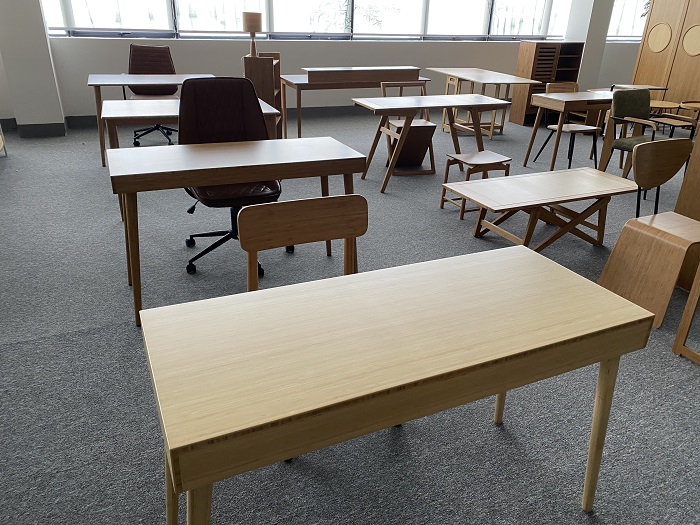
The Lifecycle Supply Chain: From Raw Botanical Culm to Architectural Slabs
The manufacturing process begins with the raw botanical harvest, specifically targeting Phyllostachys edulis, or Moso bamboo. This species is selected due to its dense cellular structure and rapid maturation cycle, reaching full mechanical strength within four to five years. Unlike slow-growing hardwood trees that require decades to develop comparable density, Moso bamboo forms a highly concentrated matrix of longitudinal cellulose fibers during its short growth phase. This concentrated cell structure gives the harvested stalks an exceptional strength-to-weight ratio, providing the foundational structural integrity necessary for subsequent conversion into wide architectural panels.
Primary Processing and Stripping
Once harvested, the hollow, cylindrical bamboo stalks are transported to primary processing facilities where they are split longitudinally into uniform, flat strips. These raw strips pass through heavy mechanical planers to isolate the high-density middle layer of the culm wall. This process is crucial because it completely strips away the outer waxy, silicious outer rind and the soft, fiber-sparse inner pith. The internal growth nodes are milled entirely flat, leaving clean, rectangular raw segments composed almost exclusively of high-density vascular fiber bundles.
Thermal Modification and Color Development
Raw bamboo strips contain native starches, sugars, and moisture that must be addressed to ensure long-term stability and prevent biological degradation. To achieve this, the processed strips undergo an extended pressure-steaming and thermal modification process. By treating the fibers with steam at temperatures varying from 140 to 180 degrees Celsius, the volatile organic sugars are fully caramelized and extracted from the cell walls. This hydrothermal treatment neutralizes the material against insect attack and rot while permanently altering its color characteristics through the entire thickness of the fiber.
The length of this thermal modification phase determines the final baseline hue of the material:
- Natural Color Profile: Shorter exposure to lower steam temperatures preserves the natural state of the bamboo fiber, resulting in a clean, light blonde or pale cream aesthetic that emphasizes a bright, Scandinavian design approach.
- Carbonized Color Profile: Prolonged thermal processing under higher pressures deeply caramelizes the inner starches, changing the natural fibers into a rich, dark amber or warm mocha tone that mimics traditional dark hardwoods without requiring surface stains or synthetic dyes.
Kiln Stabilization and Moisture Equilibrium
Following thermal modification, the damp strips enter computerized dry kilns to undergo a controlled reduction in moisture content. The strips are brought down to a target internal moisture range of 6% to 8%, matching the typical equilibrium moisture conditions found in climate-controlled indoor spaces. This precise stabilization step reduces internal cellular stresses, minimizing the risk of post-production splitting, cracking, or cupping once the final tabletops are placed into service.
Multi-Ply Ply Board Construction and Lamination
To convert individual narrow strips into wide, structural sheets, the stabilized pieces are arranged into large multi-ply panels. The strips are coated with low-emission structural adhesives and compiled in a cross-laminated configuration. This layout places the grain direction of the interior core layers perpendicular to the top and bottom face sheets, mimicking high-grade architectural plywood engineering. The compiled layers are compressed under high hydraulic pressure and heat, creating an integrated ply board that exhibits exceptional dimensional stability and eliminates the natural tendency of solid wood to expand or warp across its grain lines.
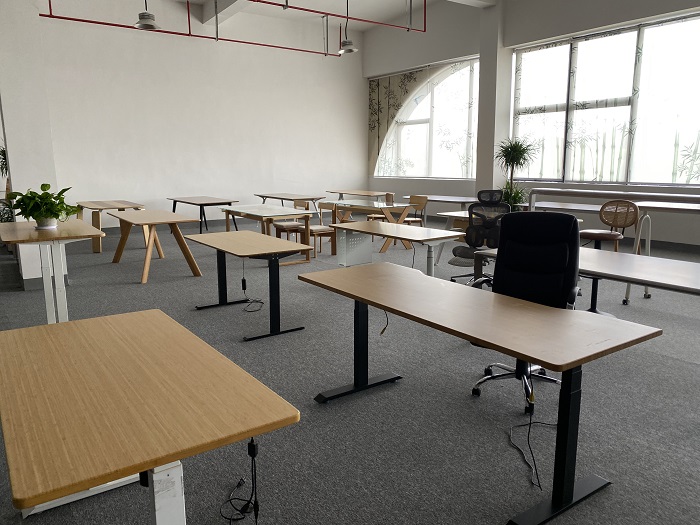
Surface Grain Technologies: Cross-Sections and Compaction Methods
The mechanical traits and visual styling of a bamboo worksurface are directly dictated by how the processed strips are oriented and bonded during the panel lamination process. Specifiers select from three primary surface textures, each yielding a unique density profile and structural layout.
Vertical Surface Configuration
In a vertical grain layout, the narrow edge-grain faces of the planed bamboo strips are turned upward, aligned parallel to each other, and laminated side-by-side. This arrangement creates a highly uniform, minimalist pattern across the tabletop, characterized by repeating fine, linear pinstripes. From a mechanical standpoint, the vertical alignment positions the tough lateral walls of the fiber bundles directly on the wear layer. This configuration makes vertical grain tabletops highly resistant to micro-scratching and linear surface wear, making them ideal for high-traffic corporate offices, technical drafting environments, and minimalist workspaces.
Horizontal Surface Configuration
Horizontal grain panels are constructed by laying the wide, flat faces of the bamboo strips parallel to the surface plane, bonding them edge-to-edge. This layout highlights the natural botanical profile of the plant, showcasing the distinctive growth nodes, soft grain variations, and organic markings. Horizontal tabletops present a distinctly natural appearance that clearly communicates the material's origin. Because the wider face of the strip is exposed, horizontal configurations offer slightly more natural flexural elasticity, making them popular for executive offices, meeting rooms, and residential desk spaces where natural texture is a priority.
Strand-Woven Compaction Technology
For industrial applications, heavy mechanical benches, or extreme-use commercial public settings, strand-woven bamboo represents the highest level of material density and hardness. Instead of utilizing intact rectangular strips, the raw bamboo culms are mechanically fractured into long, loose, interwoven strands. These raw fibers are thoroughly saturated with high-strength structural resins, placed into heavy steel molds, and subjected to massive hydraulic pressures to form solid, high-density blocks. These blocks are then sliced into architectural slabs.
This extreme manufacturing pressure yields several critical mechanical advantages:
- Extreme Janka Hardness: Strand-woven compaction compresses the fibers to an extreme density that often exceeds 1.1 grams per cubic centimeter, pushing its Janka hardness rating past 3,000 lbf—well over double the hardness of red oak or maple.
- High Impact Resistance: The interlocking, non-directional fiber structure resists deep denting, heavy tool impacts, and point-load compression from heavy monitor mounts or equipment.
- Unique Visual Grain: The fracturing process creates a complex, marbled grain pattern that resembles exotic hardwood burls, providing an organic appearance alongside industrial-grade durability.
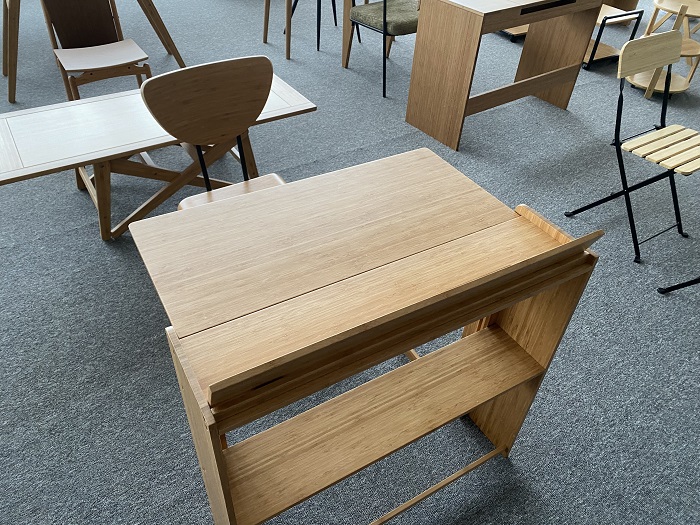
Dimensional Tolerances and Standardization Frameworks
Integrating bamboo surfaces into wide-span architectural designs or mass-produced furniture lines requires adhering to strict dimensional parameters. Because industrial bamboo is an engineered material, it can be manufactured to long spans that would be structurally unstable or impossible to source from single-piece hardwood timbers.
The 3000mm Manufacturing Boundary
The maximum continuous length available for a single solid bamboo tabletop is 3000mm. Slabs produced to this maximum scale are highly valued for expansive conference room tables, linear collaborative workstations, and integrated laboratory benches. Machining a continuous 3000mm span requires precise thickness calibration and under-desk support planning. When spanning distances between 2000mm and 3000mm without intermediate leg support, the assembly layout must incorporate under-desk steel support rails or routing channels fitted with structural metal stiffeners to prevent any long-term deflection or sagging under heavy hardware loads.
Standard Commercial Sizing Configurations
For standard office environments and consumer furniture systems, production lines are optimized around three standard sizing configurations designed to fit standard contract furniture frames:
- 2000x750mm: Sized for executive desk setups, expansive engineering stations, and secondary meeting tables, providing a deep workspace capable of supporting multi-monitor setups alongside desktop hardware.
- 1800x750mm: The industry-standard commercial footprint for standard office spaces and collaborative rows, balancing personal workspace area with efficient floor plan layouts.
- 1200x750mm: A compact option optimized for home offices, secondary training rooms, and tight spaces, offering ample work depth while fitting easily within limited floor plans.
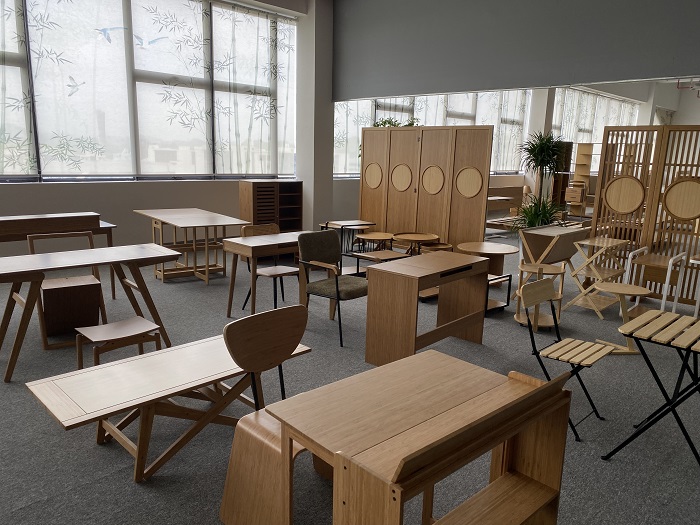
Mechanical Adaptability: Ergonomic and Height-Adjustable Integration
Modern office layouts require worksurfaces that integrate seamlessly with dynamic mechanical support structures. The dense cellular composition of solid multi-ply bamboo makes it an excellent match for high-stress mechanical desk systems, standing frames, and adjustable bases.
Electric Standing and Uplift Adjustable Frames
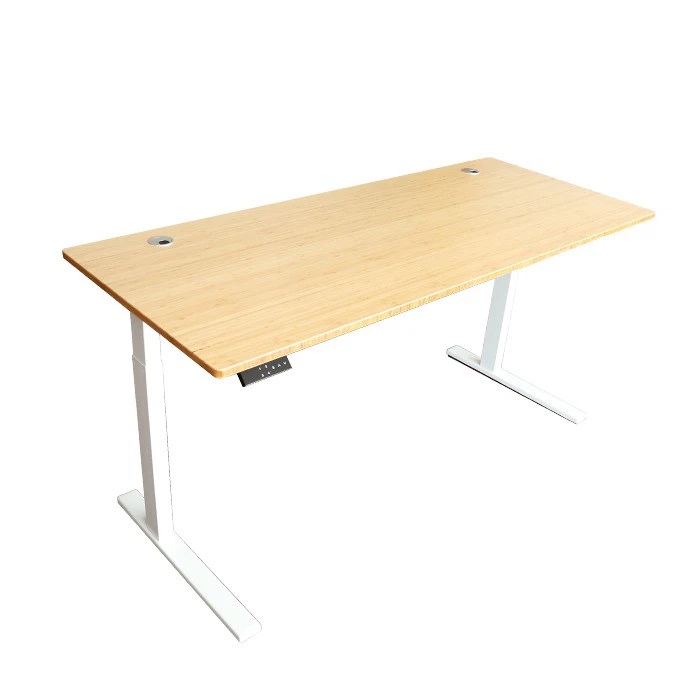
Electric standing desks and specialized high-speed uplift standing frames place unique dynamic stresses on a tabletop substrate. As electric dual-motor legs ascend or descend, the framework experiences subtle vibrations, torsional torque, and minor alignment shifts. Softer composite core surfaces like particleboard or medium-density fiberboard (MDF) can degrade over time around connection points due to these movements, eventually causing loose mounting screws and a shaky work surface.
Solid bamboo addresses these dynamic demands through its high internal fiber density and exceptional fastener retention qualities. Wood screws, machine-threaded inserts, and heavy expansion anchors bite securely into the dense fiber layers, resisting stripping or loosening even under constant motion. The high flexural strength of cross-laminated bamboo ensures the top remains perfectly flat and rigid when transitioning between sitting and standing heights, preventing frame binding and ensuring smooth motor performance over years of operation.
Advanced Ergonomic Machining and Edge Profiling
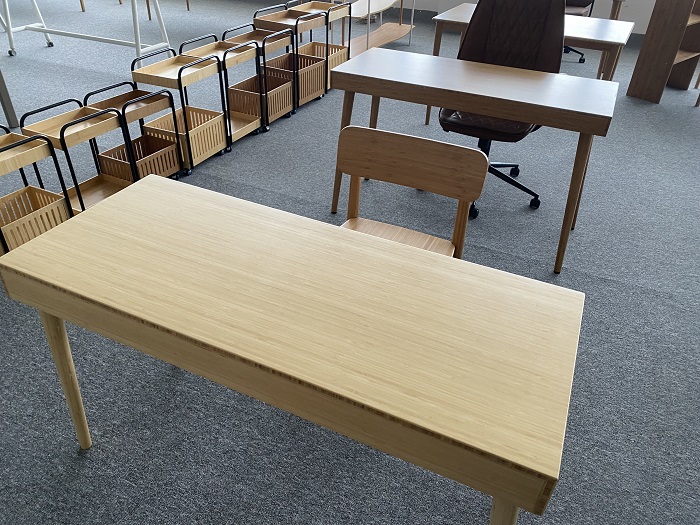
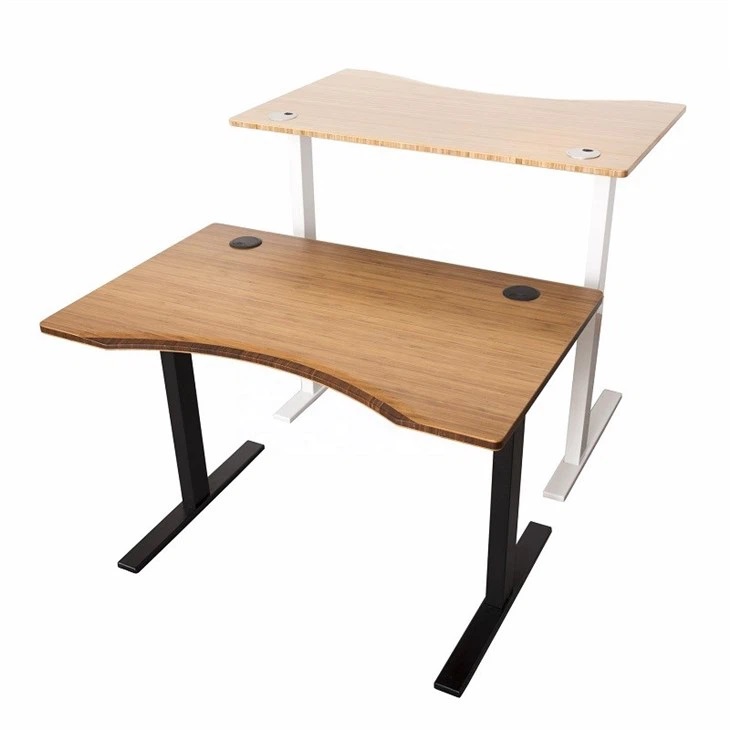
Because bamboo ply blocks are completely solid and uniform throughout their entire thickness, they can be easily sculpted into advanced ergonomic shapes without requiring protective edge banding or veneer tape. Industrial CNC routers can cut smooth, curved front cutouts that let users sit closer to their equipment, optimizing forearm support and screen alignment. Exposed edges can be carved into comfort-focused contours, such as sweeping undercuts, 45-degree chamfers, or smooth radiused drops that eliminate the sharp, circulation-restricting front corners common to standard laminate surfaces.
Specialized Applications: Space-Saving and Mobile Configurations
Beyond traditional fixed office layouts, the strength and environmental resilience of engineered bamboo make it highly effective for specialized space-saving and mobile installations that require high durability within compact footprints.
Foldable and Multi-Functional Systems
In multi-purpose corporate training spaces, educational environments, and small residential units, workspaces must often fold down, flip up, or nest away when not in use. Foldable furniture systems put significant strain on hinges, locking brackets, and pivot mechanisms. When these mechanisms are anchored into low-density composite materials, repeated folding cycles can quickly pull out fasteners and ruin the desk. Solid bamboo provides a dependable anchor for heavy steel folding hinges, ensuring the brackets stay firmly attached through thousands of open-and-close cycles. Its high strength-to-weight ratio also allows for thinner, lighter panels that remain structurally rigid, making the furniture easier to handle and fold manually.
Lagun Articulating Vehicular Mounts
The mobile lifestyle market—including marine vessels, camper vans, overland vehicles, and compact recreational layouts—demands durable, highly stable furniture solutions. Bamboo tabletops are frequently specified alongside Lagun articulating scissor-arm mounts, a heavy-duty marine-grade support framework that swivels, pivots, and locks in place. These installations place high cantilevered loads on the mounting screws, as the entire weight of the tabletop extends outward from a single side-mounted vertical arm.
A bamboo panel handles these high-stress mounting demands exceptionally well:
- Resistance to Pull-Out Stresses: The dense, interlocking fiber network ensures that flush-mounted underside screws or machine-threaded inserts can bear high cantilevered forces without pulling out of the substrate, even when exposed to vehicular vibrations.
- Environmental Stability: Mobile environments experience extreme temperature and humidity shifts. The cross-laminated construction of a bamboo tabletop prevents warping, twisting, or binding when moving through varying climates, ensuring smooth arm articulation in all weather conditions.
- Moisture Resilience: The thermal sugar extraction and dense resin bonding processes make bamboo significantly more stable in damp marine or outdoor environments than traditional hardwoods, preventing swelling and surface splitting.
Technical Specification and Field Installation Standards
Successfully integrating solid bamboo panels into a residential or commercial workspace requires following proper on-site installation protocols to accommodate the material's natural characteristics and guarantee reliable long-term performance.
Material Acclimatization Window
Like any authentic wood-derived material, engineered bamboo must adapt to the specific microclimate of its final installation site. Slabs must be unboxed, unstacked, and stored completely flat within the target room for a minimum of 48 to 72 hours before final mounting. This exposure allows the internal moisture levels to achieve perfect equilibrium with the building's operational HVAC system, preventing post-installation movement, binding, or surface stress lines.
Expansion Gap Engineering
While cross-laminated multi-ply panels are exceptionally stable, they still experience minor movement across seasonal humidity changes. When attaching a bamboo tabletop to rigid steel standing desk frames or custom base cabinets, installers must use slotted mounting holes or oversized pilot bores. Placing washers over machine screws within these slotted channels allows the tabletop to shift naturally on a micro-scale without bowing, cracking, or stressing the fixed metal frame points.
Long-Term Surface Maintenance
Maintaining the structural integrity and appearance of a bamboo tabletop depends on its factory or field surface treatment. Polyurethane and factory UV-cured acrylic coatings create an impenetrable surface barrier that requires minimal maintenance, requiring only a soft cloth and mild surface cleaner to wipe away spills. For surfaces finished with natural hardwax oils, users enjoy a rich, matte finish that can be spot-repaired and buffed manually over time, allowing the workspace to be easily refreshed and maintained through decades of continuous service.
 皖公网安备 34180202000049号