

How Bamboo Decking Handles Mold, Moisture, and Humidity
Sep 23, 2026, 8:30 AM
Outdoor decking materials face constant pressure from the environment. Rain, fog, damp air, morning dew, and shaded areas can create the perfect setting for moisture-related problems. Among the concerns most frequently raised by homeowners and builders, mold growth and moisture damage are at the top of the list. As bamboo decking becomes increasingly common in commercial and residential projects, a closer look at how it behaves under humid conditions helps clarify why it has earned a strong reputation for durability.
Modern bamboo decking differs significantly from the raw, untreated bamboo found in gardens and landscapes. Through engineered manufacturing—especially strand-woven construction, thermal modification, and high-density compression—bamboo develops properties that make it well suited for areas where moisture is a fact of life. Understanding why requires looking at how moisture interacts with materials, how mold forms, and how bamboo stands up compared with traditional timbers and composite products.

The following sections explore bamboo’s behavior in humid environments, the science behind its resistance, and practical considerations that support long-lasting performance outdoors.
Moisture Behavior in Outdoor Decking Materials
Every natural or engineered decking material absorbs and releases moisture to some degree. Even water-resistant materials interact with their environment. The way a material behaves during these cycles determines whether it remains stable or suffers damage over time.
What happens when moisture enters a material
When moisture penetrates wood fibers or composite boards, several things may occur:
- Swelling as fibers expand
- Shrinking during drying cycles
- Internal stress that leads to cracking or cupping
- Surface staining or discoloration
Increased susceptibility to mold or algae growth
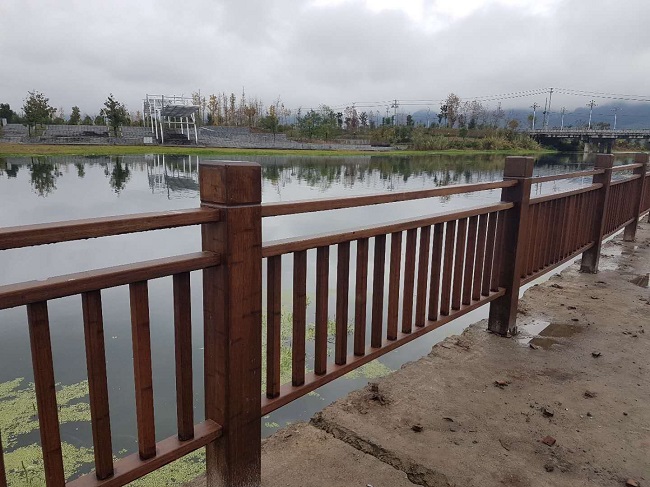
Merbau, teak, pressure-treated pine, and other hardwoods are familiar examples of materials that can warp or fade when exposed to prolonged humidity. Composites like WPC absorb moisture more slowly, but surface mold can still appear because mold feeds on organic particles present on or within the boards.
Bamboo decking, especially when produced through modern processing techniques, handles these cycles differently.
Engineered Bamboo: Why Its Structure Matters
Raw bamboo culms are not particularly moisture resistant on their own. If left untreated, they can absorb water and support mold growth easily. The turning point occurs during the manufacturing process.
Strand-woven construction
In strand-woven bamboo production, the culm is:
- Split into long fibers
- Boiled to remove sugars and starches
- Dried to a controlled moisture level
- Bonded with low-emission adhesives
- Compressed under intense heat and pressure
This creates a dense, stable block from which decking boards are milled. The high density reduces the pathways through which moisture can travel.
Thermal modification
Some manufacturers use thermal modification to increase resistance to moisture and microbial growth. By heating the bamboo fibers to high temperatures, the sugars that normally attract mold are chemically altered. This reduces the natural food source mold relies on, creating a less hospitable environment.
Stabilization and conditioning
After pressing, the bamboo block is conditioned to balance internal moisture. This careful preparation prevents abrupt expansion or contraction once the boards are released into outdoor conditions.
The end result is a board engineered to behave more predictably under humidity than many traditional decking materials.
Resistance to Mold and Fungal Growth
Mold thrives in damp environments with minimal sunlight and limited airflow. Decks near pools, shaded patios, north-facing balconies, and areas beneath large trees are especially vulnerable. Moisture alone does not cause mold—mold requires a food source, oxygen, and the right temperature range.
Why bamboo decking resists mold more effectively
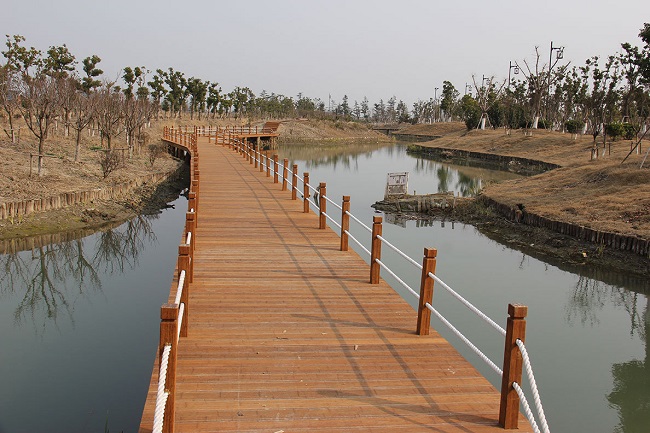
High-density bamboo resists mold because:
- The sugars that mold feeds on are largely removed during processing
- The compressed structure reduces internal voids
- Surface coatings provide an additional barrier
- Thermal modification inhibits fungal enzymes
- Many boards are factory-treated with mold-resistant sealants
What this means is that mold is less likely to penetrate or colonize the material itself. Mold may occasionally appear on the surface due to organic debris (pollen, dust, fallen leaves), but this is easily cleaned and does not indicate material degradation.
Comparing with timber
Timber naturally contains starches and nutrients that mold finds appealing. Even hardwoods with strong durability ratings can support mold growth in shaded or wet areas. While sealers help, once a wood deck absorbs moisture, it becomes more vulnerable to fungi.
Comparing with WPC
WPC does not supply nutrients internally, but debris on the surface can still lead to surface mold. Additionally, some WPC boards absorb moisture through unsealed ends, which may cause internal swelling that contributes to mold growth at cut edges.
Bamboo’s processed structure and balanced composition make it well equipped to resist mold even in humid regions.
Dimensional Stability in Humidity
One of the most noticeable signs of moisture damage in traditional decking materials is warping or cupping. These occur when one side of a board absorbs more water than the other.
Bamboo’s balanced structure
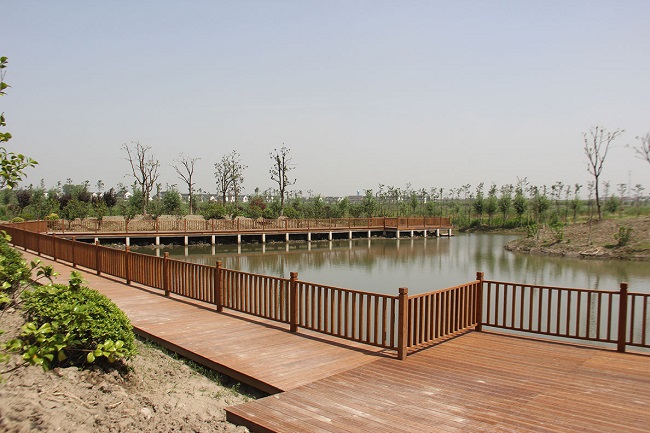
Because engineered bamboo is dense and uniform, moisture movement is more evenly distributed. This helps prevent:
- Cupping
- Warping
- Bowing
- Splitting under stress
The stability is partly due to the removal of internal variances during the compression process.
Comparison with Merbau
Merbau is known for stability, yet it is still a natural solid wood. In high humidity, its fibers can expand irregularly. The presence of tannins complicates the process because water movement can cause both swelling and bleeding.
Comparison with WPC
WPC boards resist swelling better than hardwoods, but the wood particles inside can still absorb moisture. Once swelling occurs, the plastic binder limits the board’s ability to release moisture evenly, sometimes leading to internal stress or deformation in high-heat conditions.
Bamboo’s stability under humidity helps maintain the deck’s appearance and reduces maintenance costs over time.
How Bamboo Decking Manages Prolonged Moisture Exposure
Some regions experience continuous rainfall or year-round humidity. Coastal and tropical climates, in particular, can challenge outdoor materials.
Reduced water absorption
While no outdoor decking material is completely waterproof, bamboo decking exhibits lower water absorption rates than many hardwoods because of:
- Higher density
- Minimal internal voids
- Effective sealing during manufacturing
This allows bamboo to stay stable even when moisture levels fluctuate dramatically.
Effective drainage design
Many bamboo decking boards are manufactured with:
- Grooved undersides for airflow
- Clip systems that reduce moisture trapping
- Slight surface curvature to aid water runoff
This design helps prevent standing water, one of the major contributors to mold and decay in other deck types.
End-grain treatment
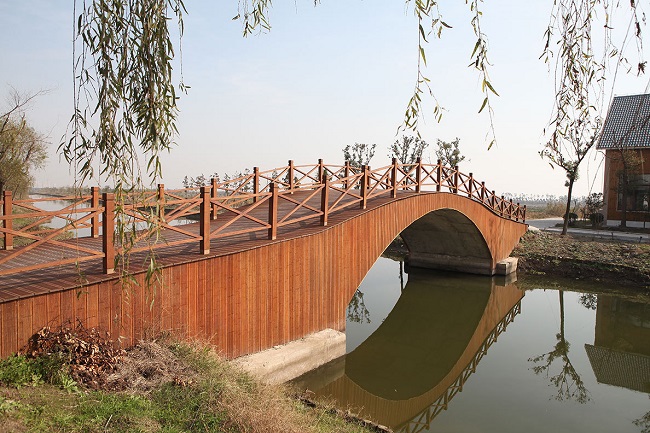
A common weak point in outdoor materials is the cut end of a board. Bamboo decking often comes with factory-applied end-grain sealers that block water absorption where the fibers are most exposed. Merbau and other hardwoods require repeated sealing after installation to manage the same risk.
Performance in Shaded and Low-Ventilation Areas
Decks built under pergolas, on covered patios, or near foliage do not receive much direct sunlight. These shaded areas retain moisture longer, creating conditions where mold can thrive.
How bamboo responds in shade
Engineered bamboo outperforms many hardwoods in shaded zones because:
- Its surface dries more quickly
- It does not retain moisture as deeply
- It does not exude tannins that promote staining
- Mold has fewer natural nutrients to feed on
With regular sweeping and occasional washing, bamboo decking can remain clean and stable in areas where hardwoods may darken or soften.
WPC in shaded areas
WPC is resistant to rot, but its surface can develop mold films in damp shade due to organic debris. Removing this film often requires specialized cleaners.
Bamboo strikes a strong balance: natural appearance with engineered performance, even when sunshine is limited.
Long-Term Outdoor Weathering
Outdoor aging involves more than mold and humidity. Exposure to UV, temperature shifts, and seasonal moisture cycles all influence a deck’s lifespan.
Weathering to a natural patina
If left untreated, bamboo decking can gradually shift into a soft grey tone. This process does not compromise structural integrity. Many architects appreciate this natural patina, similar to how premium hardwoods age.
Surface protection
Factory-applied oils or outdoor coatings help reduce discoloration, prevent moisture ingress, and make cleaning easier. Reapplication schedules vary, but maintenance tends to be straightforward.
Comparison with Merbau
Merbau weathers more unevenly due to tannins. Areas exposed to rain may lighten faster than protected areas, leading to inconsistent coloration.
Comparison with WPC
WPC often fades under UV exposure, sometimes creating a washed-out appearance. Because the pigment is integral, fading cannot be corrected through sanding or refinishing.
Bamboo’s ability to weather gracefully adds to its appeal in landscape and architectural applications.
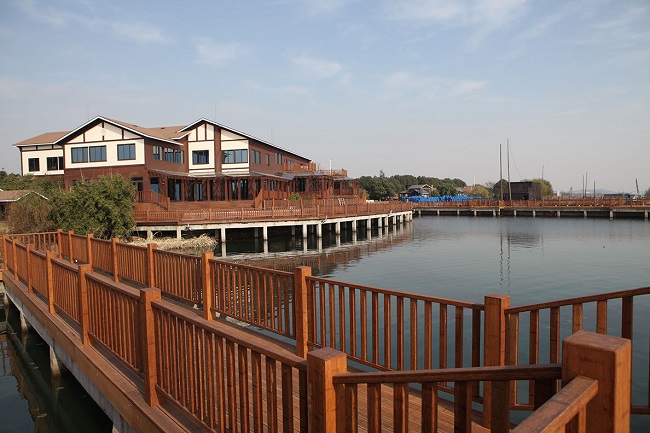
Installation Practices That Enhance Moisture Performance
Even the best decking material must be installed correctly to perform well.
Key practices that support bamboo’s moisture behavior include:
- Allowing proper ventilation beneath the deck
- Maintaining adequate board spacing
- Sealing all cut ends
- Using stainless steel fasteners or hidden clip systems
- Following recommended oiling intervals
- Ensuring drainage paths stay clear of debris
These steps reduce standing water and help the material maintain equilibrium with its environment.
Maintenance: What Owners Should Know
Although bamboo decking is durable, simple care helps prevent mold and prolong the deck’s lifespan.
Recommended practices include:
- Sweeping away debris that traps moisture
- Washing the deck periodically with mild cleaners
- Maintaining airflow around and beneath the boards
- Reapplying protective oils if a preserved color is desired
- Clearing gutters or nearby vegetation that may encourage moisture buildup
Unlike Merbau, bamboo does not require tannin management. Unlike WPC, bamboo can be lightly sanded to refresh the surface or remove minor scratches.
Comparative Summary: Why Bamboo Performs So Well
While each material has its strengths, bamboo stands out in humid environments because:
- Thermal modification reduces mold-supporting sugars
- High density limits moisture penetration
- Engineered fibers create structural consistency
- Surface coatings provide added resistance
- End-grain treatments protect vulnerable areas
- Weathering behavior is predictable
- It remains cooler and more comfortable than many composite products
This combination of natural resilience and engineered performance allows bamboo to maintain its appearance and stability even in challenging outdoor settings.
The Strength Behind Bamboo’s Moisture Performance
Bamboo decking has earned its growing popularity because it addresses the moisture challenges that have long troubled traditional decking materials. Its engineered structure minimizes swelling, reduces mold risk, and maintains stability across humidity levels. Builders appreciate the predictable performance. Homeowners appreciate the natural beauty. And landscapers enjoy the long-term reliability.
With proper installation and basic maintenance, bamboo decking offers dependable resistance to mold, moisture, and humidity—making it a strong contender for outdoor projects in a wide range of climates.
 皖公网安备 34180202000049号