Poolside Bamboo Decking: Slip Resistance and Water Exposure Explained

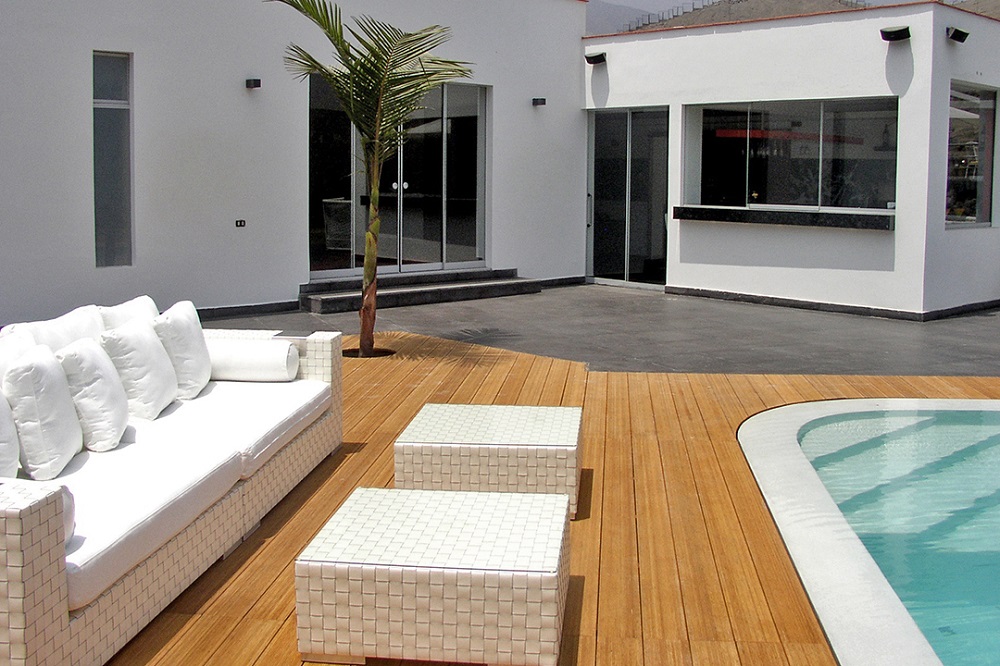
Installing a surface around a swimming pool requires balancing aesthetic warmth with hard-nosed practical safety. Homeowners and commercial designers frequently turn to natural materials to soften the stark look of concrete, glass, and tile. Bamboo decking has emerged as a premier contender in these wet environments, offering the organic look of tropical hardwood combined with impressive structural stability. However, placing any material next to thousands of gallons of splashing water raises immediate questions about traction, structural longevity, safety, and long-term maintenance. Understanding how poolside bamboo decking responds to continuous water exposure and wet foot traffic is essential before committing to a backyard build or commercial resort project.
The Engineering Behind Exterior Bamboo Around Water
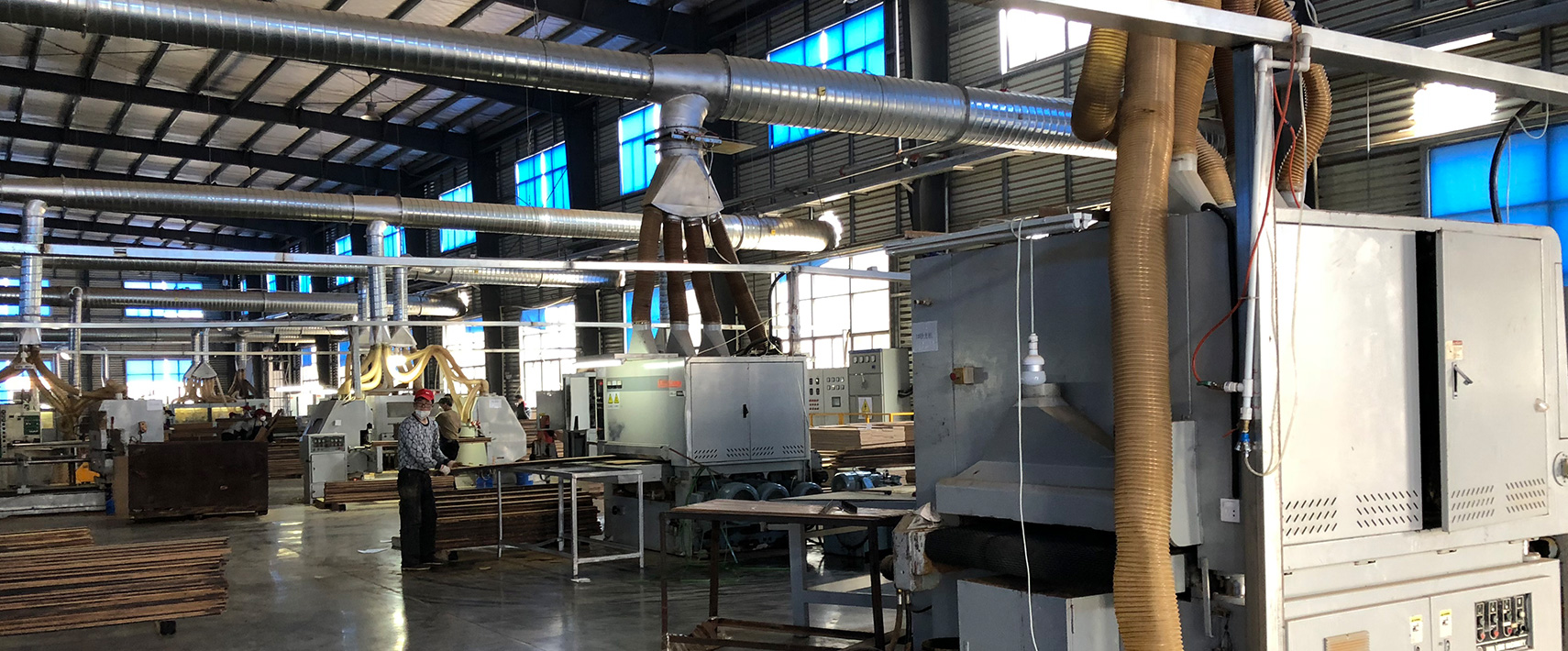
Standard bamboo poles or raw split stalks are not suitable for direct outdoor exposure. The material used for swimming pool surrounds is technically known as exterior strand woven bamboo. This product undergoes an intensive mechanical and thermal processing sequence designed specifically to counter organic degradation.
The process begins by crushing mature bamboo culms into long, raw fibrous strands. These strands are soaked, boiled, and subjected to a specialized carbonization process. Thermal treatment heats the fibers to high temperatures, removing sugars, starches, and nutrients that would otherwise attract mold, rot, or wood-boring insects. Eliminating these sugars effectively removes the primary food source for decay organisms, rendering the bamboo naturally resistant to fungi.
Once treated, the fibers are coated with exterior-grade thermosetting resins and compressed under immense hydraulic pressure into dense blocks. These blocks are then cured and milled into individual decking planks. The resulting material is significantly denser than traditional hardwoods like teak or Ipe. Because the natural cell structure is crushed and fused under thousands of tons of pressure, the open cavities that normally draw in water are permanently closed. This mechanical compression gives strand woven bamboo a remarkably low water absorption rate, making it inherently suitable for high-moisture pool zones.
Slip Resistance Standards and Wet Foot Safety
Safety is the absolute priority when selecting a surface for pool surrounds. Slippery decks contribute to painful falls, making traction a non-negotiable performance metric. Bamboo decking achieves high slip resistance through a combination of surface texturing, natural density, and manufacturing profile designs.
In testing standards used across the building industry, slip resistance is frequently measured using pendulum test values or dynamic coefficient of friction measurements. Exterior bamboo decking planks intended for pool applications are manufactured with specific surface finishes to optimize grip under wet conditions.
Surface Textures and Profiles
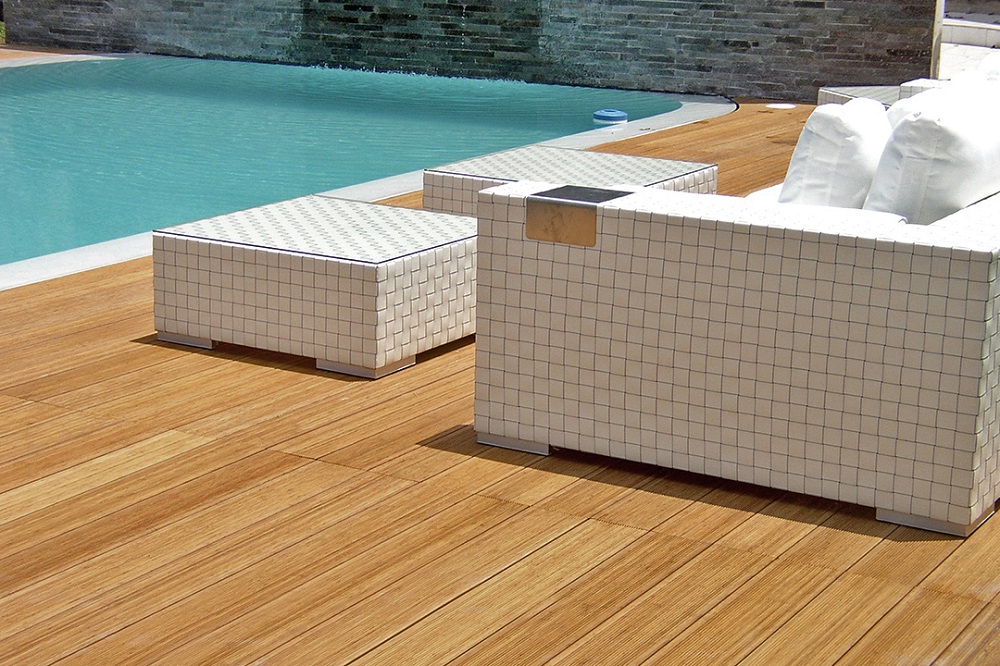
Manufacturers typically produce bamboo decking boards with two distinct face options: a smooth side and a grooved or reed surface.
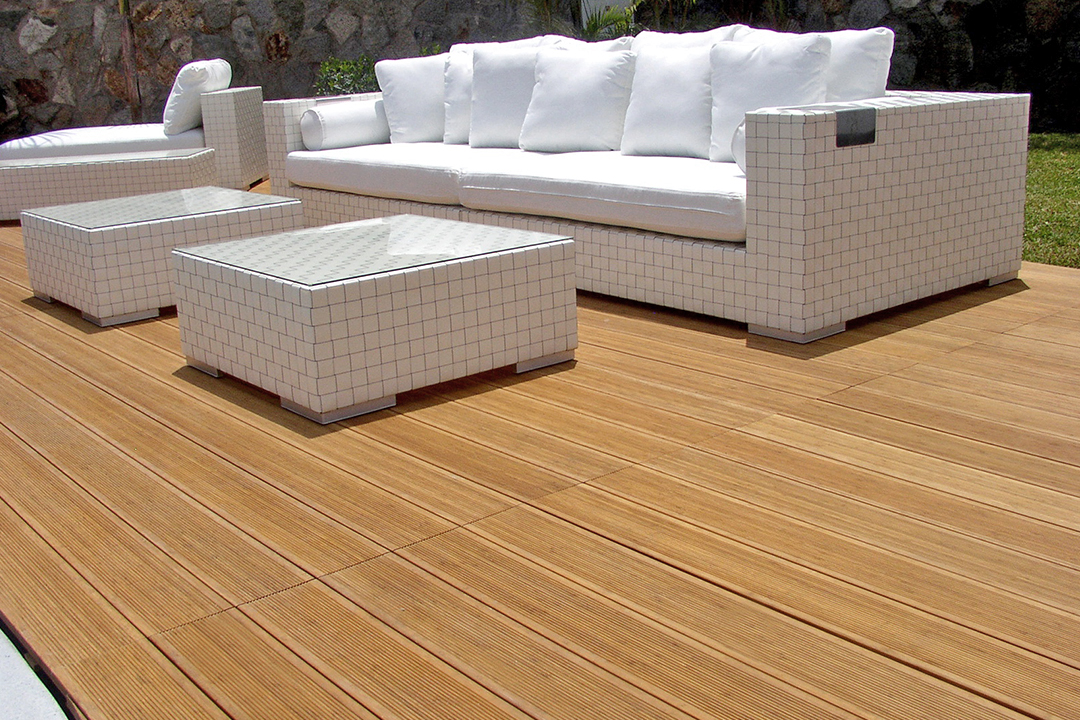
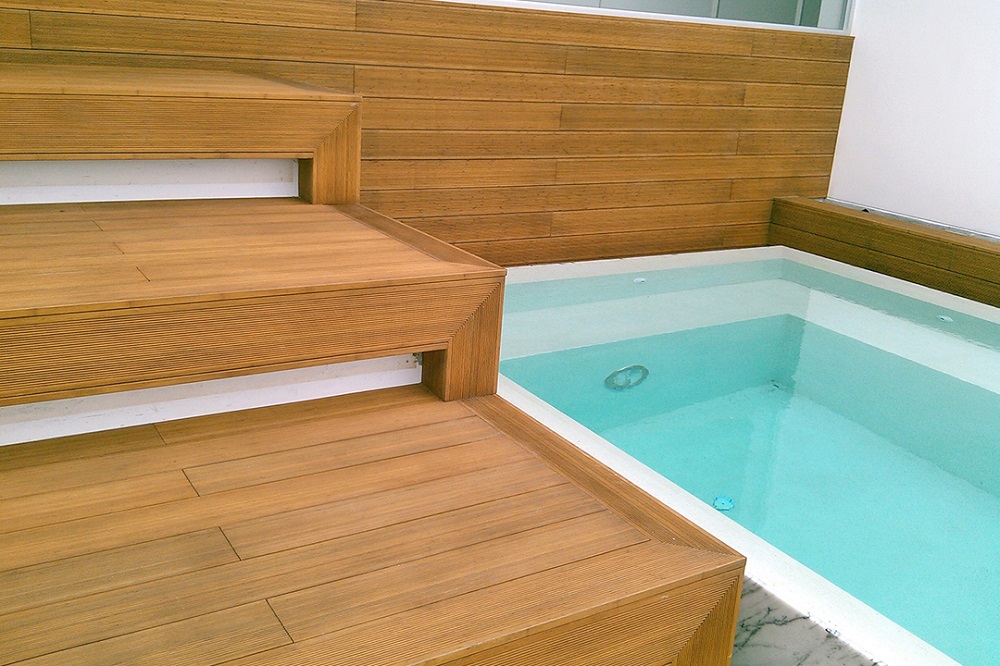
The grooved profile features shallow channels running along the length of the board. These ridges break up water surface tension under bare feet, providing micro-edges for toes to grip. Water channels away down the grooves rather than pooling directly underfoot, which significantly reduces the risk of hydroplaning when walking away from the water.
However, even smooth-milled strand woven bamboo boards maintain impressive traction. Unlike synthetic composite decking, which can feel slick and plastic-like when wet, high-density bamboo maintains a subtle natural wood grain texture. The microscopic irregularities on the surface of carbonized bamboo fibers provide reliable friction, even under direct water splashes.
Resistance to Algae and Surface Slime
A major hidden cause of slipping around pools is not the water itself, but microscopic organic growth. When water sits on porous timber, algae and mildew thrive, creating an invisible, paper-thin layer of slime that turns any surface into a hazard.
Because strand bamboo undergoes thermal treatment to destroy sugars and starches, it does not provide an easy breeding ground for organic growth. When paired with basic routine sweeping, bamboo boards resist the slick biological film that frequently plagues untreated softwoods or low-grade hardwoods in damp environments.
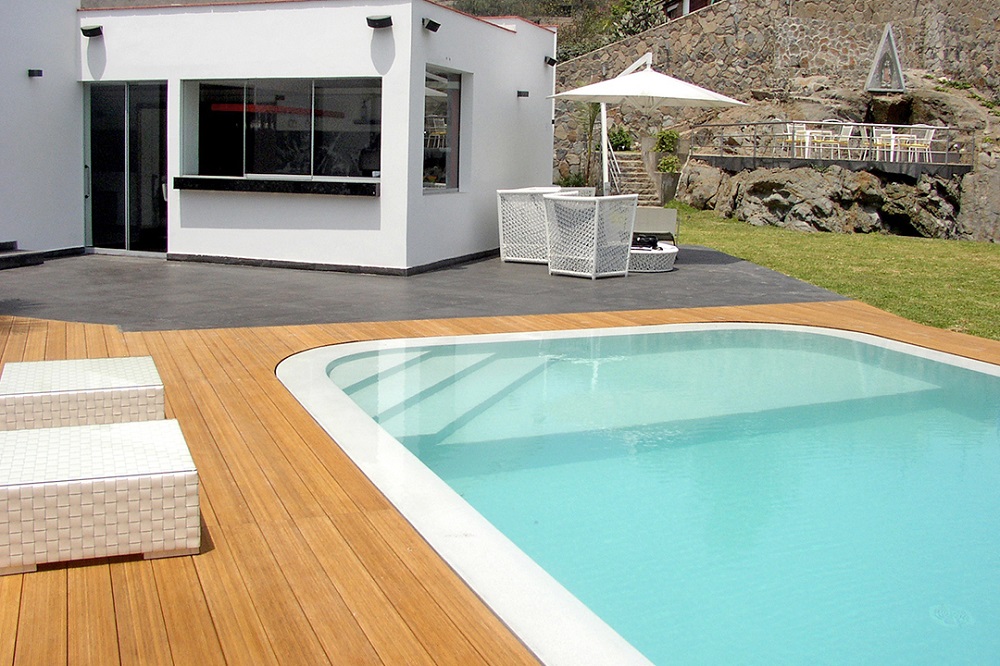
How Bamboo Decking Handles Continuous Water Exposure
Pool decking operates under harsher conditions than a standard patio. It faces constant splash cycles, wet towels left on the surface, standing water, and direct exposure to chemical sanitizers like chlorine or saltwater.
Swelling, Shrinkage, and Dimensional Stability
Traditional timber expands when absorbing moisture and shrinks as it dries out. Over several seasons, this constant dimensional shift causes warping, cupping, twisting, and cracking. High-density strand bamboo demonstrates exceptional dimensional stability because its fibers are locked in resin under heavy pressure.
When exposed to splash water, bamboo absorbs moisture at a drastically slower rate than conventional deck boards. Its volumetric expansion rate is extremely low. This means the boards hold their flat shape, maintain uniform gap spacing for drainage, and refrain from pulling against hidden fasteners or deck screws.
Splintering and Barefoot Comfort
Walking barefoot is standard practice around swimming pools. Traditional timber decking often presents a severe risk of splinters over time as surface fibers weather, crack, and lift.
Strand woven bamboo boards resist splintering due to the randomized alignment of compressed fibers fused with resin. The surface remains firm and compact under traffic. While all natural materials weather over time, bamboo maintains a smooth surface integrity that protects bare feet from sharp wood slivers.
Heat Retention Under Sun Exposure
Pool decks are typically located in full sun. Dark synthetic materials can absorb extreme amounts of heat, making them uncomfortably hot to walk on during peak daylight hours. Natural plant fibers reflect heat more effectively than solid plastics or heavy rubber composites. Standard medium-to-dark carbonized bamboo boards absorb warmth but generally remain comfortable for barefoot walking, ensuring the space remains usable even on scorching summer afternoons.
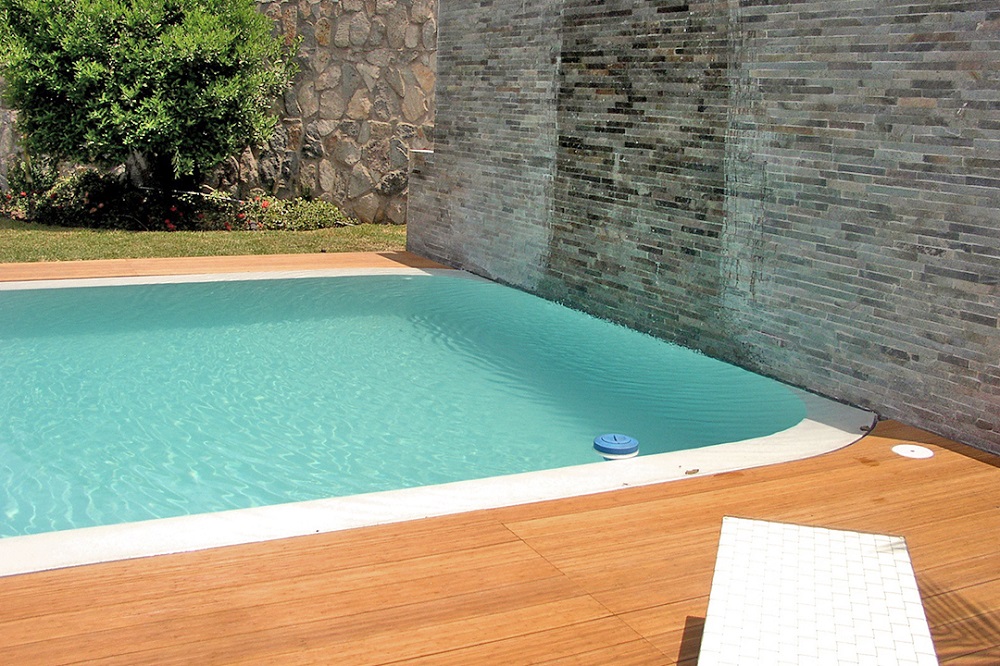
Saltwater and Chlorinated Water Performance
Pool water is never pure; it contains aggressive sanitizers designed to keep bacteria at bay. Understanding how these chemicals interact with decking materials is vital for long-term satisfaction.
Chlorine Resistance
Chlorine is a strong oxidizing agent. Constant exposure can bleach untreated natural woods, breaking down lignin and weakening the outer cellular structure. Thermally modified strand bamboo exhibits high resistance to chlorinated splash water. The resin matrix surrounding the fibers acts as a protective barrier, preventing chlorine molecules from penetrating deep into the board. While long-term sun and chlorine exposure will fade any surface to a soft gray patina over time, the structural integrity of the bamboo remains uncompromised.
Saltwater Pool Compatibility
Saltwater chlorination systems have surged in popularity due to their gentle feel on human skin. However, salt air and salt residue are notoriously destructive to building materials. Salt crystals can enter porous woods, crystallize upon drying, and expand, gradually prying the wood fibers apart from within.
Because bamboo decking has a tight, compressed internal structure with virtually no open pores, salt crystals cannot easily infiltrate the boards. The material does not crumble or spall when exposed to salt splash zones. Additionally, selecting marine-grade stainless steel clips and fasteners ensures that the hidden sub-structure matches the durability of the bamboo itself.
Best Design and Installation Practices for Pool Decking
Proper installation is critical to maximizing the lifespan and safety of poolside bamboo decking. Even the most resilient material will struggle if standing water is allowed to pool unchecked beneath the structure.
Adequate Sub-Deck Ventilation
Ventilation beneath the deck frame is mandatory. A poolside environment creates continuous high humidity underneath the boards. Installing the sub-frame with sufficient ground clearance allows continuous air movement, drying out the undersides of the planks. Adequate air circulation ensures that moisture levels remain balanced between the top exposed surface and the shaded underside, preventing uneven tension across the board.
Pitch and Drainage Slopes
To prevent water from standing on the deck surface for extended periods, the substructure should be built with a subtle slope away from the pool edge. A pitch of roughly one-eighth inch per foot allows splash water and rain to run off efficiently. Furthermore, maintaining consistent gaps between board edges ensures quick drainage into the channel below, keeping foot pathways dry and safe.
Hidden Fastener Systems
Pool decks should ideally be installed using grooved boards fitted with hidden clip systems. Fastening from the side eliminates exposed screw heads on the top surface. This approach delivers two important benefits for pool environments: it creates a sleek, seamless visual finish, and it removes metal hazards that could rust or snag bare feet.
Long-Term Maintenance and Surface Protection
While strand bamboo decking requires far less intervention than softwoods, routine care keeps it looking pristine and performing safely near water.
Cleaning Protocols
Regular cleaning prevents dirt, sunscreen oils, and pool chemicals from accumulating. Sweeping away leaves and debris stops organic matter from rotting on the surface. Washing the deck periodically with a mild soap, warm water, and a stiff-bristle brush removes stubborn grime and maintains the original non-slip surface texture.
Re-Oiling and Color Preservation
Over time, UV radiation and water exposure naturally alter the color of bamboo, causing it to transition into an elegant silvery-gray shade. This color shift is purely cosmetic and does not indicate structural degradation.
For property owners who prefer to retain the rich, deep brown tone of freshly installed bamboo, applying a penetrating exterior deck oil once a year is recommended. Penetrating finishes coat the outer fibers, blocking UV rays and providing an additional hydrophobic barrier against splash water. These oils should be designed specifically for dense hardwoods or bamboo, ensuring they absorb cleanly without leaving a sticky surface film that could compromise traction.
Comparing Bamboo to Alternative Pool Surfaces
Selecting pool decking often comes down to weighing bamboo against other common outdoor materials like tropical hardwoods, wood-plastic composites, and traditional concrete paving.
- Compared to Concrete and Pavers: Concrete can crack over time due to ground settling and becomes extremely hot under direct sun. Bamboo provides a softer, warmer, natural visual that absorbs less surface heat while offering a springier, more comfortable walking feel.
- Compared to Wood-Plastic Composites: Composites are low maintenance, but many contain high concentrations of plastic that absorb intense summer heat, making them uncomfortable for barefoot use. They can also become slick when wet and lack the authentic grain character of real plant fibers.
- Compared to Tropical Hardwoods: Rare hardwoods like Ipe offer great durability, but their availability can be inconsistent and their environmental footprint high due to slow growth cycles. Bamboo matures in just five to seven years, providing an equally dense, durable, and slip-resistant surface while maintaining a rapid renewable growth cycle.
Final Practical Considerations
Installing poolside bamboo decking offers a harmonious balance of safety, barefoot comfort, and durability against constant wet conditions. The dense strand woven construction withstands heavy splash zones, resists chemical degradation from pool treatments, and maintains its shape despite changing moisture levels. By choosing appropriate surface textures, ensuring proper deck drainage during installation, and performing basic annual maintenance, property owners can enjoy a safe, slip-resistant outdoor space that retains its rich natural beauty for years.