Panda-Approved Sustainability, The Secrets Behind Ultra-Durable Bamboo Floor Manufacturing

When people think about bamboo, their minds often drift to wild green forests, peaceful natural landscapes, and pandas contentedly chewing on stalks. It feels like a symbol of pure, undisturbed nature. Yet, walk into a modern home or architectural showroom, and you will find that very same material reimagined as a sleek, highly polished, and incredibly tough ground surface.
For many consumers, this creates a fascinating puzzle. How does a hollow, flexible grass that serves as a staple food for wildlife become a surface hard enough to resist heavy foot traffic, pet claws, and dropped kitchen pots? The transformation is not a matter of magic; it is a testament to sophisticated engineering and precise manufacturing secrets.
Understanding the steps behind producing ultra-durable bamboo flooring reveals a deep respect for resource conservation. It shows how modern production methods harness the raw biological strengths of a fast-growing grass and turn it into a premium product that rivals, and often surpasses, traditional hardwoods in both performance and longevity.
The Raw Material: Sourcing and the Panda Myth
To understand the environmental story of this material, it helps to clear up a very common misconception right at the start. Many people worry that harvesting bamboo for commercial products like floors, decking, or plywood takes away food from wild pandas.
The manufacturing industry relies almost entirely on a specific species known as Phyllostachys edulis, or more commonly, Moso bamboo. This particular variety grows at very high altitudes and features incredibly thick, dense walls that are perfect for industrial processing.
Pandas, on the other hand, live in much lower, isolated mountain regions and feed on entirely different, smaller species of low-lying bamboo. Furthermore, commercial harvesting occurs in managed forests far away from protected wildlife reserves, ensuring that production lines have zero impact on natural habitats or wildlife food supplies.
The sustainable journey begins with timing. A traditional oak or maple tree needs several decades to reach maturity before it can be cut down for lumber. Moso bamboo reaches its full height of up to eighty feet in just a few months, and it achieves its peak structural density and hardness in roughly five to seven years.
When a mature stalk is harvested, the extensive underground root system remains completely intact in the soil. This root network acts like a natural anchor, preventing soil erosion on mountain slopes while immediately sending up new shoots. There is no need for clear-cutting, replanting, or chemical fertilizers. The forest naturally regenerates itself season after season, making it one of the most efficient and sustainable resources on earth.
Splitting, Stripping, and Boiling: The Initial Processing
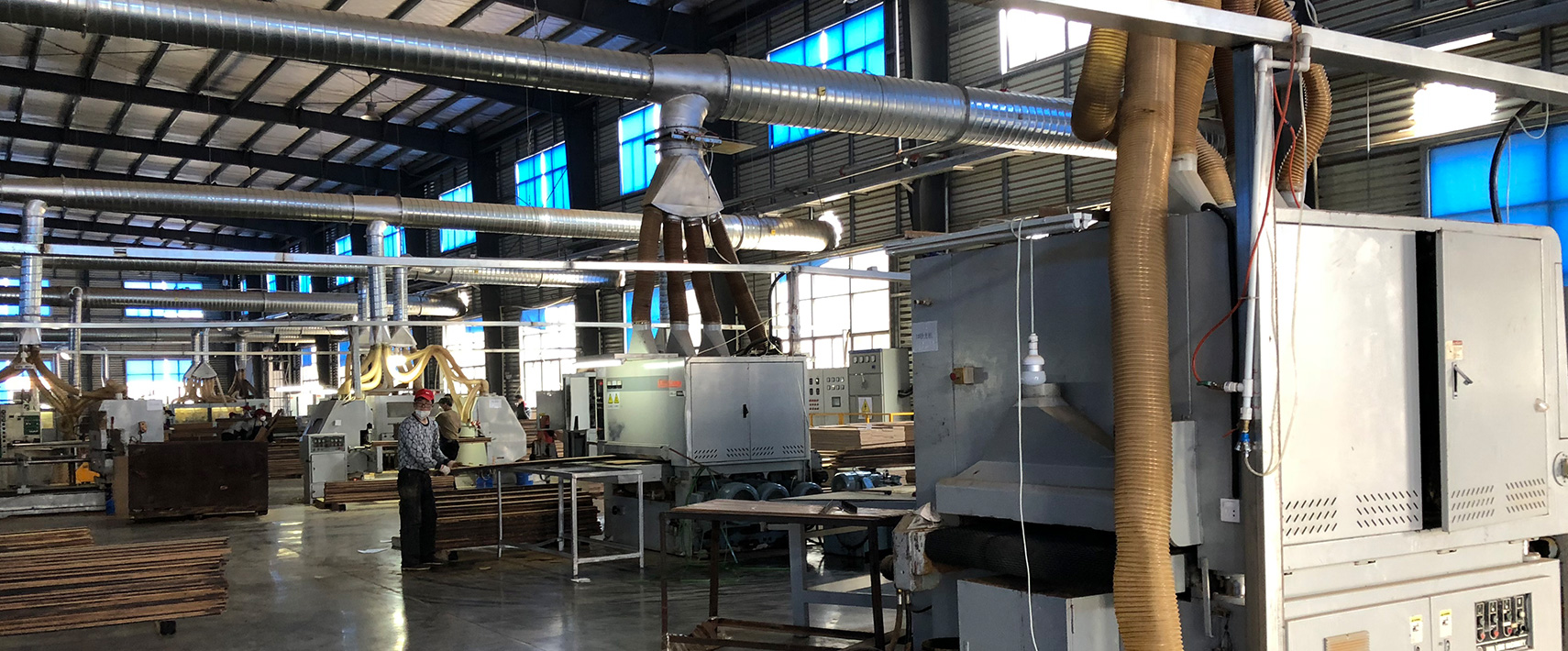
Once the mature stalks are carefully selected and harvested from mountain groves, they are transported to the production facility to undergo a multi-step transformation. Because bamboo grows as a hollow cylinder with a hard outer green skin and a soft inner pith, it cannot be milled into wide, flat planks using traditional sawmill methods. Instead, the manufacturing process requires specialized techniques to open up the material.
First, heavy industrial machinery splits the round stalks lengthwise into long, narrow strips. These rough strips then pass through automated planing machines that carefully shave away the waxy outer green skin and the soft inner lining. This leaves behind a clean, rectangular strip made entirely of dense, tough vascular bundles—the fibers responsible for the plant’s strength.
At this stage, the raw strips contain natural sugars and starches. If left untreated, these organic compounds would attract wood-boring insects and absorb moisture from the surrounding air, leading to mold or rot over time.
To prevent this, the strips are placed into massive boiling vats. This boiling process caramelizes or extracts the natural starches, effectively rendering the material unappetizing to pests and making it highly resistant to decay.
During this boiling phase, manufacturers can also control the final color of the material. A short boiling time preserves the natural, bright blonde color of the fibers. A longer boiling period under pressure steam darkens the sugars throughout the material, turning the fibers a rich, warm amber or caramel tone. Because this color change happens deep inside the fiber structure rather than as a surface stain, the final planks maintain their uniform shade even if they are sanded down years later.
The Secret to Strength: Solid vs. Strand-Woven Engineering
Once the boiled strips are thoroughly dried in climate-controlled kilns to match strict equilibrium moisture contents, they are ready for structural formation. The industry uses two distinct manufacturing paths to create planks, each offering unique visual styles and strength profiles.
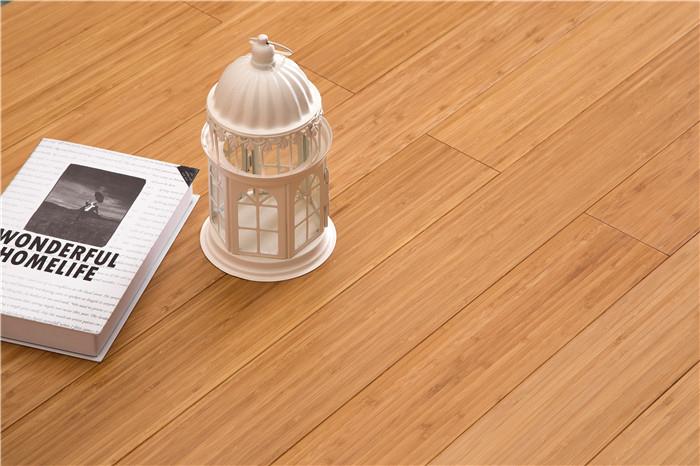
The traditional path creates what is known as solid or vertical and horizontal flooring. In a horizontal layout, the prepared strips are laid flat side-by-side in multiple layers and bonded together under immense pressure. This style showcases the distinctive growth rings or nodes of the plant, creating an exotic, natural look. In a vertical layout, the strips are turned on their edges and pressed together, resulting in a clean, contemporary appearance with narrow, linear grain lines.
The real secret behind ultra-durable performance, however, lies in the second path: strand-woven manufacturing. This method was developed to push the material’s toughness to its absolute limit.
Instead of keeping the strips intact, heavy mechanical rollers crush the dried strips into long, loose strands of raw fiber. These loose fiber strands are then thoroughly coated with eco-friendly, low-emission resins.
Next, the resin-coated strands are packed into massive steel molds and subjected to incredible hydraulic pressure—often exceeding several thousand tons—while being baked at high temperatures. This intense compression fuses the individual fibers into an incredibly dense, solid block of material.
The resulting block is so tough and heavy that it mimics the density of exotic tropical hardwoods. Specialized heavy-duty saws then slice these massive blocks into individual flooring planks. The strand-weaving process changes the cell structure completely, creating an intricate, interlocking grain pattern that is up to three times harder than traditional red oak on the Janka hardness scale.
Precision Milling and Multi-Layer Finishing
After the planks are sliced from the pressed blocks, they undergo precision milling to ensure they are easy to install and fit together seamlessly. Advanced computer-controlled milling machines cut precise profiles into the edges of each plank.
Many modern lines feature interlocking click-lock profiling, which allows the planks to snap together tightly during installation without the need for wet glues or nails. This precise manufacturing standard guarantees that the joints remain completely flush, preventing dust and moisture from penetrating between the pieces.
The final stage of the manufacturing process involves applying the protective surface coating. Raw material, no matter how dense, requires a shield against everyday wear, scratches, and sunlight exposure.
High-end manufacturing facilities utilize a multi-layer finishing line. The planks pass through a series of rollers that apply multiple micro-coats of advanced polyurethane finish. These coatings are instantly cured using ultraviolet light, which hardens the finish into a crystal-clear, scratch-resistant barrier.
Many top-tier lines incorporate aluminum oxide crystals directly into these finish layers. These microscopic crystals act like tiny diamonds embedded in the surface, providing exceptional resistance to scuffs, pet claws, and the abrasive tracking of fine dirt or sand.
Maintaining Strict Quality Control and Indoor Air Safety
A premium floor must not only endure physical wear; it must also contribute to a safe and healthy living environment. Historically, wood composites and engineered products sometimes relied on cheap adhesives that could release volatile organic compounds, or VOCs, into the household air over time.
Modern, responsible manufacturing facilities place an enormous emphasis on air safety and chemical purity. They utilize advanced, water-based or soy-based resins during the pressing process that contain little to no added formaldehyde.
Throughout the production line, rigorous quality control checks measure everything from moisture consistency and dimensional tolerances to strict chemical emission levels. Finished products are regularly tested by independent laboratories to ensure they comply with the most stringent global environmental regulations, such as European E1 standards and American CARB Phase II certifications. This meticulous oversight ensures that when the planks are unpacked and installed in a home, they emit no harsh odors, creating a clean, safe indoor climate for families, infants, and pets.
Why the Manufacturing Secret Matters for Your Home
Investing in a new floor is a long-term decision. By understanding the rigorous steps involved in high-density production—from the sustainable harvesting of Moso stalks to the high-pressure compression of strand fibers—homeowners can appreciate the incredible value this material brings to a property.
You are not just buying a surface that mimics the look of wood; you are selecting an engineered system designed to handle the messy realities of daily life. The density prevents dents from dropped objects, the thermal processing prevents warping during seasonal humidity shifts, and the multi-layer UV finish minimizes weekend maintenance.
By choosing a material built on these advanced engineering principles, you are investing in a beautiful, long-lasting surface that respects the planet, protects your indoor air quality, and stands up to the heaviest demands of a modern home.
About Bothbest
Bothbest is a leading factory of bamboo flooring, bamboo decking, and bamboo plywood based in China. With over two decades of manufacturing experience, the company supplies high-quality, durable, and eco-friendly bamboo products to international markets, ensuring exceptional structural integrity and beautiful finishes for residential and commercial projects worldwide.