Horizontal vs. Vertical Bamboo Plywood: Edge Aesthetics in Modern Furniture Design

Modern furniture design places an extraordinary emphasis on raw material expression. Instead of hiding the cross-sections of engineered wood under plastic edge banding or thick wood veneer, contemporary woodworkers, interior designers, and architects actively highlight open edges. Among sustainable engineered materials, bamboo plywood stands out as a top choice for exposed-edge construction.
When specifying bamboo plywood for cabinets, tabletops, shelving, and custom millwork, one of the primary cosmetic and structural decisions revolves around grain orientation: horizontal versus vertical structure. While both styles originate from the same natural resource, their surface patterns and edge aesthetics offer completely distinct visual moods. Understanding how horizontal and vertical bamboo plywood compare—particularly along their exposed edges—helps designers select the perfect material for sleek, contemporary interiors.
Understanding Bamboo Plywood Construction
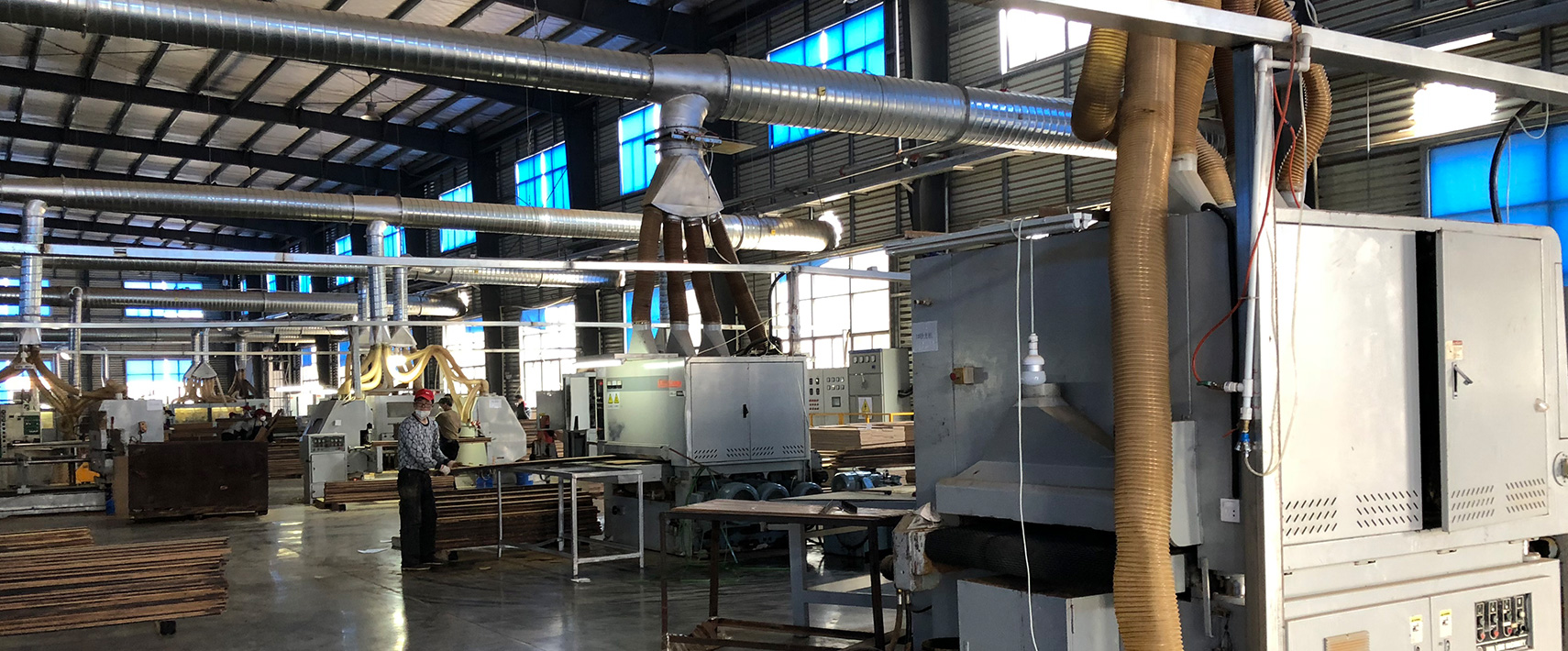
To appreciate the visual differences along the edges of bamboo sheets, it is helpful to look at how these panels are manufactured. Bamboo is not a natural hardwood tree; it is a fast-growing grass. To manufacture structural sheets, raw bamboo culms—typically Moso bamboo—are harvested, split into narrow strips, boiled to remove sugars, dried, and sorted.
These individual strips are then glued together under high pressure using durable adhesives. The arrangement of these strips during the pressing process dictates whether the finished panel becomes horizontal or vertical bamboo plywood:
- Horizontal Bamboo Plywood: The strips are laid flat, side-by-side, exposing the wide outer skin of the bamboo cane.
- Vertical Bamboo Plywood: The strips are turned on edge, standing vertically side-by-side, and pressed together to show a narrower, uniform grain pattern.
Because bamboo plywood is constructed in multi-ply configurations—such as 3-ply, 5-ply, or solid single-ply—the exposed cross-section reveals an intricate, layered sandwich of these oriented strips. This multi-layer construction is where the edge aesthetic truly comes alive.
The Visual Character of Horizontal Bamboo Edges
Horizontal bamboo plywood is known for its organic, traditional appearance on the main face, featuring prominent bamboo nodes or “knuckles” every few inches. However, along the exposed cut edge, horizontal bamboo paneling presents a strikingly bold, geometric rhythm.
In a multi-ply horizontal sheet, the top and bottom face layers display broad bamboo strips laid horizontally, while the inner core layers are often oriented perpendicular or parallel depending on the structural grade. When cut with a sharp carbide saw blade, the edge reveals wide, alternating bands of natural grass fibers and distinct glue lines.
Key aesthetic characteristics of horizontal bamboo edges include:
- Pronounced Strip Thickness: Each horizontal layer appears as a distinct band, typically around 5mm to 6mm thick, creating a chunky, stacked stripe pattern along the cut edge.
- Visible Node Cross-Sections: Where a bamboo node occurs within the strip, the edge reveals a slightly darker, organic swirl through the band, breaking up linear symmetry with a touch of natural variation.
- High Contrast in Multi-Ply Panels: In 3-ply or 5-ply cross-laminated sheets, alternating grain directions between core and face layers produce a checkerboard or block-like edge profile that serves as a decorative feature in its own right.
Designers often choose horizontal bamboo edges when they want the material to clearly communicate its origin. The wide bands make it immediately obvious that the piece is constructed from natural, processed bamboo rather than standard timber.
The Visual Character of Vertical Bamboo Edges
Vertical bamboo plywood offers a refined, minimalist aesthetic that fits effortlessly into Scandinavian, Japandi, and contemporary architectural spaces. Because the bamboo strips are turned sideways before pressing, the face of the board features narrow, tightly packed grain lines without prominent node marks.
Along the exposed edge, vertical bamboo panels create a completely different graphic language compared to their horizontal counterparts:
- Fine, Pinstripe Pattern: The cross-section of a vertical layer displays a series of closely spaced, parallel lines. The individual strips appear much thinner, usually around 3mm to 4mm wide, yielding an elegant pinstripe effect.
- Uniformity and Consistency: Vertical edges show far fewer visible nodes. The line pattern remains remarkably consistent along long spans, making it ideal for streamlined shelving and seamless cabinetry doors.
- Subtle Core Transitions: In multi-ply vertical sheets, cross-laminated core layers show small, tightly grouped end-grain rectangles that contrast smoothly with the straight pinstripes of the top and bottom layers.
The edge of vertical bamboo plywood reads as sophisticated and controlled. It offers a clean, architectural detail that adds texture to minimalist furniture without feeling overly busy or distracting.
Comparing Edge Aesthetics for Specific Furniture Applications
Selecting between horizontal and vertical bamboo edges depends heavily on the scale, style, and functional purpose of the furniture piece.
Tabletops and Desks
Desks and dining tables benefit greatly from exposed, detailed edges.
- Horizontal bamboo edges add character to thick, heavy tops. The wide, alternating bands ground the furniture piece and match well with industrial steel frames or thick wood legs.
- Vertical bamboo edges excel on floating desks, executive workstations, and slim dining tables. The fine pinstripe profile gives thin or medium-thickness tops a sleek, lightweight appearance while retaining solid structural strength.
Cabinetry Doors and Drawer Fronts
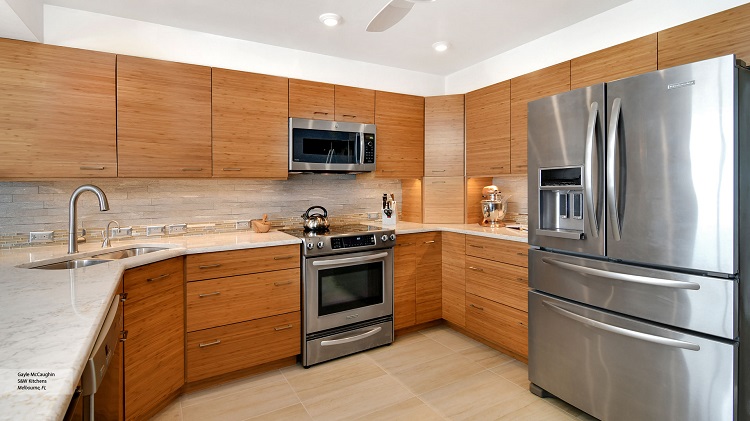
In modern kitchen design and commercial millwork, exposed-edge cabinet doors eliminate the need for PVC or wood edge banding that can peel over time.
- Horizontal edges create a rustic-modern or tropical vibe. The distinct bands make cabinet doors stand out, particularly when paired with bevel cuts or integrated finger pulls.
- Vertical edges are the preferred choice for sleek, handleless cabinet fronts. A routered J-pull or chamfered top edge on a vertical bamboo door creates a subtle, tactile line of fine stripes that catches light softly.
Open Shelving and Bookcases
Shelving systems highlight long horizontal runs of exposed material.
- Horizontal bamboo shelves present a thick, substantial front profile. The alternating layer bands break up long monochromatic walls and pair nicely with warm neutral palettes.
- Vertical bamboo shelves look exceptionally crisp. The dense pinstripes along the front edge maintain a clean horizon line across long shelving runs, making books and displayed decorative items the primary focus.
Finishing and Polishing Exposed Bamboo Edges
Regardless of whether horizontal or vertical bamboo plywood is chosen, proper edge finishing is essential to reveal the true beauty of the material. Unlike standard plywood with softwood cores that leave hollow pockets, high-density bamboo plywood has a solid, continuous core with virtually no voids.
To achieve a professional, furniture-grade finish on exposed bamboo edges, consider these processing steps:
- Precision Cutting: Use a high-tooth-count carbide blade or CNC router bit to achieve clean cuts without chip-out along the delicate bamboo fibers.
- Progressive Sanding: Sand the raw cut edges progressively from 150-grit up to 220-grit or 320-grit. Because bamboo is extremely dense, high-grit sanding polishes the end-grain fibers to a silky smoothness.
- Softening Corners: Apply a subtle micro-bevel or 1/16-inch round-over router bit to soften sharp edges. This prevents splintering and makes tactile surfaces, such as desk edges, comfortable to touch.
- Clear Coating: Apply clear penetrating oils, hardwax oils, or polyurethane. Hardwax oils soak into the dense fibers, darkening the glue lines slightly and making the exposed stripes or pinstripes pop with rich contrast.
Color Considerations: Natural vs. Caramelized Edges
Color processing further influences how horizontal and vertical bamboo edges look in finished furniture. Bamboo plywood generally comes in two primary natural shades:
- Natural (Blonde): The raw bamboo retains its pale yellow, birch-like color. Along the edge, the contrast between the light fibers and the dark adhesive lines is sharp, highlighting the geometric strip pattern.
- Caramelized (Amber/Carbonized): The bamboo is steam-heated under pressure, caramelizing the natural sugars in the grass fibers to produce a rich, warm brown color that runs entirely through the material. Along the edge, caramelized horizontal and vertical layers offer a darker, subtle tone that mimics exotic hardwoods like teak or walnut.
Mixing natural and caramelized layers within custom multi-ply panels is another option that millwork shops use to create striking, multi-colored edge stripes for custom furniture.
Complementary Materials in Modern Interiors
Both horizontal and vertical bamboo plywood pair effortlessly with common modern building materials.
- Matte Laminates and Linoleum: Combining a matte black or white laminate surface with exposed vertical bamboo edges creates a classic Mid-Century Modern or Scandinavian aesthetic. The matte surface keeps the piece simple, while the exposed pinstripe edge adds warmth and organic texture.
- Powder-Coated Metal: Black steel or aluminum frames contrast beautifully against warm horizontal bamboo edges. The industrial feel of metal frames pairs naturally with the bold, chunky bands of horizontal bamboo strips.
- Concrete and Stone: In kitchens or office environments featuring concrete floors or quartz counter space, vertical bamboo edges soften the coldness of hard stone surfaces while keeping the design clean and structured.
Making the Right Choice for Your Design Project
Choosing between horizontal and vertical bamboo plywood ultimately comes down to the desired scale, texture, and visual impact of the exposed edges.
If the design goal is to highlight natural grass characteristics, showcase bold geometric striping, and build warm, organic furniture with high visual presence, horizontal bamboo plywood delivers a timeless look.
If the intent is to create streamlined, contemporary pieces with fine architectural details, tight linear patterns, and minimalist sophistication, vertical bamboo plywood offers an unbeatable pinstripe cross-section.
By leaving the cut edges of either panel type raw, finely sanded, and oiled, designers celebrate the authentic internal structure of bamboo, creating durable, sustainable furniture that stands out through honest material expression.