The Science of Strand Woven Bamboo Decking: How It Outlasts Traditional Timber

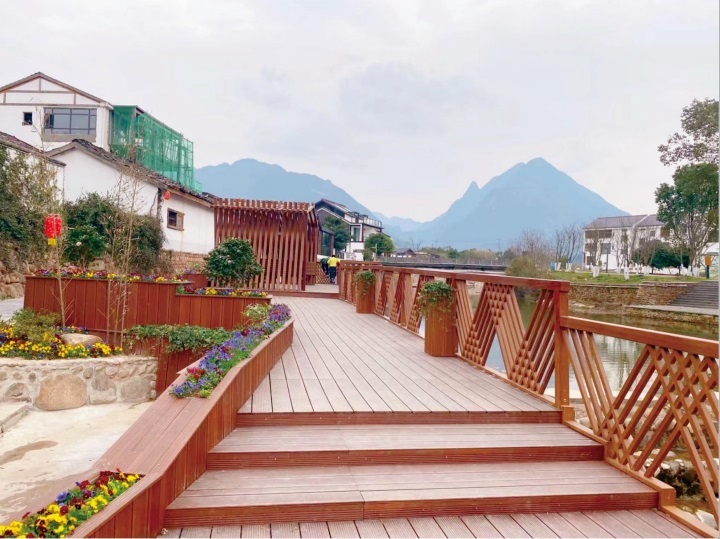
Outdoor decking spaces face relentless environmental challenges. Day after day, exterior materials endure intense ultraviolet radiation, drastic temperature fluctuations, persistent rain, humidity, and constant foot traffic. While traditional hardwoods like i teak, ipê, and cedar have historically dominated high-end outdoor construction, their long-term performance comes at a steep maintenance cost. Natural timber expands, warps, checks, splits, and rots as moisture penetrates its organic fiber structure.
Over the past two decades, advanced material engineering has yielded a dramatic structural alternative: strand woven bamboo decking. Far from raw natural bamboo poles or basic laminated bamboo strips, strand woven bamboo is a hyper-dense, high-tech composite material engineered specifically to survive harsh exterior environments. By breaking down natural bamboo culms into loose fibers and fusing them back together under extreme thermal and mechanical pressures, manufacturers create a material that outperforms even the densest tropical hardwoods in strength, dimensional stability, and weather resistance.
Understanding the underlying material science reveals why strand woven bamboo has become a preferred choice for commercial boardwalks, luxury residential decks, and high-traffic public venues across the globe.
The Raw Material Advantage: Bamboo Growth Physiology
To appreciate the structural characteristics of strand woven bamboo, one must first look at the unique cellular structure of the raw plant. Most commercial structural bamboo products rely on a specific species: Phyllostachys edulis, commonly known as Moso bamboo.
Unlike hardwood trees that require fifty to one hundred years to reach maturity, Moso bamboo is a fast-growing giant grass that reaches its full height of up to twenty meters within a single growing season. Over a five-to-six-year period, the bamboo culm undergoes a process called lignification. During this time, the cell walls thicken, and natural lignin deposits accumulate inside the fibers, giving the mature stalks remarkable tensile strength.
When harvested at the five-year mark, Moso bamboo possesses a natural tensile strength that rivals mild steel. However, in its natural tubular state, raw bamboo cannot be used directly for flat, wide decking planks. Traditional methods involved cutting the hollow stalks into flat rectangular strips and gluing them side-by-side. While effective for indoor flooring, laminated strips retain the plant’s natural cellular orientation, leaving internal channels where moisture can migrate, causing swelling and delamination when exposed to rain and sun. Strand woven technology was developed specifically to overcome these natural structural limitations.
The Manufacturing Process: Re-Engineering the Fiber Matrix
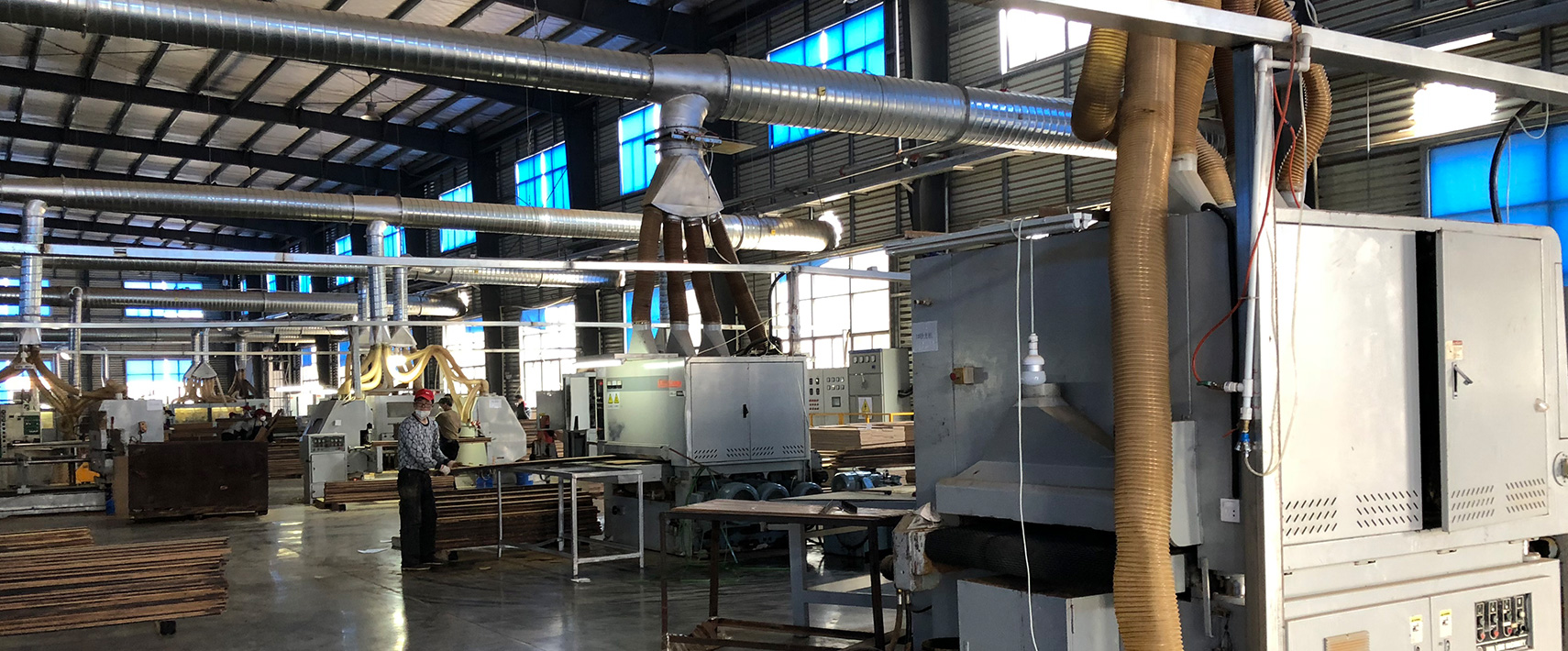
The production of strand woven bamboo decking is an intensive multi-step thermo-mechanical process designed to destroy the natural weak points of the raw plant and reconstruct a completely homogenized material.
Fiber Shredding and Separation
The manufacturing process begins by stripping the outer green skin and inner soft nodes from mature bamboo logs. The remaining dense wall section is crushed and shredded longitudinally into long, rough fiber strands. Rather than cutting neat, uniform boards, the machine pulls apart the vascular bundles, creating an interconnected mesh of loose bamboo filaments. This step breaks open the natural cell walls and exposes the internal fibers completely.
Thermal Modification and Carbonization
Raw bamboo contains naturally occurring starches, sugars, and moisture. In untreated wood or raw bamboo, these starches serve as an abundant food source for decay fungi, mold spores, and wood-boring insects. To render the material completely immune to biological attack, the shredded bamboo strands undergo a specialized thermal treatment process known as carbonization or caramelization.
The fiber strands are placed inside high-pressure steam vessels or dry heat chambers and heated to temperatures between 180 and 220 degrees Celsius. This intense heat alters the chemical composition of the bamboo on a molecular level:
- Sugars and starches are pyrolyzed and broken down entirely, removing any nutrient source for fungi and termites.
- The natural hemicellulose inside the cell walls degrades, significantly reducing the fiber’s capacity to absorb water molecules.
- The bamboo takes on a rich, dark brown, or espresso color that penetrates completely through the full thickness of the fiber strands rather than sitting merely on the surface.
This thermal modification step is critical. Without deep carbonization, any organic material exposed to rain and soil contact would decay over time.
Phenolic Resin Impregnation
Once carbonized and dried, the loose fiber meshes are immersed in specialized thermosetting resins, typically phenolic resins. Unlike basic adhesives that sit on top of wood surfaces, phenolic resin deeply saturates the microscopic porous spaces within the heat-treated bamboo fibers.
Phenolic resins are chosen for their exceptional water resistance, thermal stability, and structural strength once cured. The resin acts as an impermeable barrier coating each individual strand, preventing water molecules from binding to the remaining cellulose molecules.
High-Pressure Cold or Hot Compression
The saturated, resin-coated fiber strands are aligned longitudinally into massive heavy-duty steel molds. A super-heavy hydraulic press then exerts immense pressure on the material—often exceeding 2,000 to 3,000 tons of force.
Under this extreme mechanical force, the loose fiber strands are crushed, compressed, and compacted until virtually all air pockets and internal voids are eliminated. Heat is applied to cure the resin while the material remains under compression, permanently locking the dense web of interwoven fibers into a solid, solid block or beam.
The resulting material exhibits a density exceeding 1,200 kilograms per cubic meter. For comparison, traditional oak has a density of roughly 700 kilograms per cubic meter, and even dense tropical ipê wood sits around 1,050 kilograms per cubic meter.
Precision Machining and Surface Profiling
Once cured, the dense bamboo blocks are sawn into individual decking planks using specialized diamond-tipped saw blades. Because the material is so hard, standard woodworking tools are completely insufficient. The planks are machined with side grooves for hidden fastener systems and surface profiles such as smooth finishes, deep grooves, or subtle wave textures. Finally, an exterior-grade protective oil is applied to seal the surface against early sunlight exposure.
Key Performance Metrics: Bamboo vs. Traditional Timber
The radical re-engineering of bamboo fibers into a dense composite matrix translates directly into physical performance advantages on the job site. Evaluating how strand woven bamboo responds to real-world stressors highlights why it outlasts traditional timber species.
Density and Structural Hardness
Hardness measures a material’s resistance to indentation, wear, and impact damage from heavy furniture, high heels, and pet claws. In the flooring industry, hardness is commonly evaluated using the JANKA hardness scale.
Traditional softwoods like cedar or pressure-treated pine register low on the scale, often under 900 pounds-force, making them susceptible to deep scratches and denting. Premium hardwoods like ipe are famous for their toughness, rating around 3,680 pounds-force.
Strand woven bamboo decking routinely achieves JANKA hardness ratings between 3,800 and 4,000 pounds-force. The dense interlocking network of resin-infused strands creates an ultra-tough surface that resists heavy impacts, scuffing, and commercial foot traffic without crushing or indenting.
Dimensional Stability and Moisture Resistance
The most significant cause of deck failure in natural timber is volumetric expansion and contraction. Wood is a hygroscopic material; it absorbs moisture from humid air or rain, causing the wood cells to swell across their grain. When the sun dries the deck out, the wood shrinks. This constant cycle of expansion and contraction creates internal stresses that lead to warping, cupping, twisting, and surface checking (cracking).
Strand woven bamboo achieves exceptional dimensional stability through two distinct mechanisms:
- Destruction of grain orientation: In a natural timber board, wood cells run parallel, creating distinct directional planes where swelling occurs easily. In strand woven bamboo, the fibers are crushed, interwoven, and saturated with resin, destroying the continuous directional pathways that draw water through a board via capillary action.
- Hydrophobic chemistry: Thermal carbonization degrades the hydrophilic hydroxyl groups inside the cellulose, while cured phenolic resin blocks microscopic pores.
Because water cannot penetrate deeply into the dense matrix, strand woven bamboo experiences negligible swell and shrinkage rates. Planks remain flat and true, maintaining tight butt-joints and consistent gap spacing between boards year after year.
Class A Fire Resistance
For properties built in wildland-urban interface zones or high-density commercial developments, fire resistance is a critical building code requirement. Un-treated timber is naturally combustible, requiring expensive topical chemical sprays to achieve basic fire ratings.
Due to its extreme density and the inclusion of fire-retardant phenolic resins, high-quality strand woven bamboo decking naturally achieves a Class A flame spread rating under ASTM E84 testing standards. It resists ignition, generates minimal smoke, and slows flame spread, meeting stringent building safety mandates without requiring secondary chemical coatings.
Resistance to Rot, Mold, and Insects
For wood to rot, decay fungi require three conditions: moisture, oxygen, and a nutrient source (cellulose and sugars). Traditional timber relies on natural extractives or chemical pressure treatments to ward off fungal spores.
Strand woven bamboo eliminates the nutrient source entirely during the high-temperature carbonization phase. Fungi and termites cannot feed on the heat-modified, resin-encapsulated fibers. As a result, strand woven bamboo decking achieves the highest durability classification (Class 1 durability under EN 350 standards), ensuring decades of service life even in warm, humid, or rainy climates.
Environmental Sustainability and Eco-Balance
Beyond pure physical performance, strand woven bamboo provides an exceptionally strong ecological profile compared to slow-growing hardwoods.
Harvesting old-growth tropical hardwoods like ipê or teak contributes to deforestation, soil erosion, and habitat destruction in sensitive rainforest ecosystems. Because tropical trees take up to a century to mature, replacing a harvested tree requires generations.
Conversely, Moso bamboo is a giant grass that regenerates naturally after harvesting. When a mature five-year-old bamboo stalk is cut, the underground root system (rhizome) remains alive and active. New shoots emerge from the soil during the next rainy season and grow back to full height within months without requiring re-planting, artificial fertilizers, or intensive irrigation.
Furthermore, because bamboo grows so rapidly, a managed bamboo forest sequesters significantly more carbon dioxide over a given timeframe than a comparable stand of hardwood trees. The carbon absorbed during the plant’s growth remains locked inside the dense strand woven decking board for its entire operational lifecycle, resulting in a carbon-neutral or even carbon-negative footprint from forest to finished product.
Long-Term Maintenance Practices
While strand woven bamboo is engineered for extreme durability, all exterior materials exposed to outdoor conditions require basic care to maintain their aesthetic appeal.
UV Light and Color Evolution
Like any natural plant material, strand woven bamboo contains lignin that reacts to ultraviolet sunlight. Over time, exposure to un-shielded sunlight will cause the rich initial dark brown color to weather gracefully into a soft silver-grey patina.
This color shift is purely cosmetic and does not indicate structural breakdown or rot. For property owners who prefer the weathered silver aesthetic, the deck can be left to age naturally with only routine cleaning.
Retaining Original Color
For those who wish to maintain the deep, rich brown tones of newly installed bamboo, simple periodic maintenance is required:
- Regular Cleaning: Sweep away leaves, dirt, and organic debris that trap moisture on the board surface. Wash the deck periodically with water and a soft-bristle brush.
- Penetrating Exterior Oils: Every one to two years, apply a coat of breathable, exterior-grade penetrating oil formulated for high-density hardwoods or bamboo. The oil replenishes UV-blocking pigments and keeps the surface rich and hydrophobic.
Because the planks do not splinter, cup, or check, refinishing strand woven bamboo requires far less labor than sanding down a rough, warped timber deck.
A Superior Standard for Outdoor Living
Selecting the right material for an outdoor deck requires balancing aesthetics, initial costs, long-term maintenance requirements, and structural reliability. Traditional timber, while classic in appearance, carries intrinsic physical limitations that lead to splitting, rotting, and high upkeep demands over time.
Strand woven bamboo decking represents a triumph of modern material engineering. By combining the rapid natural growth and inherent tensile strength of Moso bamboo with advanced carbonization and high-pressure resin compression, manufacturers have created a material that redefines performance standards for exterior construction.
With its incredible JANKA hardness, Class A fire safety, superior dimensional stability, and proven resistance to rot and insects, strand woven bamboo delivers an unmatched combination of longevity, safety, and luxury aesthetic appeal. For commercial developers and homeowners seeking a sustainable, high-performance decking solution built to endure decades of severe weather, strand woven bamboo stands out as the ultimate modern alternative to traditional timber.