Natural Bamboo Plywood for Eco-Friendly Cabinetry: Sustainable Interior Design Strategies

Interior design continues to lean heavily toward sustainable practices and environmentally conscious material choices. Natural bamboo plywood has emerged as a premier option for custom cabinetry, offering a compelling alternative to traditional hardwoods and synthetic composites. Selecting the right materials forms the foundation of responsible building, and architects and designers are actively seeking out resources that balance ecological responsibility with high-end aesthetic appeal.
Bamboo plywood delivers on all fronts, providing exceptional structural stability, a clean and modern visual profile, and impressive environmental credentials. Utilizing this material for cabinetry requires an understanding of its unique physical properties, aesthetic strengths, and fabrication nuances.
The Environmental Imperative
The push for greener building practices places intense scrutiny on the lifecycle of interior finishes. Traditional hardwood harvesting often involves decades-long growth cycles and complex forestry management challenges. Bamboo offers a radically different biological model.
Rapid Regeneration
Technically a fast-growing grass rather than a tree, bamboo reaches full maturity and structural hardness in just five to seven years. This rapid growth cycle allows for frequent harvesting without depleting the natural resource. Furthermore, harvesting bamboo does not kill the plant. The extensive root system remains completely intact in the soil, immediately sending up new shoots. This continuous regeneration prevents soil erosion, maintains local ecosystem stability, and ensures a steady supply of raw material without the need for replanting.
Carbon Sequestration
During its rapid growth phase, bamboo absorbs substantial amounts of carbon dioxide while releasing oxygen into the atmosphere. The carbon remains locked within the cellular structure of the material even after it is harvested, processed, and installed as cabinetry in a home or commercial space. Building with bamboo effectively stores carbon long-term, contributing positively to the overall carbon footprint of an architectural project.
Anatomy of the Material
Understanding how bamboo plywood is manufactured helps designers leverage its strengths in cabinetry applications. The process begins by slicing mature bamboo stalks into uniform strips. These strips are boiled to remove natural sugars, a crucial step that permanently deters pests and increases the material’s longevity.
The strips are then kiln-dried and laminated together under extreme pressure using specialized adhesives. The orientation of these strips dictates both the appearance and the structural behavior of the final panel.
Grain Orientation
Designers can choose between vertical grain and horizontal grain panels. Horizontal grain showcases the natural nodes or “knuckles” of the bamboo stalk, providing a very organic, botanical appearance. Vertical grain, created by turning the strips on their narrow edge before pressing, results in a clean, linear, and uniform texture. Natural bamboo, which is left unsteamed, retains a bright, blonde color that reflects light beautifully and makes interior spaces feel larger and more open.
Cross-Ply Construction
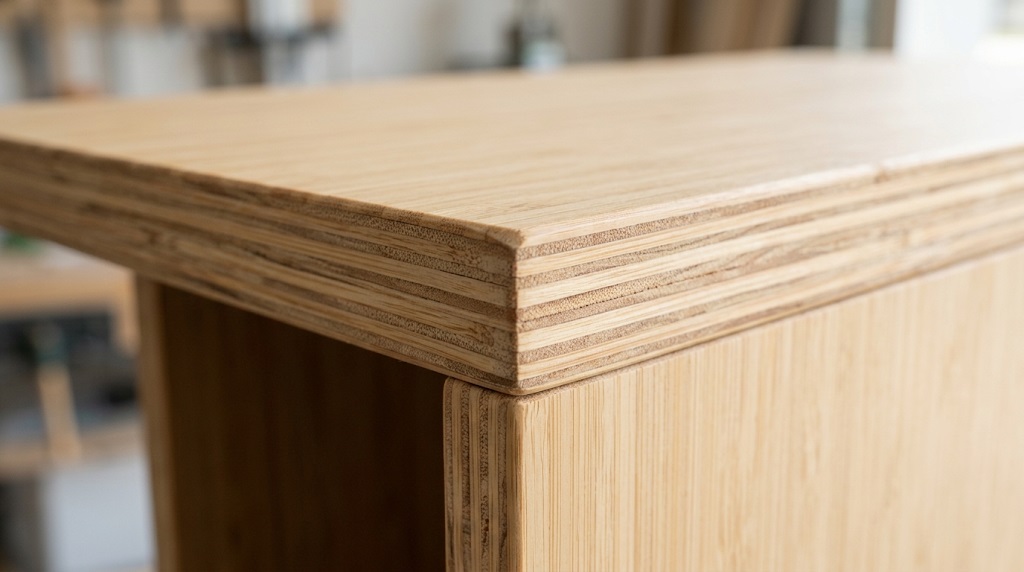
High-quality bamboo plywood used for cabinetry is constructed using a cross-ply lamination method. The inner core layers are laid perpendicular to the face layers. This alternating grain direction mirrors the construction of traditional hardwood plywood and provides immense dimensional stability.
Structural Integrity
Cabinets endure constant daily use. Doors are repeatedly opened and closed, drawers are loaded with heavy items, and the structural boxes must support the weight of stone or concrete countertops.
Dimensional Stability
Because of the cross-laminated construction, bamboo plywood resists the standard seasonal expansion and contraction that plagues solid wood doors. In environments with fluctuating humidity, a well-sealed bamboo cabinet door is far less likely to warp, cup, or twist over time. This stability is critical for modern inset cabinetry designs, where maintaining precise, uniform gaps between doors and face frames is necessary for a clean look.
Exceptional Hardness
Bamboo possesses remarkable density. Its cellular structure gives it a hardness rating that often exceeds familiar cabinet woods like oak, maple, or cherry. This inherent density means that cabinet faces made from bamboo plywood are highly resistant to the dents, dings, and impacts that inevitably occur in busy households and commercial environments.
Design Aesthetics
Natural bamboo plywood aligns perfectly with several prominent interior design movements. Its light, optimistic color palette and linear textures make it highly adaptable.
Minimalist Approaches
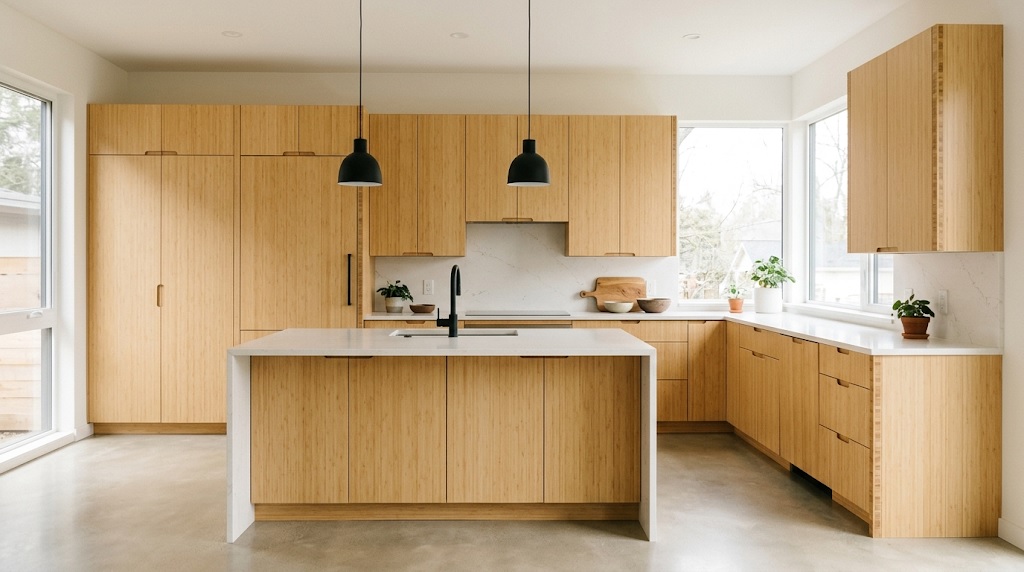
The clean lines of vertical grain bamboo fit seamlessly into minimalist, Scandinavian, and Japandi design schemes. These styles prioritize uncluttered spaces, functional forms, and a strong connection to natural materials. Flat-panel (slab) cabinet doors made from natural bamboo provide a smooth, uninterrupted visual plane that feels highly contemporary. The blonde tones pair exceptionally well with matte black hardware, brushed brass fixtures, or integrated, handle-less opening mechanisms.
The Exposed Edge
One of the most distinct architectural features of bamboo plywood is its layered edge. Unlike MDF or particleboard, which require edge-banding or solid wood trim to hide the unsightly core, bamboo plywood features a beautiful, multi-layered edge grain that designers actively want to show off.
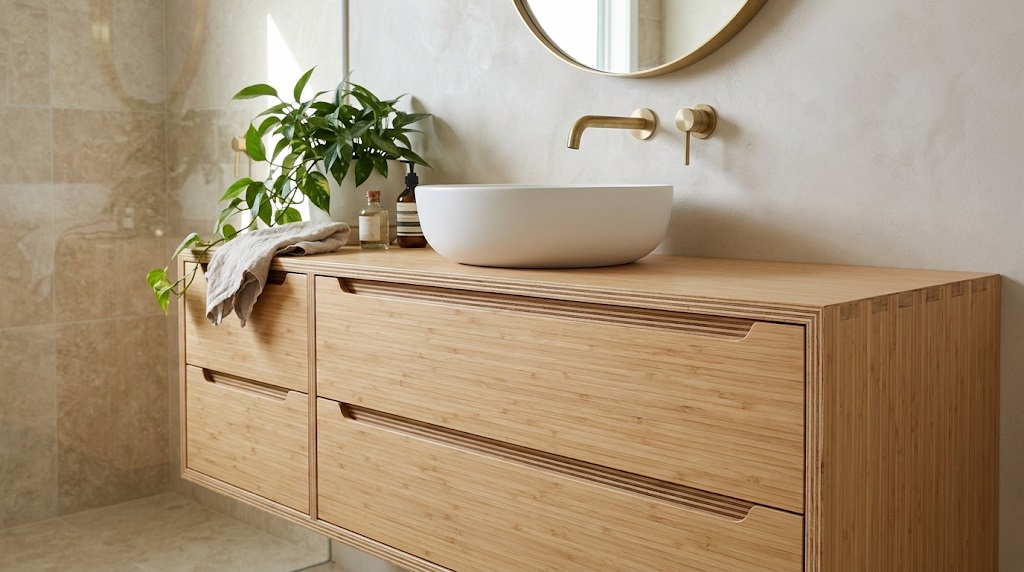
Routing finger pulls directly into the top of a drawer face exposes these laminations, creating a striking striped detail. Leaving the edges of floating shelves or open cabinet boxes exposed celebrates the honest construction of the material and adds a layer of bespoke craftsmanship to the space.
Strategic Applications
The versatility of this material allows it to be specified across almost every room in a residential or commercial building.
Kitchen Environments
In the kitchen, natural bamboo brings warmth to what is often a cold, appliance-heavy space. Full floor-to-ceiling pantry walls finished in natural bamboo create a stunning architectural focal point. For a balanced look, designers frequently use bamboo for the lower base cabinets and kitchen islands, while keeping upper cabinets painted white to maintain a bright, airy feeling. The structural strength of 3/4-inch bamboo plywood makes it excellent for building the internal cabinet boxes themselves, offering a premium upgrade over standard melamine interiors.
Bathroom Vanities
Bathrooms require materials that can handle higher moisture levels. A floating vanity constructed from natural bamboo plywood adds a luxurious, spa-like atmosphere to the room. The organic material softens the hard surfaces of ceramic tiles, glass shower enclosures, and porcelain sinks. When properly finished with high-quality water-resistant sealants, bamboo holds up exceptionally well in bathroom environments.
Commercial Workspaces
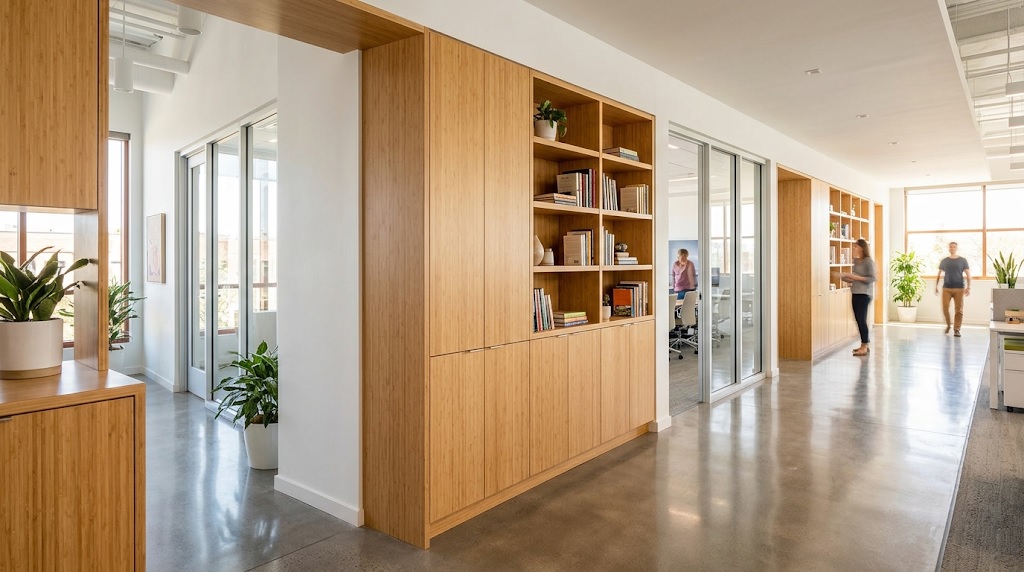
Corporate offices, retail stores, and hospitality venues frequently utilize bamboo cabinetry to signal a commitment to sustainability. Built-in storage walls, reception desks, and employee break room cabinetry made from bamboo withstand heavy commercial use while maintaining a sophisticated appearance.
Fabrication Best Practices
Working with bamboo plywood requires some specific considerations during the fabrication process to ensure professional results.
Cutting Machinery
Because of the high density and the heavy resins used during pressing, bamboo can be tough on tooling. Cabinet makers must use high-quality, sharp, carbide-tipped saw blades and router bits. A blade with a high tooth count is necessary to achieve clean crosscuts and prevent the surface fibers from tearing out or splintering. Feeding the material through saws at a steady, moderate pace prevents the dense wood from burning due to friction.
Fastening Systems
The density that makes bamboo durable also means that pre-drilling is absolutely mandatory. Attempting to drive a screw directly into bamboo plywood without a pilot hole will almost certainly cause the material to split. However, once properly pre-drilled, the screw-holding power of bamboo is outstanding, ensuring that hinges, drawer slides, and architectural hardware remain firmly attached for decades.
Finishing Techniques
To preserve the bright, natural blonde color of the bamboo, finishers typically rely on water-based clear coats or specialized hardwax oils. Oil-based polyurethanes tend to impart an amber or yellow hue that darkens over time, which can detract from the crisp, modern look of the natural panel. Water-based finishes keep the color light and neutral while providing excellent protection against stains and moisture.
Indoor Air Quality
Sustainable interior design goes beyond just the origin of the raw materials; it also encompasses the health of the indoor environment. The adhesives used to laminate plywood panels historically contained high levels of volatile organic compounds (VOCs).
Low Emission Standards
When specifying bamboo plywood for cabinetry, designers look for panels manufactured with urea-formaldehyde-free adhesives. High-quality architectural bamboo panels are strictly regulated and tested to ensure minimal off-gassing. This protects the indoor air quality of the home or office, making the space safer for occupants and meeting strict green building standards.
Environmental Certifications
Many bamboo plywood products contribute to LEED (Leadership in Energy and Environmental Design) certification points. Verifying that the material holds independent environmental certifications ensures that the entire supply chain, from the bamboo forest to the manufacturing facility, adheres to rigorous ecological and ethical standards.
Maintenance and Longevity
Investing in custom cabinetry requires an understanding of long-term care to keep the installation looking pristine.
Routine Cleaning
Natural bamboo cabinetry is remarkably easy to maintain. Dusting with a soft microfiber cloth handles everyday upkeep. For heavier cleaning, wiping the cabinets down with a damp cloth and a mild, non-abrasive soap is sufficient. It is crucial to avoid harsh chemical cleaners, ammonia, or abrasive scrubbing pads, as these will degrade the protective clear coat over time.
Managing Moisture
While bamboo is resilient, standing water should never be left on the surface of any wood or grass-based cabinet. Spills should be wiped up promptly, particularly around sink bases and dishwashers, to prevent moisture from seeping into the seams or hardware holes.
Refinishing Possibilities
Unlike cabinets wrapped in vinyl thermofoil or thin melamine papers, bamboo plywood is a solid, substantial material. If the surface becomes deeply scratched or the finish wears down after years of heavy use, the cabinet faces can be lightly sanded and completely refinished. This lifecycle adaptability prevents the cabinets from ending up in a landfill, ensuring they can serve the space for generations.
Implementing natural bamboo plywood into interior layouts represents a highly effective approach to sustainable design. By leveraging its rapid renewability, exceptional strength, and clean aesthetic, design professionals can build spaces that respect ecological boundaries while delivering uncompromising architectural quality.