Bamboo Plywood: The Complete Guide to Manufacturing, Colors, Structure, and Technical Data

Bamboo plywood starts with a grass, not a tree. Moso bamboo matures in four to six years and regenerates from the same root system after every harvest, yet the finished panel behaves like premium hardwood: dense, dimensionally stable, moisture-resistant, and completely free of knots.
It is also built differently from bamboo flooring and decking. Those products compress woven strands into solid boards; bamboo plywood is a true sheet material — sliced bamboo faces bonded to a cross-laminated strip core in three-ply and five-ply H-shape panels. The core carries load in two directions, so the sheet stays flat across wide spans. That is why it has become a favorite for cabinetry, tabletops, doors, wall panels, and marine interiors.
Why Choose Bamboo Plywood
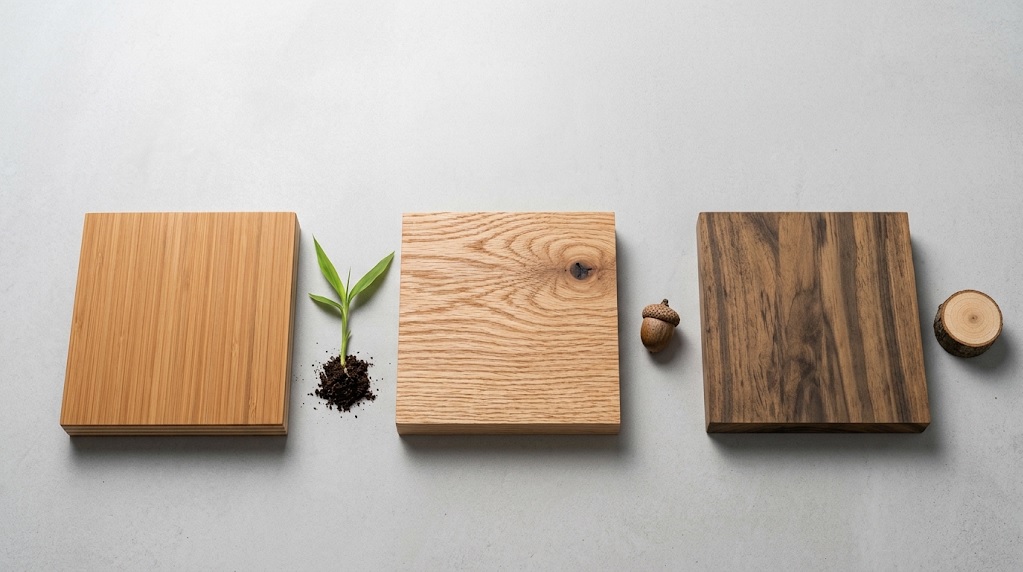
It renews in years, not generations. Moso bamboo (Phyllostachys edulis) is ready to harvest in four to six years and regrows from the same root system after every cut — no replanting, no clear-cut land. An oak needs 60 years or more to reach the same size. Choosing bamboo takes pressure off slow-growing forests without asking you to give up anything in performance.
It works like hardwood, without hardwood’s defects. A bamboo culm grows straight, its fibers running the full length of the stem, with no knots and no branches in the section that becomes panel. The result is a clean, even face that solid wood rarely delivers — and because the core is built from dimensionally controlled strips rather than random veneer, thickness holds to ±0.5 mm across a full 2,440 mm sheet, batch after batch. That is the consistency a furniture production line depends on: every door aligns, every joint closes.
The color is in the material, not on it. Bamboo’s tones come from heat treatment during manufacturing, not from staining the surface. Carbonization darkens the fiber all the way through, so a scratch or a light sanding reveals the same color underneath — a finish that stays true for the life of the panel.
Bamboo vs. Traditional Wood
| Moso Bamboo | Oak | Tropical Hardwood | |
|---|---|---|---|
| Time to harvest | 4–6 years | 60–80 years | 50–100+ years |
| Regrows after cutting | Yes, from the same roots | No — must be replanted | No — often not replanted |
| Knots in the material | None | Common | Common |
| Panel thickness consistency | ±0.5 mm across the sheet | Varies with the log | Varies with the log |
| Color consistency between batches | High — color-sorted before pressing | Moderate | Moderate to low |
Bamboo Plywood Production
| Premium Raw Materials | Advanced Processing | Fine Quality Control |
|---|---|---|
 |
 |
 |
 |
 |
 |
 |
 |
 |
 |
 |
 |
 |
 |
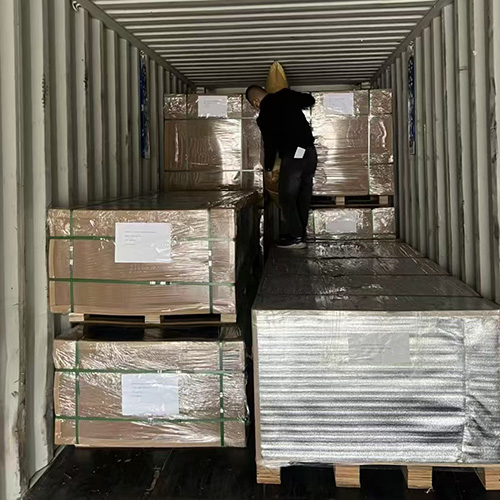 |
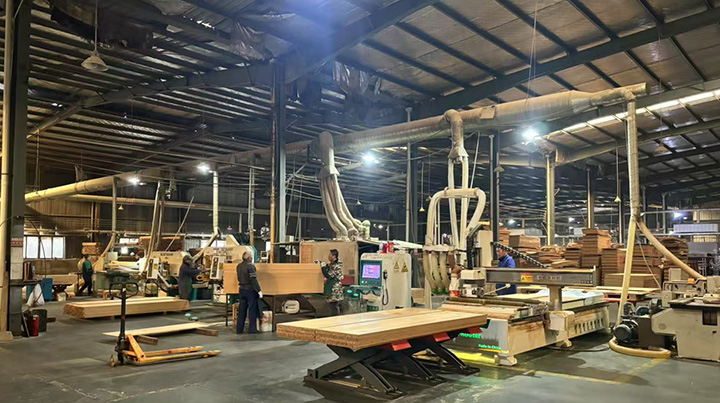
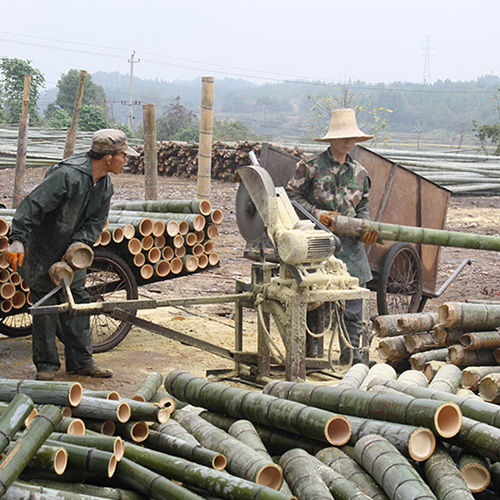
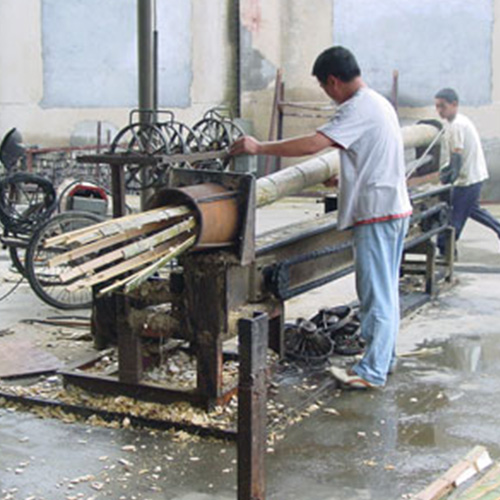
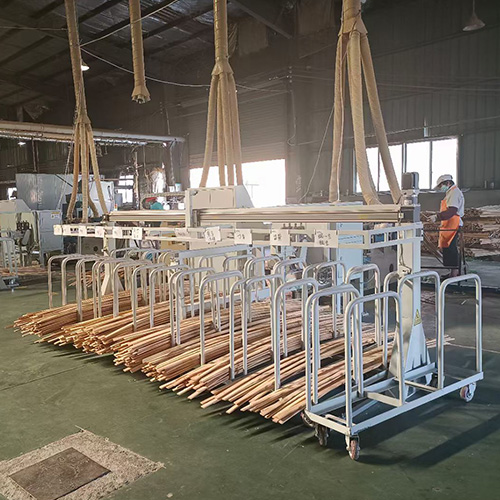
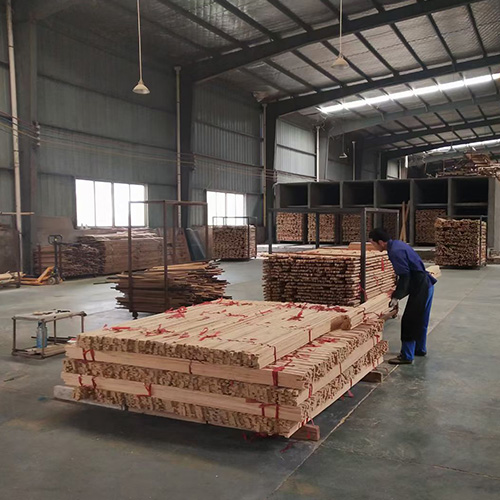
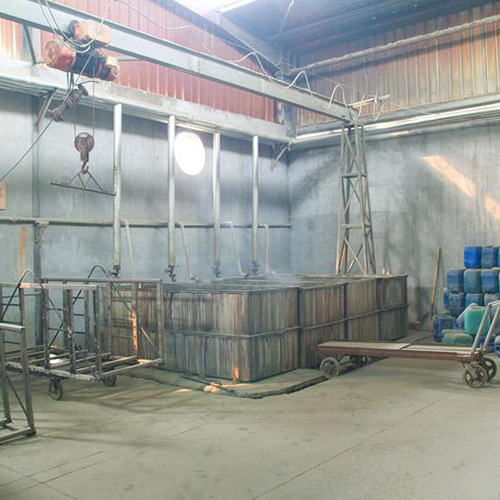
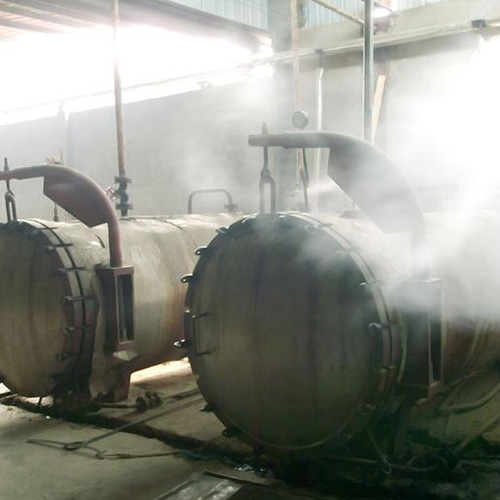
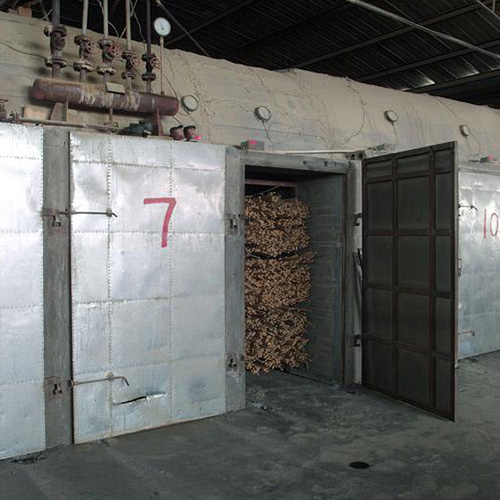
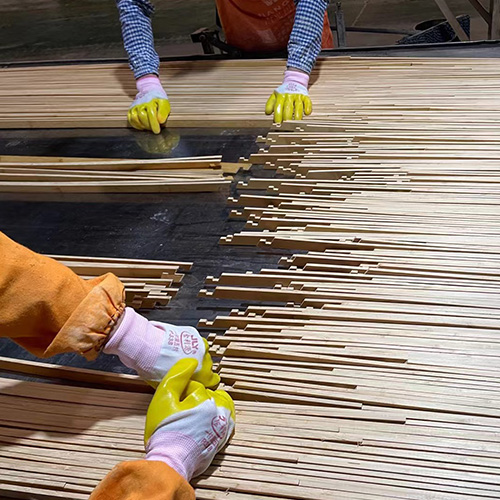
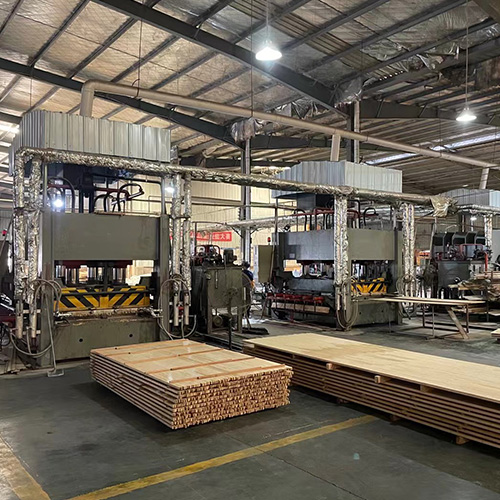
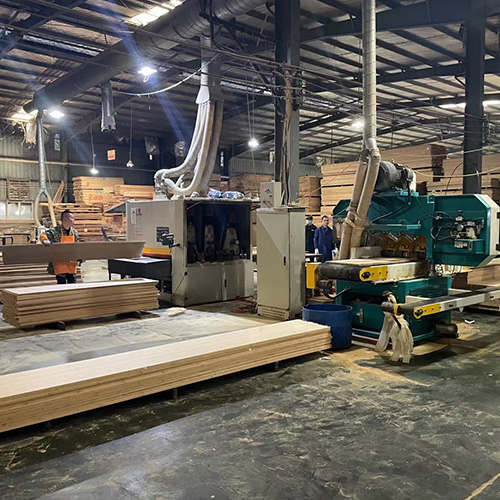
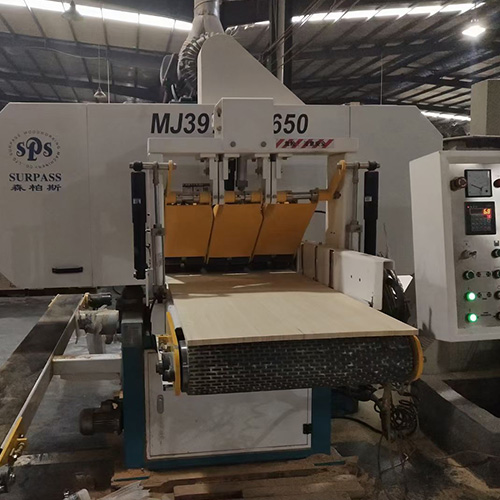
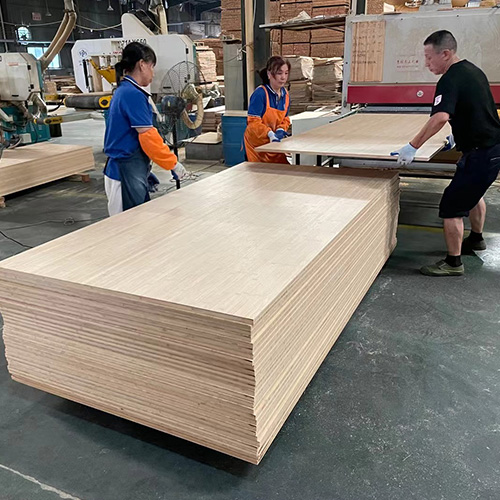
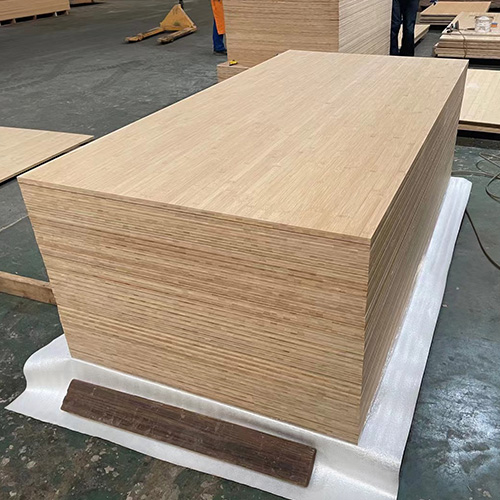
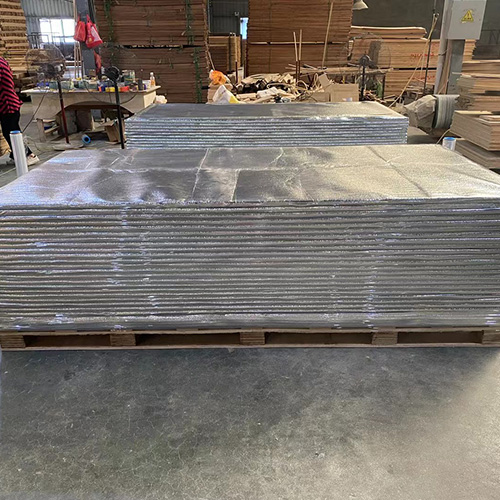
Every panel passes through the same twelve stations, and each one exists to remove a specific weakness from the raw bamboo. Boiling strips out the starch and sugars that attract insects, kiln drying locks in dimensional stability, and the 900-ton hot press cures the bond that holds the cross-laminated core together. Rush any of these steps and the panel pays for it later, in service.
Bamboo Plywood Colours
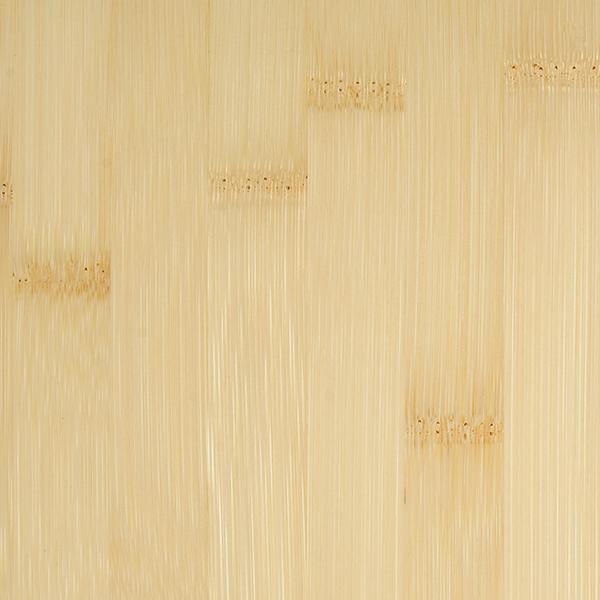
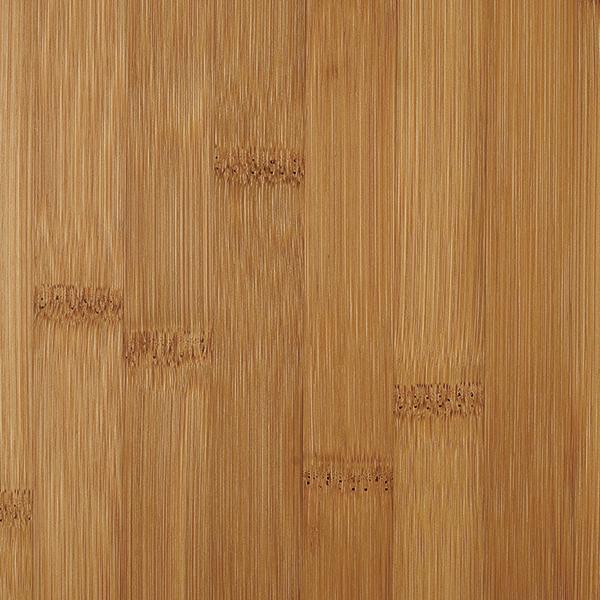
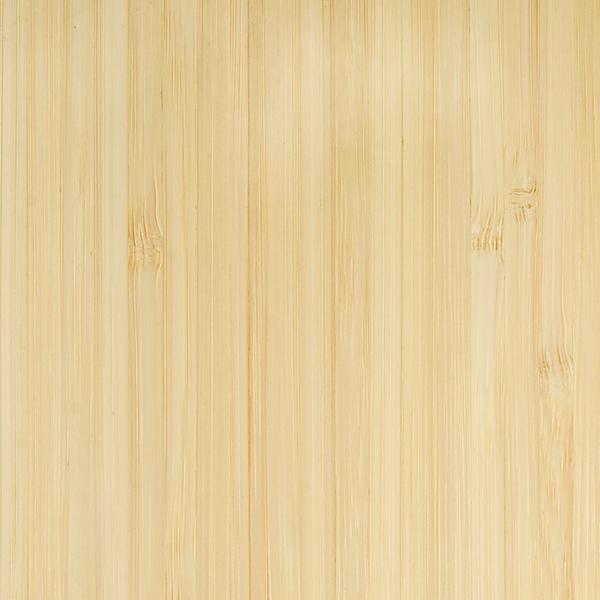
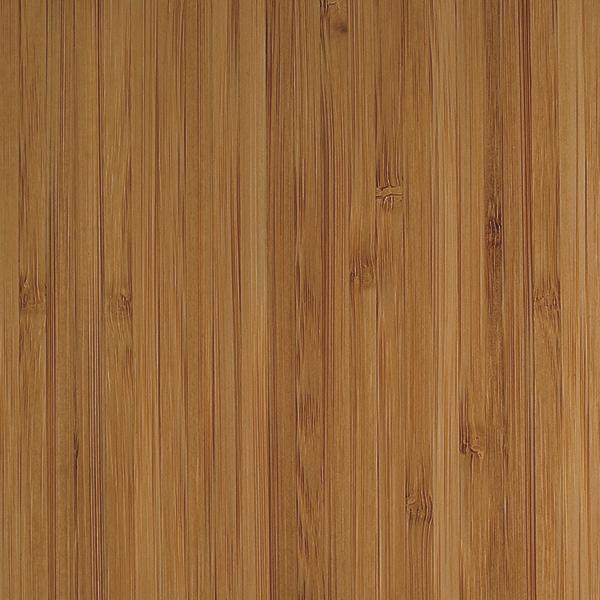
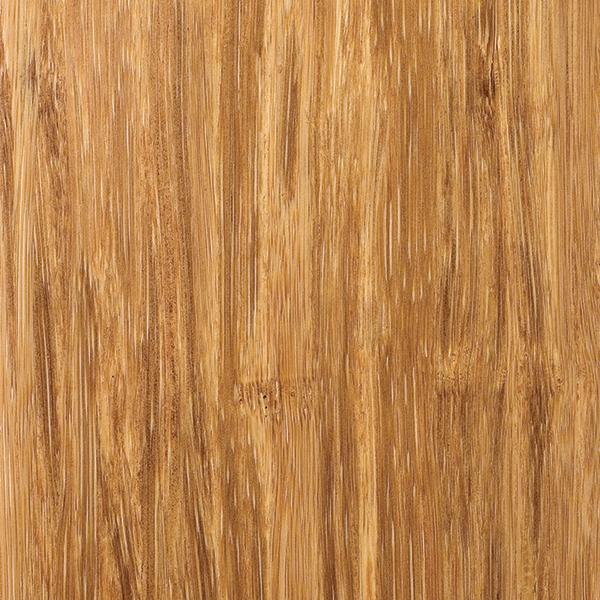
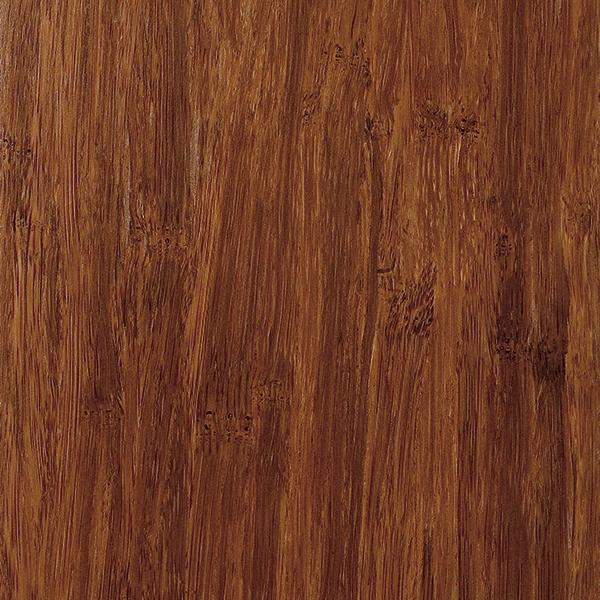
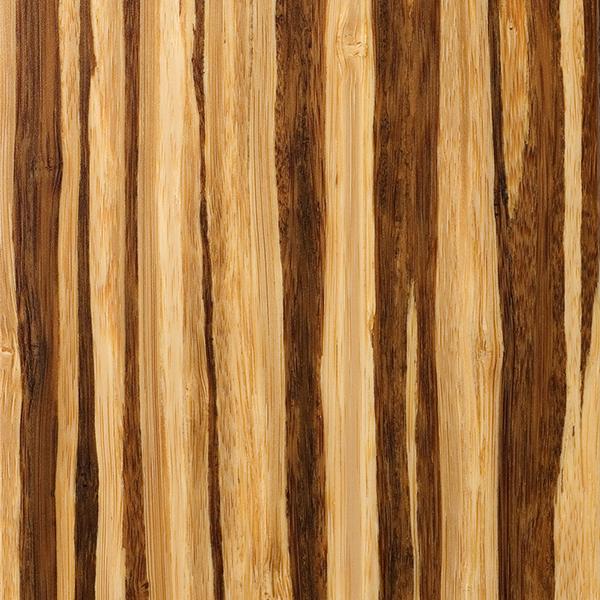
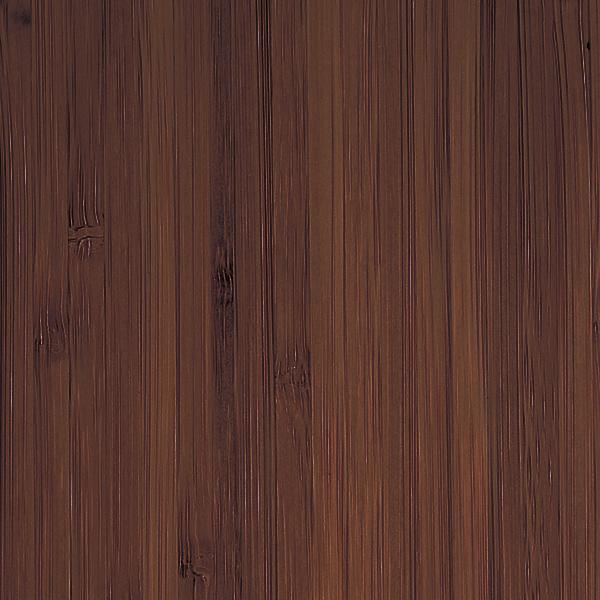
Color changes a room faster than almost anything else, and bamboo plywood offers more usable range than most hardwood veneers — because the tones are created by processing the fiber itself, not by staining a surface. These are the eight standard factory colours, photographed from production samples.
| Horizontal Natural | Horizontal Caramel |
|---|---|
 |
 |
| Vertical Natural | Vertical Caramel |
|---|---|
 |
 |
| Strand Natural | Strand Caramel |
|---|---|
 |
 |
| Strand Tiger | Vertical Chocolate |
|---|---|
 |
 |
- Horizontal faces show the bamboo grain running across the width of the sheet. The grain lines read as long, continuous horizontal streaks.
- Vertical faces show the grain running along the length of the sheet, producing a more varied, cathedral-like figure.
- Strand faces are built from woven bamboo strands rather than a continuous sliced veneer, giving a fine, textured, highly directional surface that reads almost like rattan or woven cane. Strand faces take a sanding and oil finish beautifully because the woven texture catches light.
- Natural is the color of the bamboo as it comes out of the process, a pale straw to light honey, and it is the brightest option in the range.
- Caramel is the carbonized tone, produced by heat treatment. It is warmer, deeper, and more uniform in appearance because carbonization removes much of the natural tonal variation.
- Chocolate is the darkest tone in the range, a deep brown that pairs well with metal fittings and pale textiles.
All eight colors will shift slightly over time — bamboo is a natural material and responds to light and humidity. Carbonized tones are the most stable, because their color is locked in by the carbonization step rather than by the natural sugars in the fiber.
Bamboo Plywood Structures
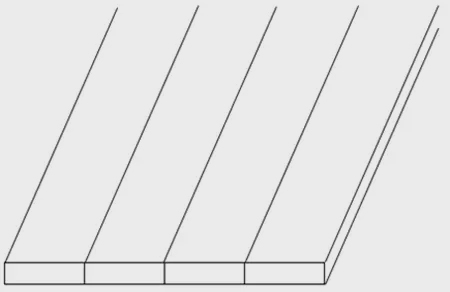
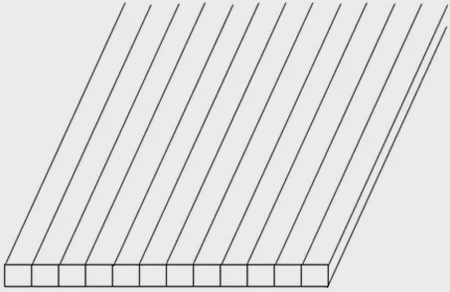
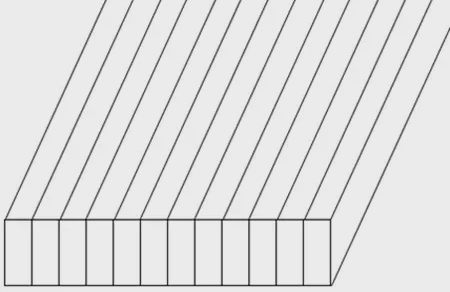
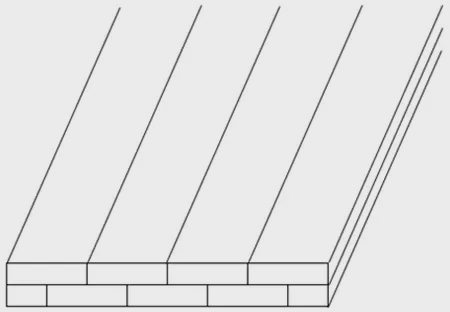
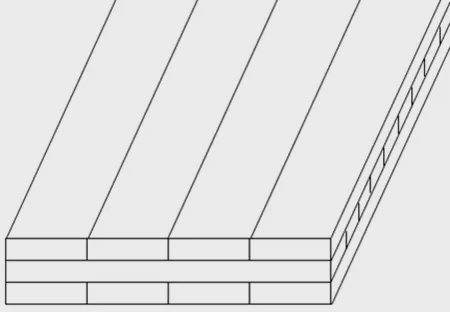
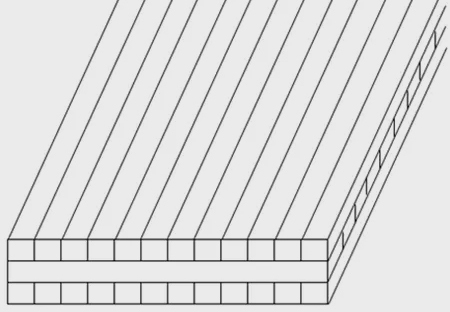
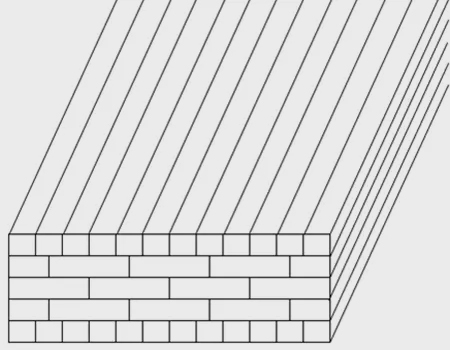
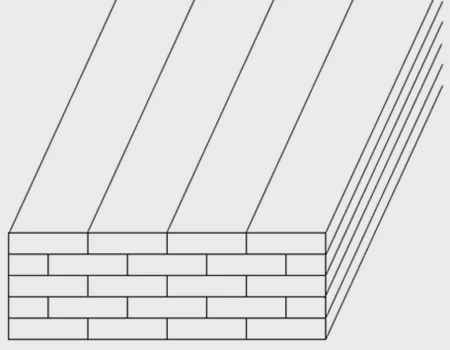
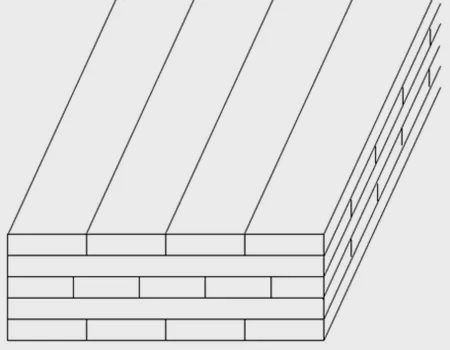
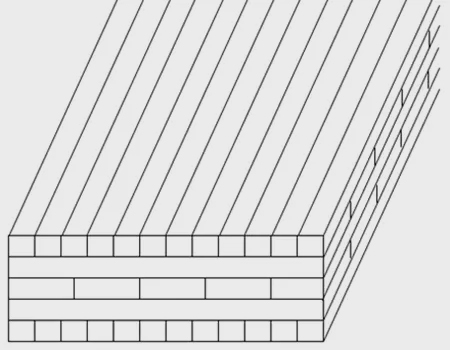
Bamboo plywood is built in several structural families. The difference is not cosmetic; it changes the panel’s load capacity, its working span, and where it can be used.
| 1 Ply Horizontal | 1 Ply Vertical | 1 Ply Vertical 19mm |
|---|---|---|
 |
 |
 |
| 2 Ply Horizontal | 3 Ply H Horizontal | 3 Ply H Vertical |
|---|---|---|
 |
 |
 |
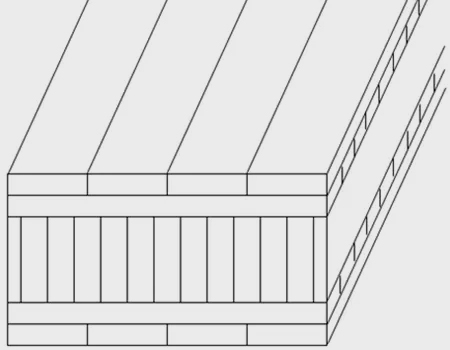
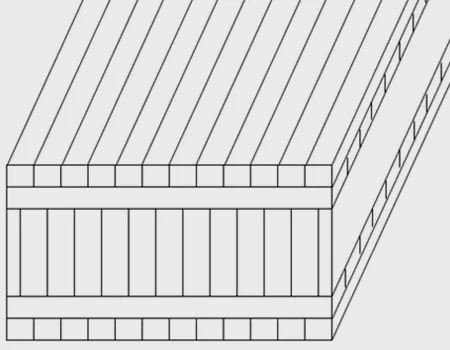
| 5 Ply H Horizontal | 5 Ply H Vertical | Multiply Vertical |
|---|---|---|
 |
 |
 |
| Multiply Horizontal | Multiply Horizontal Crossed | Multiply Vertical Crossed |
|---|---|---|
 |
 |
 |
1. What “H-Shape” Actually Means
An H-shape core is a cross-laminated core built from two sets of bamboo strips running in perpendicular directions, arranged so the section behaves like the letter H — vertical flanges tied by a horizontal web. Face veneers close the panel on both sides.
This construction solves the central weakness of flat-sawn veneer panels. A conventional plywood panel with a single-direction core has a preferred weak axis: it is stiff along the grain and comparatively soft across it. The cross-laminated H-shape core pushes strength in both directions, so the panel resists bending, twisting, and racking far better than a single-direction core of the same thickness.
2. Difference For 3-Ply, 5-Ply
| Feature | 3-Ply Bamboo Plywood | 5-Ply Bamboo Plywood |
|---|---|---|
| Layer build-up | Face + cross-laminated H-core + face | Face / horizontal core / vertical core / horizontal core / face |
| Typical thickness range | 6 – 30 mm | 30 – 50 mm |
| Cross-sectional stiffness | Good | Very high — roughly 2–3× a 3-ply panel of equal thickness |
| Edge appearance | Shows a continuous core line | Shows a symmetrical multi-layer core, often preferred when the edge is exposed |
| Span capability | Suitable for cabinet carcasses, shelving, wall panels, furniture parts | Suitable for tabletops, worktops, long shelves, structural panels and door leaves |
| Screw-holding capability | Good, but limited for repeated fixing | Excellent, thanks to the denser alternating core |
| Best applications | Doors, cabinetry, drawer parts, shelving, wall cladding, furniture panels | Kitchen worktops, bar tops, tabletops, bench tops, marine interiors, structural panels |
| Cost position | Standard | Premium |
For most furniture and interior work, 3-ply at 12–15 mm covers the requirement and keeps costs down. Move to 5-ply when the panel will span, when it will be visible on its edge, when it carries a countertop load, or when it will be fixed into demanding environments.
Technical Data Sheet
Numbers tell the real story of an engineered panel. The tables below give the standard reference profile for bamboo plywood, with the test methods a specifier should ask for. Values are typical for a qualified manufacturer — always confirm them against the datasheet of the specific product you purchase.
1. Physical and Mechanical Properties
| Property | Test Standard | Typical Value |
|---|---|---|
| Density | — | 700 – 800 kg/m³ (0.67 – 0.80 g/cm³) |
| Moisture Content | GB/T 17657 | 8 % – 12 % |
| Thickness Tolerance | — | ± 0.5 mm |
| Size Tolerance | — | ± 3 mm on length and width |
| Warpage (warp degree) | GB/T 9846 | ≤ 1 % |
| Modulus of Elasticity (face) | EN 310 | ≥ 5,000 MPa |
| Bending Strength (face) | EN 310 | ≥ 40 MPa |
| Surface Bonding Strength | EN 310 | ≥ 1.60 MPa |
| Internal Bonding Strength | GB/T 9846 | ≥ 0.90 MPa |
| Bonding Strength (exterior / WBP) | GB/T 9846 | ≥ 1.00 MPa |
| Screw Holding Ability — Face | EN 1505 | ≥ 1,900 N |
| Screw Holding Ability — Edge | EN 1505 | ≥ 1,200 N |
| Impact Resistance | EN 317 | ≥ 40 kJ/m² |
| Abrasion Resistance | GB/T 9846 | ≤ 0.1 g / 100 r |
| Water Absorption (24 h) | GB/T 9846 | ≤ 10 % |
| Thickness Swelling (24 h) | GB/T 9846 | ≤ 10 % |
| Thermal Conductivity | — | 0.15 – 0.20 W/(m·K) |
2. Adhesive, Emissions, and Durability
| Property | Test Standard | Typical Value / Class |
|---|---|---|
| Bonding Class | EN 314 | Class 1 (interior) / Class 3 (exterior, WBP) |
| Formaldehyde Emission | GB 18580 / EN 717-1 | E0 / E1 (< 0.124 mg/m³) |
| Biological Durability | EN 350 | Class 1 for carbonized grade |
| Reaction to Fire | EN 13501-1 | Class B-s1-d0 / Bfl-s1 |
| Flame Spread Index | ASTM E84 | Class A |
| Surface Water Vapour Resistance | GB/T 30364-2013 | No cracking, no blistering |
| Horizontal Shear Strength | GB/T 30364-2013 | ≥ 10.0 MPa (tested: 16.02 MPa) |
| Water Absorption Width Expansion | GB/T 30364-2013 | ≤ 4.0 % (tested: 0.5 %) |
| Water Absorption Thickness Expansion | GB/T 30364-2013 | ≤ 10.0 % (tested: 6.1 %) |
| Dimensional Stability (24 h in water, 20 °C) | — | Length: +0.1 % / Width: +0.9 % |
| Shrink / Swell | — | 0.10 % per 0.80 % change in moisture content |
3. Standard Sizes and Structures
| Thickness | Grain Available | Color Available | Layers Available | Maximum Length | Maximum Width |
|---|---|---|---|---|---|
| 5mm | H / V | N / C | 1 | 4000mm | 1220mm |
| 6mm | H / V | N / C | 1, 3 | 4000mm | 1220mm |
| 10mm | H | N / C | 2 | 4000mm | 1220mm |
| 10mm | V | N / C | 1 | 4000mm | 1220mm |
| 12mm | H / V | N / C | 3 | 4000mm | 1220mm |
| 15mm | H / V | N / C | 1, 3 | 4000mm | 1220mm |
| 20mm | H | N / C | 3 | 4000mm | 1220mm |
| 20mm | V | N / C | 1, 3 | 4000mm | 1220mm |
| 25mm | H / V | N / C | 3 | 4000mm | 1220mm |
| 30mm | H / V | N / C | 3 | 4000mm | 1220mm |
| 35mm | H / V | N / C | 3 | 4000mm | 1220mm |
| 40mm | H / V | N / C | 5 | 4000mm | 1220mm |
Fabrication & Installation Guidelines
Bamboo plywood is denser than most hardwood sheet goods, and it rewards proper tooling. The same fiber density that gives the panel its strength works against careless machining: dull blades burn, unpre-drilled screws split, and planer blades tear out. Follow the three guidelines below and the material will machine as cleanly as any premium hardwood.
1. Cutting & Sawing
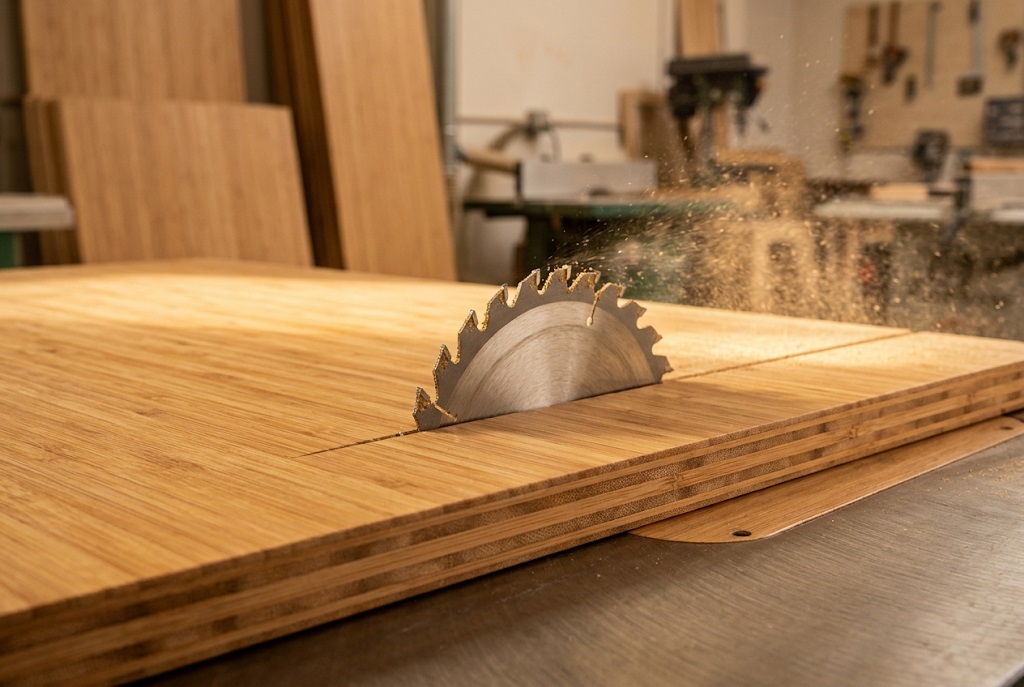
- Tooling: Use carbide-tipped blades exclusively. The high density of bamboo fiber dulls standard carbon-steel blades within minutes — and a dull blade is what burns edges, not the bamboo itself.
- Technique: Keep blades sharp and maintain a steady, consistent feed rate. Let the blade do the work; forcing the cut builds heat, scorches the edge, and shortens blade life.
2. Drilling & Fastening
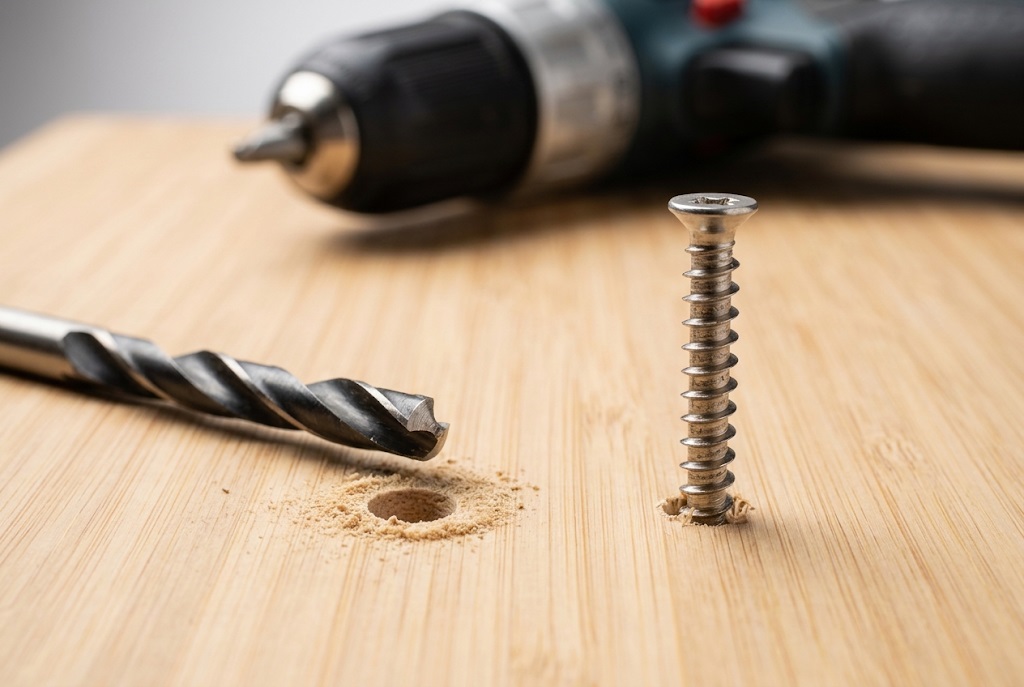
- Pre-drilling: Always drill pilot holes before driving screws. Bamboo’s long, aligned fibers make the panel strong along the grain but prone to splitting across it — a screw driven straight in can start a crack that runs the full width of the sheet.
- Fasteners: Use coarse-thread screws for maximum holding power. Fine threads designed for softwood tend to strip out in dense bamboo.
- What to avoid: Do not use pneumatic nail guns or standard iron nails. Driven directly into the panel, they cause edge chipping, cracking, and structural splits that cannot be repaired afterwards.
3. Sanding & Surface Finishing
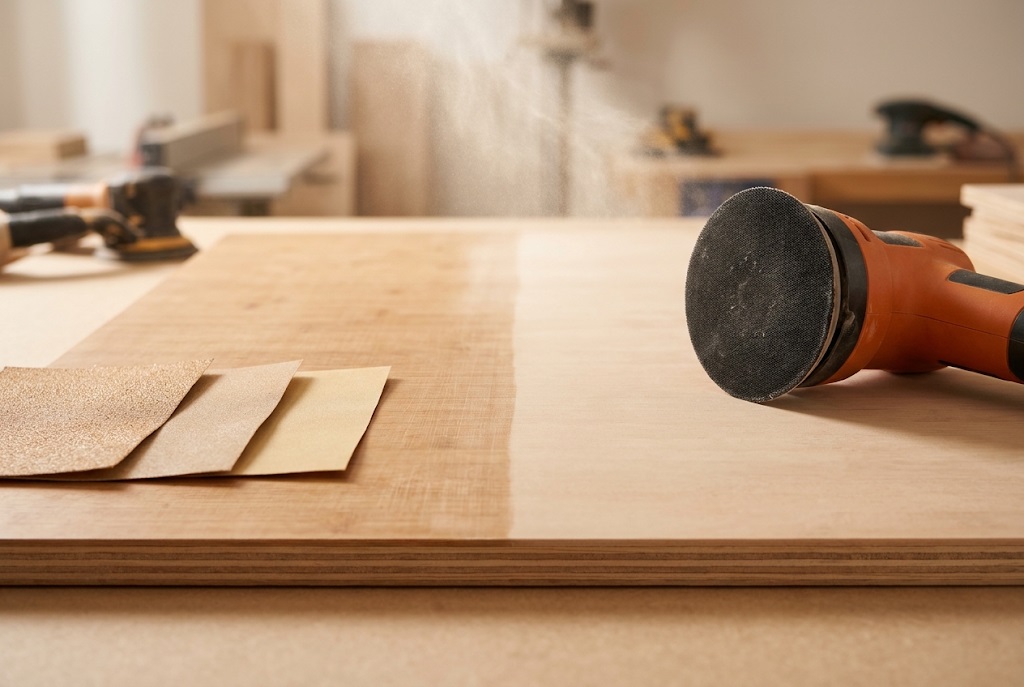
- Sanding: Bamboo plywood responds beautifully to sanding. Work through a progressive grit sequence — 120 → 180 → 220 — then seal with a hard wax oil or water-based lacquer to bring out the depth of the grain.
- What to avoid: Do not use hand planes or thickness planers. The interlocking fibers tear out unpredictably under a plane blade. Sanding is always the correct method for surface preparation.
Recommended Applications
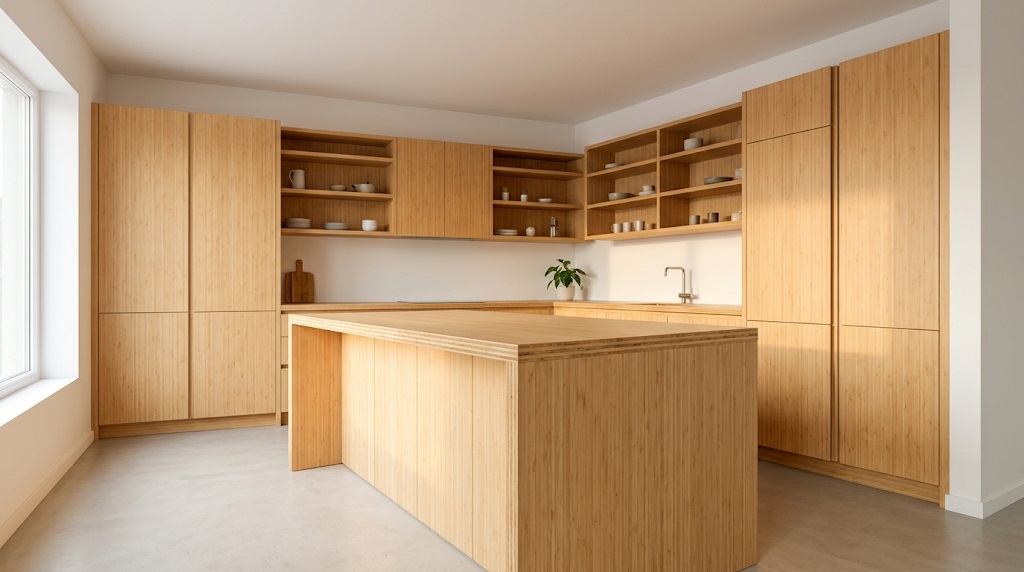
Bamboo plywood is a premium sheet material with the dimensional stability, density, and flawless surface that demanding applications require. It performs best in:
- Interior cabinetry — kitchen cabinets, bathroom vanities (with proper edge sealing), and wardrobe carcasses.
- Furniture manufacturing — cabinet doors, drawer fronts, and structural furniture components.
- Tabletops & countertops — desktops, dining tables, and bar tops, especially in 5-ply thicknesses.
- Interior design & architecture — decorative wall panels, ceiling boards, and partition systems.
- Marine & yacht interiors — cabinetry and interior fittings, where stability in humid conditions is essential.
- Commercial displays — retail shelving, exhibition stands, and display fixtures that must survive repeated assembly, disassembly, and transport.
Frequently Asked Questions
Is bamboo plywood as strong as hardwood plywood?
For the thickness ranges used in furniture and interior work, a qualified 5-ply bamboo panel exceeds the bending and internal bonding performance of most hardwood plywood of the same thickness. Bamboo fiber is dense and dimensionally stable, which is where the advantage comes from.
Can bamboo plywood be used outdoors?
No. Untreated or interior-bond panels should not be exposed to direct weather. For fully exposed exterior construction, strand-woven bamboo decking is the correct product rather than bamboo plywood.
How does bamboo plywood compare with bamboo flooring or decking?
They are different products made by different routes. Flooring and decking are made from strands woven together and compressed into a solid, single-block board — extremely dense, around 1,200 kg/m³. Bamboo plywood is made from veneer faces and a cross-laminated strip core, and is far more workable as a sheet material: it can be cut, drilled, edge-banded, and joined like conventional plywood.
Is the color consistent between batches?
Within a single production run, yes — the colour-matching step exists specifically to guarantee that. Across different batches, and particularly for natural grades, expect normal variation in tone. If a project requires an exact color match across multiple production lots, order the full quantity in one run, or approve a physical sample as the reference standard.
Can bamboo plywood be painted or lacquered?
Yes. The sanding stage leaves a clean, uniform surface that takes lacquer, paint, or melamine film very well. As with any wood product, the panel should be sealed on all edges as well as faces, and the finish should be applied at the moisture content the panel will have in service.