Bamboo Plywood for Eco-Friendly Cabinetry: Sustainable Interior Design

The conversation surrounding residential and commercial interiors has shifted dramatically toward materials that balance structural integrity with genuine ecological responsibility. Designers and builders constantly search for alternatives to standard timber products that deplete old-growth forests. Among the available options, bamboo plywood stands out as a remarkably versatile, renewable resource. Utilizing this dense grass species for cabinetry allows craftsmen to construct durable, beautiful fixtures while significantly reducing environmental impact.
Understanding how to work with this material requires looking beyond standard woodworking assumptions. Bamboo possesses unique botanical characteristics that influence its performance, machining properties, and aesthetic presentation. When integrated thoughtfully into interior layouts, it delivers clean lines, exceptional dimensional stability, and a warm, organic character that complements minimalist, contemporary, and transitional design schemes alike.
The Anatomy and Construction of Bamboo Sheets
To appreciate why bamboo sheet goods perform so well in casework, it helps to examine how they are manufactured. Unlike traditional plywood, which layers thin veneers of wood with alternating grain directions, bamboo panels are constructed from strips of Moso bamboo, a species known for its rapid growth rate and substantial diameter.
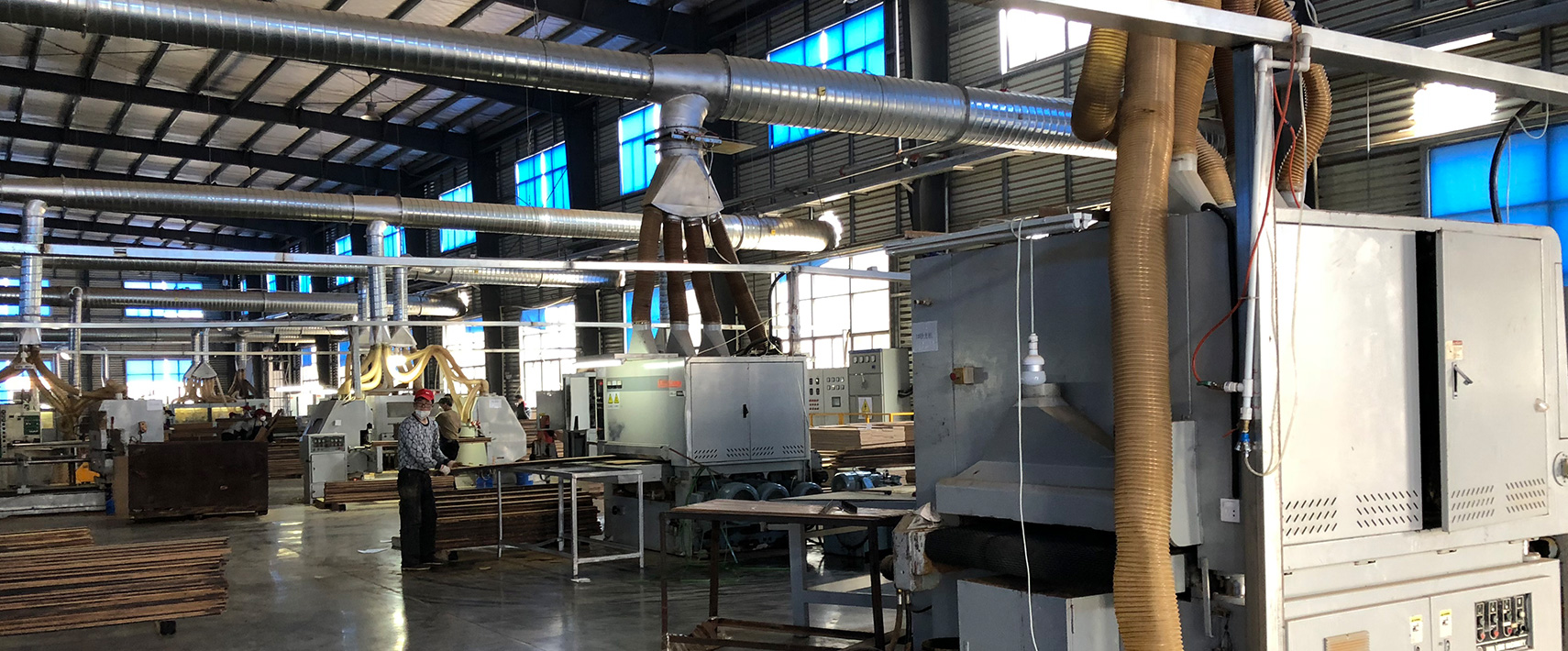
The raw culms are harvested, split into strips, stripped of their outer skin, and boiled to remove starches and sugars. Once dried and treated against pests, these strips are arranged either horizontally or vertically and pressed together using industrial adhesives. Multi-ply panels are created by cross-laminating core layers with face veneers, resulting in a balanced sheet that resists warping, cupping, and twisting far better than many conventional softwoods.
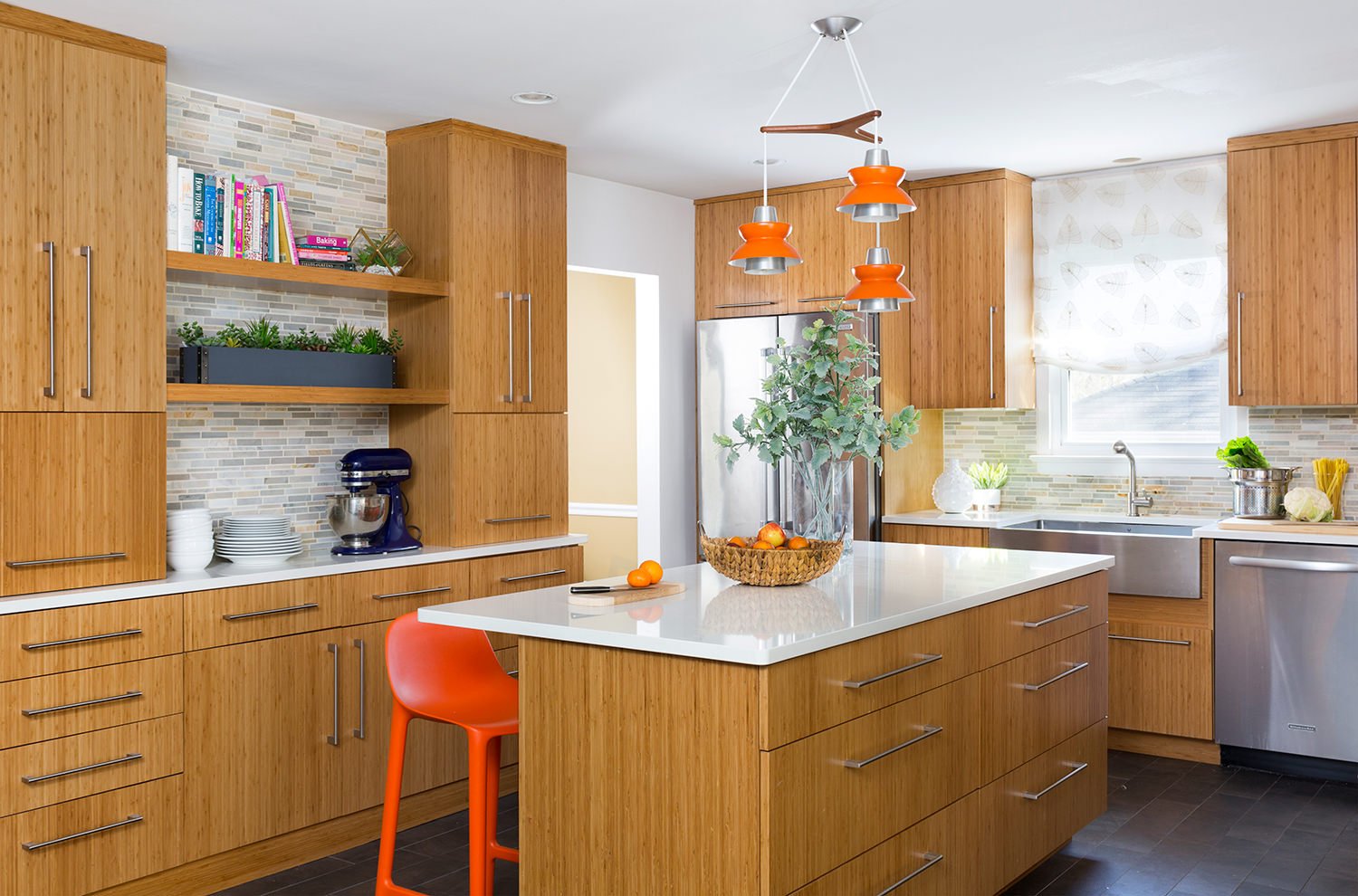
Choosing the right core construction dictates the visual rhythm of the finished cabinet doors and boxes. Horizontal panels display distinct node rings, giving the surface a lively, organic texture with visible growth knuckles. Vertical panels present narrow, linear grain lines that create a sleek, uniform appearance favored in contemporary architectural millwork. Strand-woven variations, though heavier, offer extreme hardness and an appearance resembling dense exotic hardwoods, making them ideal for high-impact surfaces like countertop edges or heavy-use drawer boxes.
Performance Benefits Over Conventional Hardwoods
Cabinetmakers often weigh material choices against criteria such as density, screw-holding capacity, and reaction to humidity fluctuations. Standard hardwoods like red oak or hard maple have long been industry benchmarks, but bamboo frequently surpasses them in several key performance metrics.
Because bamboo is technically a grass rather than a broadleaf tree, its fibers are exceptionally dense and uniform. High-quality strand-woven and pressed panels exhibit a Janka hardness rating that outstrips many common cabinet woods, meaning the finished cabinets withstand daily wear, bumps, and scratches with minimal damage. Furthermore, the multi-layered cross-banded manufacturing process minimizes the natural tendency of wood fibers to expand and contract across the grain. This dimensional stability proves invaluable in kitchens and bathrooms, where seasonal humidity shifts normally cause doors to bind or panels to split.
Sustainability metrics also heavily favor this material. Moso bamboo reaches maturity in roughly five to seven years, compared to decades for traditional timber species. Once harvested, the root system regenerates new shoots without requiring replanting or intensive soil tilling. For projects pursuing green building certifications or low carbon footprints, specifying rapidly renewable agricultural materials satisfies both ecological goals and client expectations.
Aesthetic Versatility and Grain Selection
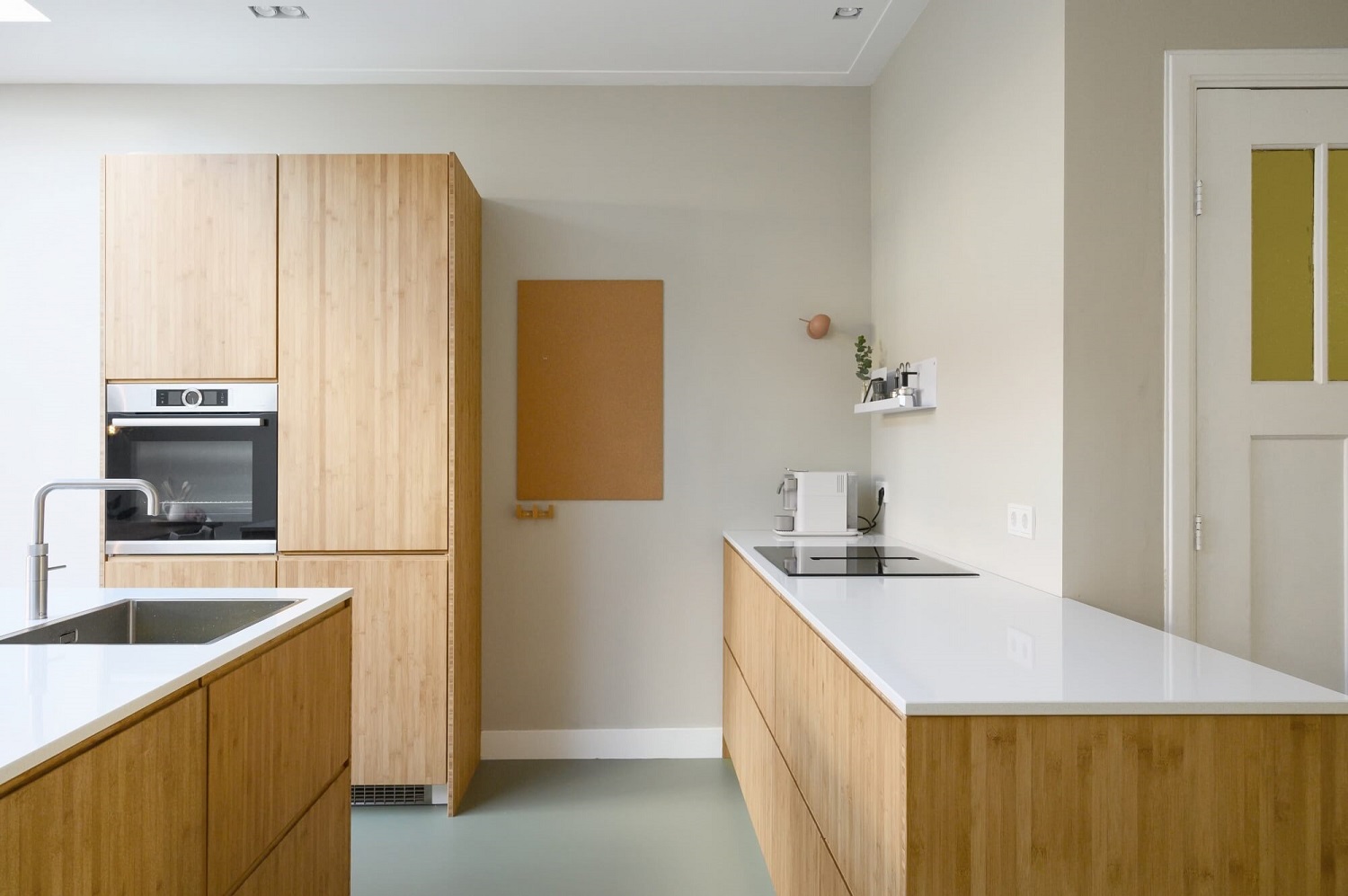
Designing functional storage requires balancing structural layout with visual warmth. Bamboo sheet materials provide a neutral yet distinct palette that adapts to various interior themes. The natural blonde tone offers a bright, airy aesthetic that reflects ambient light, making smaller rooms feel open and expansive. Alternatively, carbonized bamboo undergoes a thermal steaming process that caramelizes the natural sugars within the fibers, producing a rich, amber hue reminiscent of roasted walnut or teak.
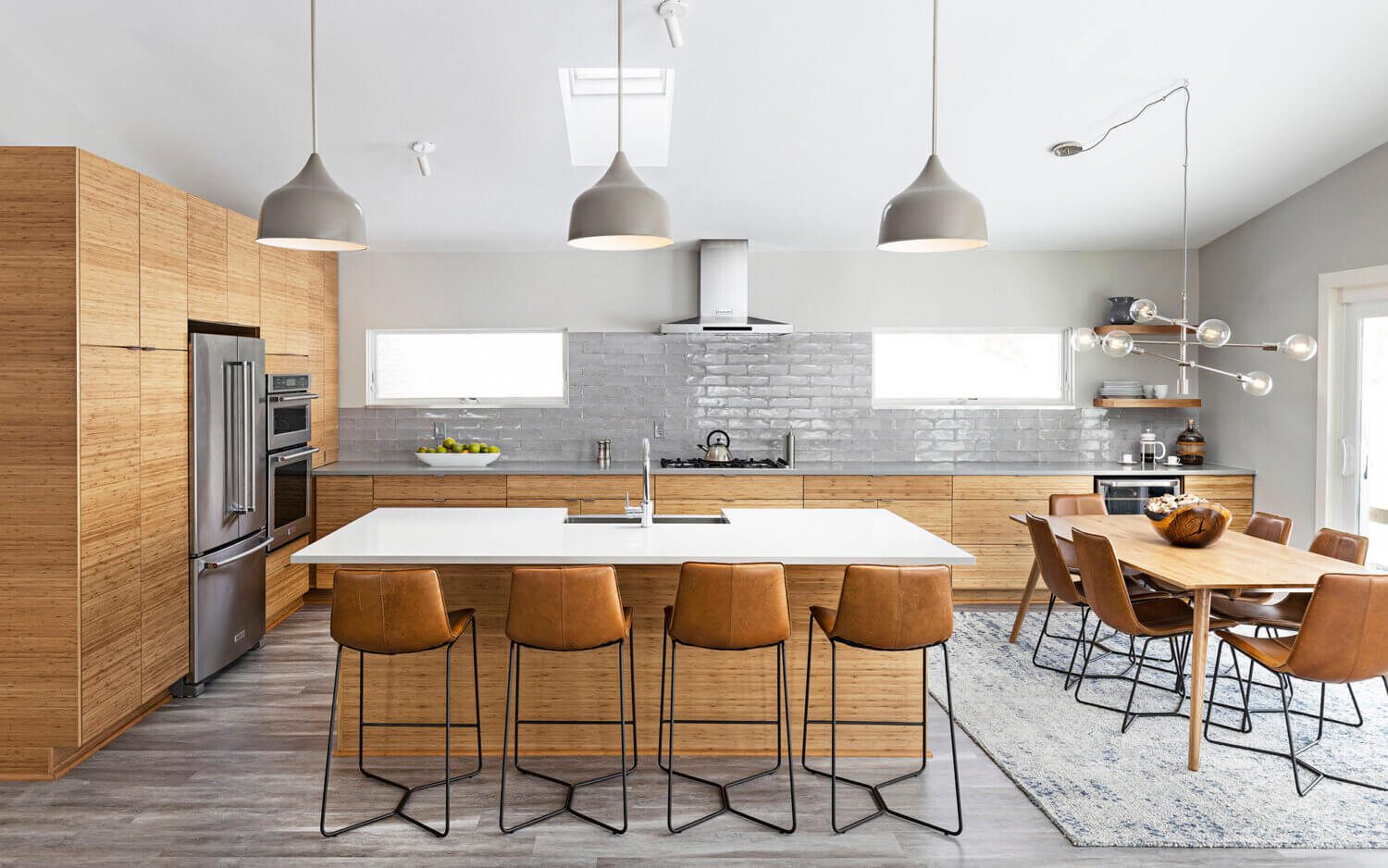
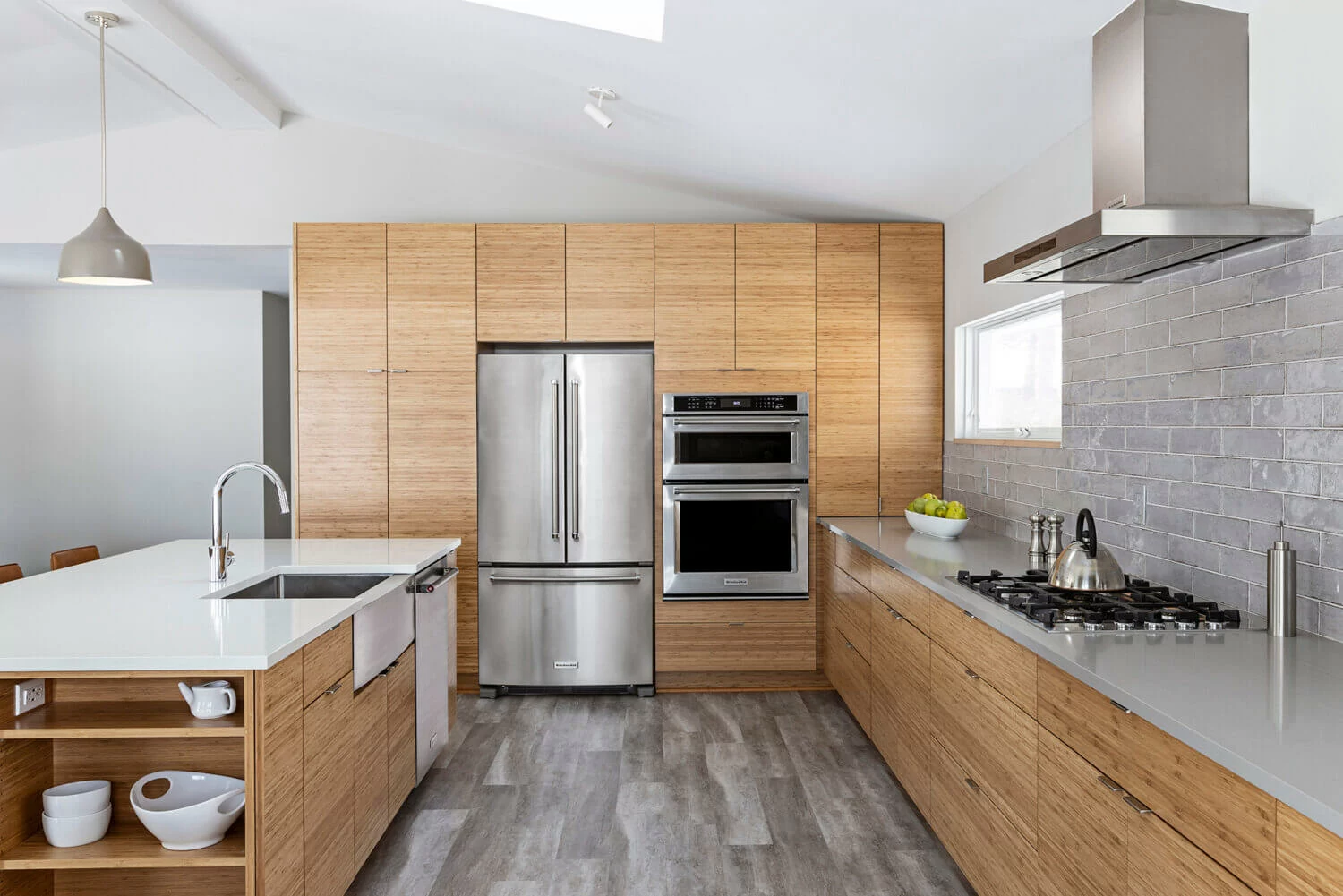
Combining these tones allows craftsmen to create striking contrast within a single run of casework. Designers might specify natural vertical panels for tall pantry doors and pair them with carbonized drawer fronts or open shelving units. Because the material sands and finishes uniformly, subtle shading variations can be blended or accentuated depending on the desired visual outcome. The absence of heavy natural knots creates a clean, architectural canvas that integrates smoothly with metal hardware, stone countertops, and matte painted surfaces.
Workshop Best Practices for Fabrication
Building high-end casework with bamboo sheets demands specific machining techniques to prevent chipping and splintering. Because the material contains natural silica and high-density fibers, standard steel saw blades dull quickly. Fabricators achieve the cleanest cuts by using high-quality, carbide-tipped or polycrystalline diamond saw blades with a high tooth count, paired with a zero-clearance insert on the table saw or track saw. Scoring the face veneer prior to making a through-cut entirely eliminates micro-tearing along cut lines.
Routing edges and cutting joinery require similar care. Sharp router bits running at appropriate feed rates prevent burning, as the resin adhesives and dense fibers generate friction quickly. When assembling cabinet boxes, pre-drilling holes for screws prevents splitting, particularly near the edges of panels. Pocket hole joinery, confirmat screws, and traditional dado and rabbet joints all perform exceptionally well when sizing and assembling cabinet carcasses.
Edge banding presents another critical consideration. While some fabricators prefer matching bamboo veneer tape, exposing the multi-layer edge profile has become a popular design detail in modern architectural millwork. Leaving the striped edge layers visible highlights the unique construction of the sheet, celebrating the material’s natural origin rather than masking it. When applying edge banding, high-strength contact cement or heat-activated iron-on veneers create a permanent, seamless bond along exposed cabinet box perimeters.
Surface Finishing and Moisture Management
Achieving a durable, professional finish on bamboo cabinetry preserves its appearance and protects against everyday kitchen and bathroom environments. Before applying any finish, thorough sanding up to 180 or 220 grit ensures a smooth surface that accepts topcoats evenly.
Water-based polyurethanes, hardwax oils, and UV-cured finishes all interact favorably with bamboo. Hardwax oils penetrate the surface pores, offering a tactile, matte finish that highlights the organic texture while allowing for easy spot repairs if a scratch occurs. For high-moisture zones like kitchen sinks or vanity bases, multi-coat film-forming finishes provide a robust moisture barrier. Because bamboo has a tight cellular structure, it absorbs stains differently than porous softwoods; water-based stains or dyes prevent blotching and maintain clarity in the grain pattern.
Functional Applications Across Residential Interiors
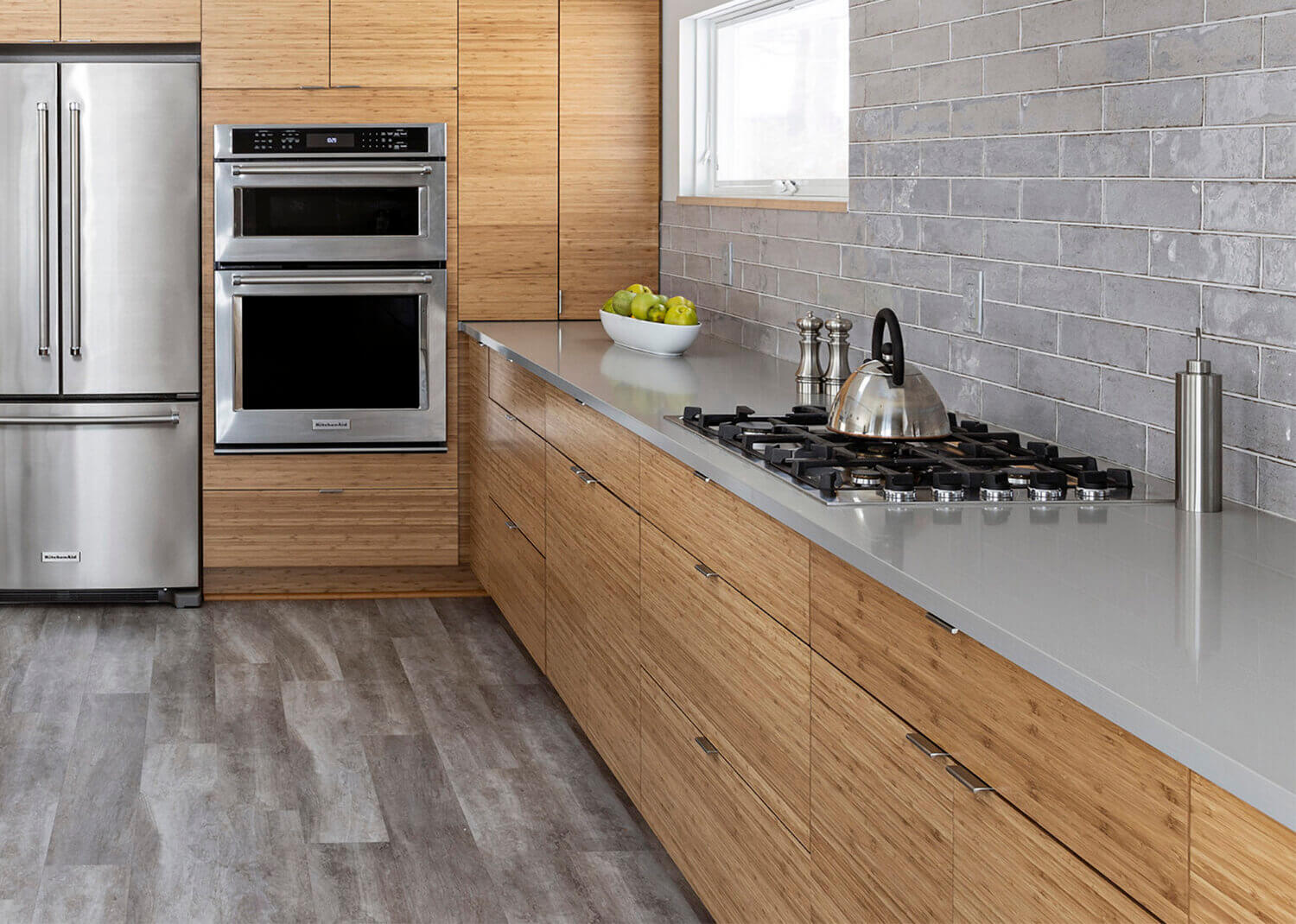
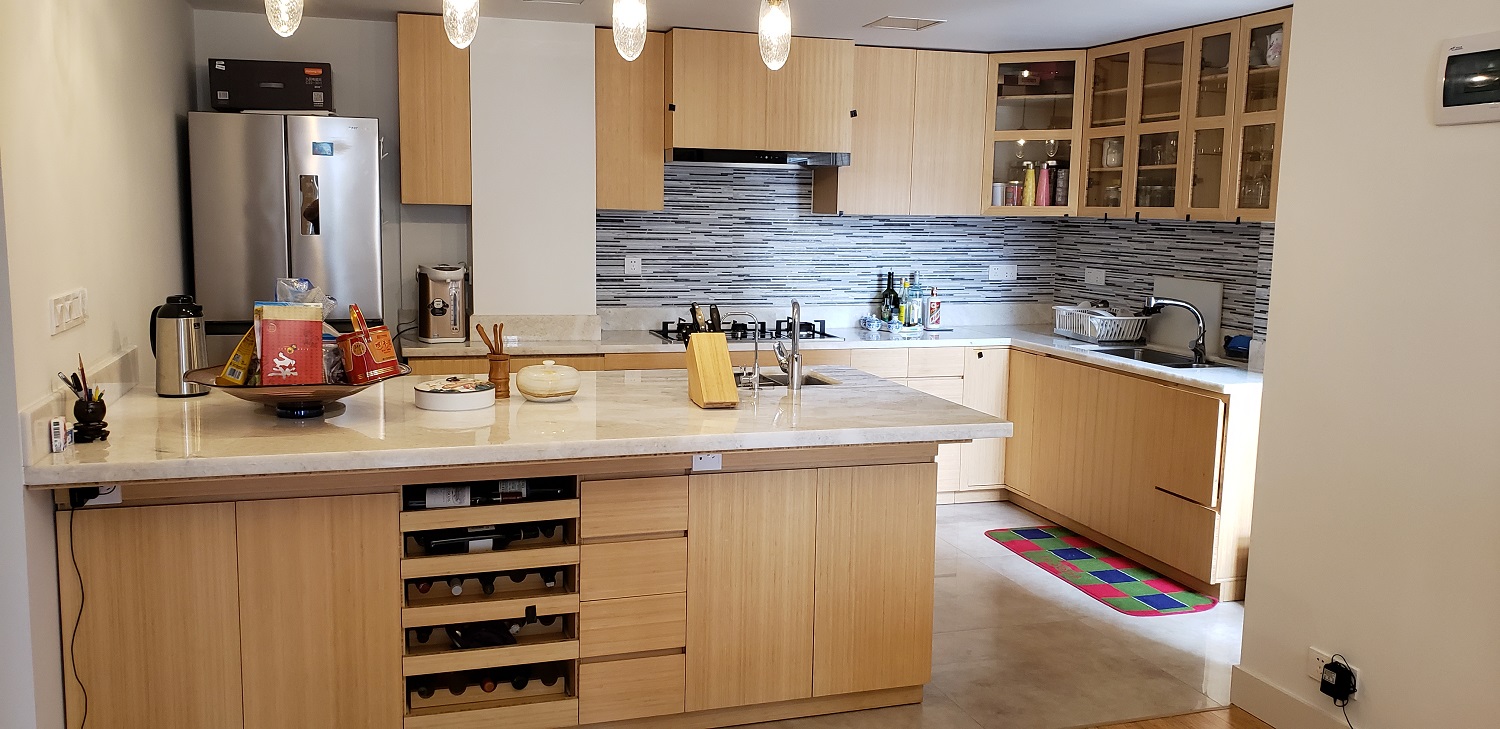
While kitchen cabinetry remains the primary application for sheet goods, natural bamboo plywood proves equally effective throughout the rest of the home. Bathroom vanities benefit from its moisture stability when properly sealed, bringing warmth to tile-heavy spaces. In walk-in closets and wardrobe installations, custom shelving made from lightweight yet rigid bamboo panels supports heavy loads without sagging over long spans.
Living room media centers, built-in library bookcases, and office credenzas also gain refinement through coordinated casework. By maintaining a consistent material language across multiple rooms, interior designers establish visual cohesion that ties an entire floor plan together. The subtle linear patterns of vertical grain panels draw the eye upward, enhancing the perceived height of ceilings and making compact living areas feel intentional and uncluttered.
Sourcing and Quality Control
Successful projects rely heavily on procuring reliable materials from reputable manufacturers. When purchasing bamboo sheets for high-end furniture or cabinetry, checking specifications regarding formaldehyde emissions is essential. Premium suppliers utilize ultra-low emitting or zero-added formaldehyde adhesives during pressing, ensuring indoor air quality remains uncompromised in tight residential spaces.
Inspect panels for core voids, surface uniformity, and consistent sanding thickness upon delivery. High-grade sheets feature solid, well-pressed cores without internal gaps, guaranteeing that edge profiles and fastener placements maintain structural integrity over decades of daily use. Partnering with specialized producers who manage the entire supply chain from raw culm harvest to final sanding ensures batch-to-batch consistency, simplifying the fabrication process from the first cut to the final installation.