Bamboo Cabinets and Storage Solutions for Modern Interiors: Design, Durability, and Practical Applications

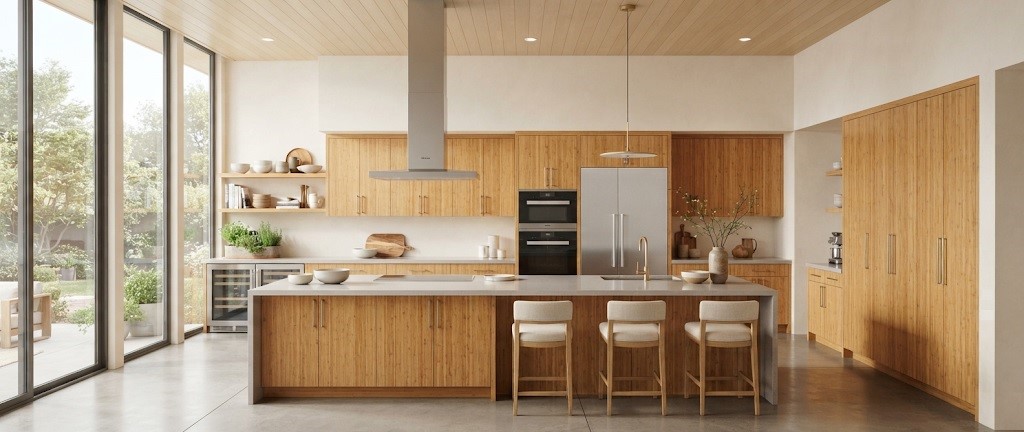
Bamboo cabinets and storage solutions have carved out a significant niche in modern interior design, offering a renewable alternative to traditional hardwood cabinetry without sacrificing structural performance or visual appeal. As homeowners and interior designers increasingly prioritize sustainable materials that perform under daily wear, bamboo has moved from a novelty species into a mainstream choice for kitchen cabinetry, bathroom vanities, living room shelving, and built-in storage systems throughout contemporary homes.
Bamboo is technically a grass rather than a tree, but when processed into engineered panels and lumber, it achieves hardness ratings that exceed many conventional timber species. This combination of rapid renewability and impressive mechanical performance makes bamboo cabinetry particularly attractive for households seeking long-lasting storage solutions with genuine environmental credentials.
Why Bamboo Works for Interior Cabinetry
The material properties of processed bamboo align well with the demands of interior cabinetry. Strand-woven bamboo—the densest commercially available bamboo product—ranks between 2,800 and 3,000 on the Janka hardness scale, placing it well above red oak at 1,290 and comparable to tropical hardwoods like Brazilian cherry at 2,350. This hardness translates directly to dent resistance on cabinet doors, drawer fronts, and shelving surfaces that face daily impacts from cookware, tableware, and household items.
Beyond raw hardness, bamboo exhibits excellent dimensional stability when properly manufactured. High-quality bamboo panels are constructed by laminating strips of bamboo fiber under heat and pressure, producing boards that resist warping and cupping better than many solid wood alternatives. This stability matters particularly for wide cabinet doors and long shelving spans where seasonal humidity fluctuations can cause solid wood to bow or twist.
The grain pattern of bamboo offers a distinctive aesthetic that differs from traditional wood cabinetry. Vertical-grain bamboo presents clean, narrow linear striations that suit minimalist and contemporary interiors, while flat-grain bamboo displays wider node patterns with a more organic character. Strand-woven bamboo, with its compressed fiber appearance, resembles exotic hardwoods and works well in designs where a richer, darker tone is desired.
Kitchen Cabinetry Applications
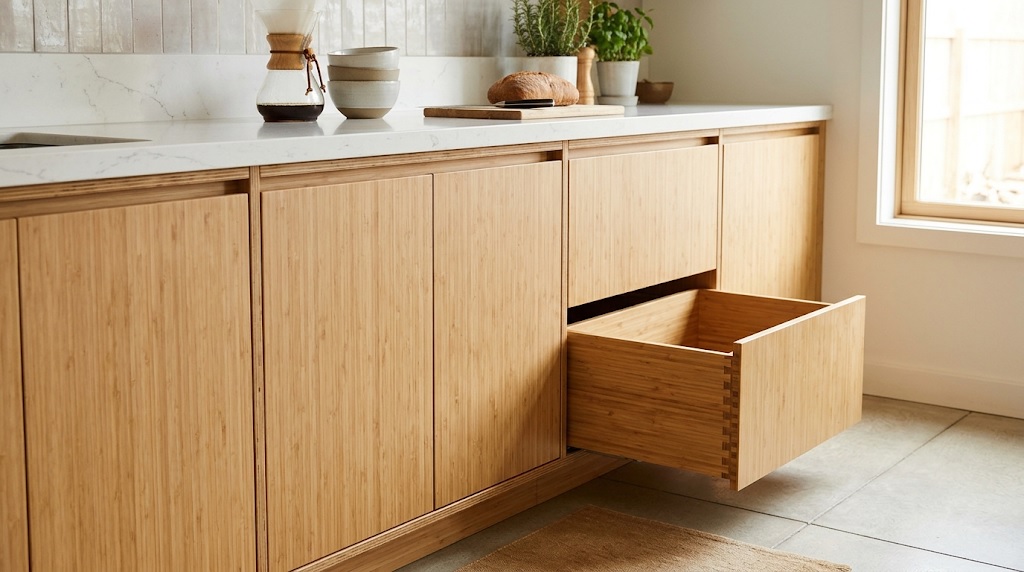
Kitchen environments subject cabinets to heat, moisture, grease, and constant handling, making material selection critical for long-term satisfaction. Bamboo kitchen cabinets perform well in this demanding setting when properly finished and maintained.
For cabinet door construction, bamboo plywood panels in 18-millimeter thickness provide sufficient rigidity for standard door sizes while keeping weight manageable for smooth hinge operation. Edge banding applied to the perimeter seals the exposed laminated edges, preventing moisture ingress that could cause delamination over time. Many manufacturers offer bamboo doors with either clear natural finishes that showcase the light blonde color of raw bamboo or caramelized finishes achieved through heat treatment that deepens the tone to a warm amber.
Drawer construction benefits from solid bamboo lumber rather than plywood. Solid bamboo drawer boxes, typically joined with dovetail construction, handle the weight of stored cookware and utensils without racking. The natural density of bamboo also provides a satisfying acoustic quality—drawers close with a solid, low-pitched sound rather than the hollow rattle associated with thinner particleboard alternatives.
One consideration for kitchen applications is bamboo’s response to prolonged direct moisture exposure. While finished bamboo cabinetry handles ambient humidity and occasional splashes without issue, standing water around sink bases can penetrate unfinished edge grain and cause swelling. Proper sealing of all cabinet interiors, particularly under-sink bases, prevents this vulnerability from becoming a problem.
Bathroom Vanity and Storage Options
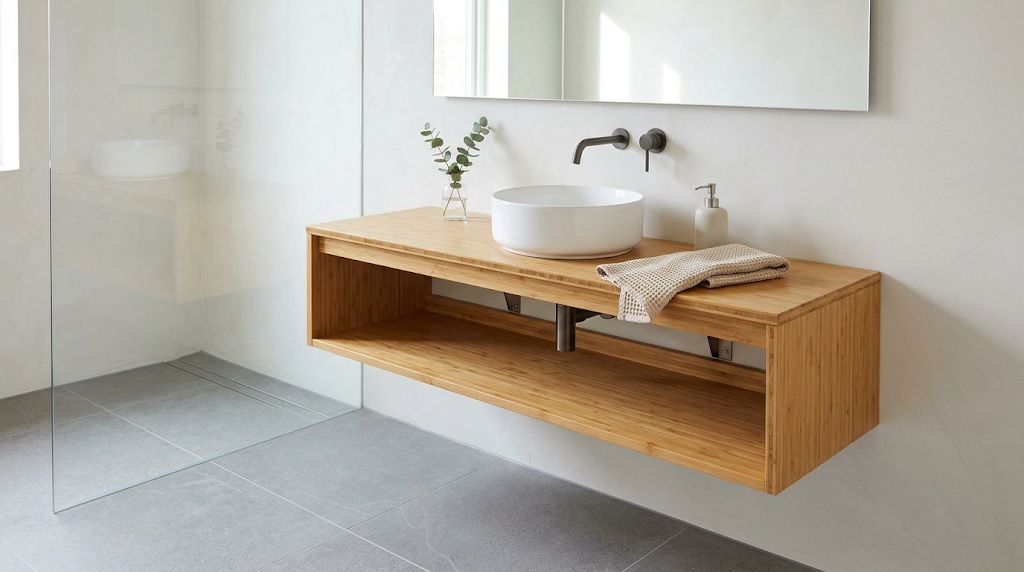
Bathroom vanities represent another natural fit for bamboo cabinetry. The warm tones of bamboo complement the clean fixtures and neutral palettes common in modern bathroom design, and the material’s moisture resistance—when properly sealed—holds up well in the humid bathroom environment.
Floating bamboo vanities have become particularly popular in contemporary bathroom layouts. These wall-mounted units, supported by concealed heavy-duty brackets anchored directly into wall studs, create a visual lightness that makes smaller bathrooms feel more spacious. The open space beneath a floating vanity also simplifies floor cleaning and reduces the moisture traps that traditional floor-mounted vanities can create.
For bathroom storage beyond the vanity, bamboo shelving units and linen towers offer coordinated storage solutions. Bamboo’s natural resistance to fungal growth provides an advantage over MDF and particleboard alternatives in humid bathroom conditions, where conventional engineered panels can swell and harbor mold if their surface coatings are compromised.
Vessel sink integration works smoothly with bamboo vanity tops, though a protective waterproof sealant must be applied to the top surface and resealed periodically. Epoxy or polyurethane sealers formulated for wood countertops provide the necessary barrier against standing water around the sink cutout.
Living Room and Built-In Storage Solutions
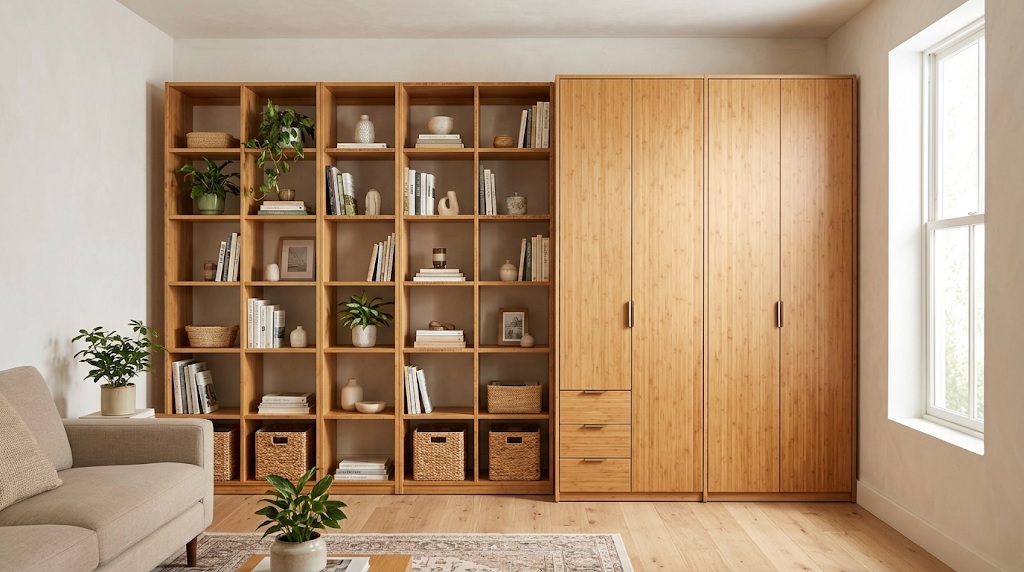
Bamboo extends naturally into living spaces where storage needs blend with display and organizational functions. Built-in bamboo shelving, entertainment centers, and wardrobe systems bring the material’s warmth into shared living areas while providing practical storage capacity.
Modular bamboo shelving systems offer flexibility that fixed cabinetry cannot match. Individual shelf units can be reconfigured as storage needs change, and open shelving in bamboo provides a lighter visual presence than enclosed cabinetry. For living rooms with limited square footage, bamboo storage cubes and cubby systems provide compartmentalized organization for books, media equipment, and decorative objects without visually dominating the space.
Bamboo wardrobe and closet systems benefit from the material’s strength-to-weight ratio. Adjustable shelving in bamboo handles the weight of folded clothing and stored bedding without sagging, and bamboo closet rods support hanging garments across wide spans. The smooth surface of finished bamboo prevents snagging on delicate fabrics, an advantage over rougher wood species that can catch on silk and knit materials.
For home office integration, bamboo filing cabinets and desk storage coordinate visually with shelving and create a cohesive workspace aesthetic. The material’s acoustic properties—bamboo surfaces absorb slightly more sound than hard synthetic laminates—contribute to a quieter working environment.
Finishing and Surface Treatment Options
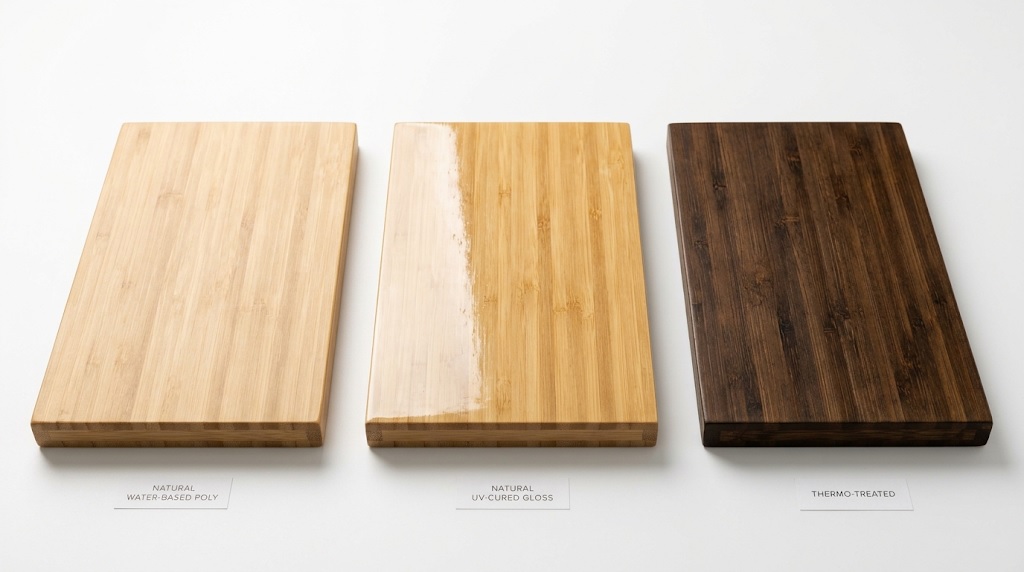
The finish applied to bamboo cabinetry determines both its appearance and its long-term performance. Several finishing approaches suit different applications and aesthetic preferences.
Clear water-based polyurethane finishes preserve the natural color of bamboo while providing a durable surface coating that resists scratches and moisture. These finishes remain slightly flexible, accommodating the minor seasonal movement that bamboo panels experience without cracking or peeling. Water-based formulations also avoid the yellowing that oil-based finishes develop over time, maintaining the clean, bright appearance that draws many buyers to bamboo initially.
UV-cured lacquer finishes, common on factory-produced bamboo cabinetry, provide a harder surface than field-applied polyurethane and cure instantly under controlled conditions. This finishing method produces a consistent, glass-smooth surface that handles kitchen and bathroom duty well. The factory application also ensures complete coverage of all edges and interior surfaces, eliminating the vulnerable unfinished areas that can compromise field-finished cabinetry.
For darker aesthetics, thermo-treated bamboo offers a chemical-free alternative to staining. High-heat treatment in controlled kilns darkens the bamboo fibers throughout their full thickness, producing a rich caramel or coffee tone that will not wear away like surface-applied stains. The thermal modification process also improves dimensional stability and fungal resistance, making thermo-treated bamboo particularly suitable for bathroom and humid-climate applications.
Environmental and Sustainability Considerations

The environmental profile of bamboo represents one of its most compelling advantages over conventional cabinet materials. Moso bamboo, the primary species used for engineered bamboo products, reaches full maturity in five to seven years compared to the decades required for hardwood timber species. After harvesting, the bamboo root system remains intact and regenerates new culms, making bamboo a genuinely renewable resource rather than a crop that requires replanting after each harvest.
Bamboo plantations also sequester significant amounts of carbon dioxide during their rapid growth cycle, with mature Moso groves absorbing carbon at rates that exceed equivalent areas of forest. When this carbon is locked into durable cabinetry products with service lives of decades, the carbon storage benefit extends well beyond the initial growth period.
The processing of raw bamboo into engineered panels does involve energy consumption and adhesive use. However, reputable manufacturers have made significant progress in reducing formaldehyde emissions from bamboo panel adhesives, with many products now achieving E0 and CARB Phase 2 compliance. When specifying bamboo cabinetry, verifying that panels meet these low-emission standards ensures that indoor air quality is not compromised.
Practical Sourcing and Installation Tips
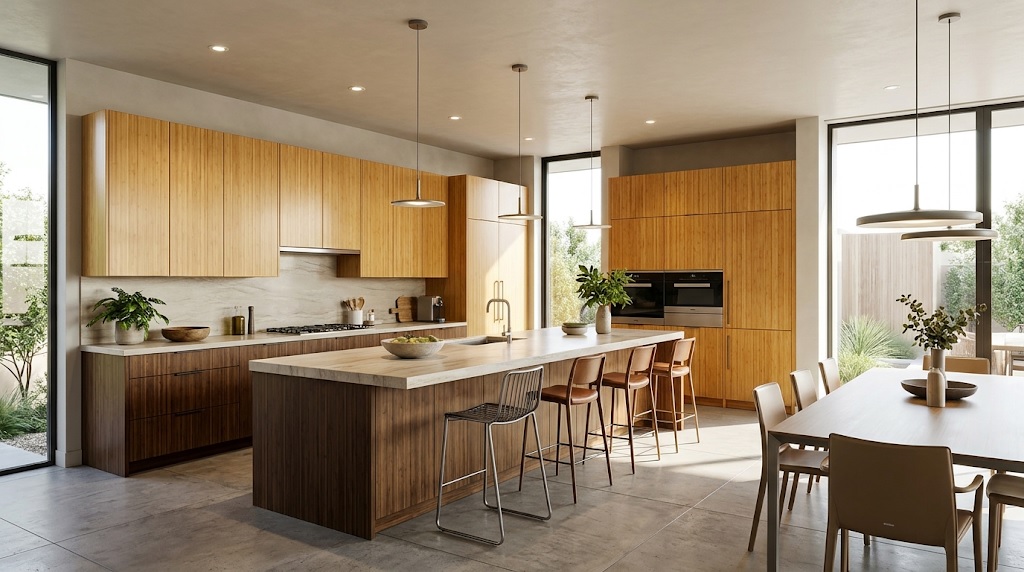
Selecting quality bamboo cabinetry requires attention to several manufacturing details that distinguish durable products from inferior alternatives. Panel density should feel solid and heavy for its thickness—lightweight panels often indicate insufficient pressure during lamination or excessive adhesive content. Edge grain should appear tight and uniform, with no visible gaps between laminated strips.
Hardware selection plays an equally important role in long-term performance. Soft-close hinges and full-extension drawer slides rated for the weight of stored contents prevent the operational failures that plague budget cabinetry. For bamboo drawer boxes, which are heavier than conventional MDF alternatives, specifying drawer slides with adequate load capacity—typically 75 to 100 pounds for kitchen applications—ensures smooth operation over years of daily use.
Installation of bamboo cabinetry follows the same procedures as conventional wood cabinetry, with one important addition: acclimation. Bamboo panels should be allowed to equilibrate to the installation environment’s humidity and temperature for 48 to 72 hours before installation. This acclimation period allows the material to reach moisture equilibrium with the space, minimizing post-installation movement that could affect door alignment and drawer operation.
Professional installation is recommended for built-in bamboo storage systems, particularly floating vanities and wall-mounted shelving that require secure anchoring into structural framing. The weight of solid bamboo cabinetry, while manageable for standard wall construction, demands proper bracket selection and stud attachment to ensure safe long-term support.
Maintaining Bamboo Cabinetry Over Time
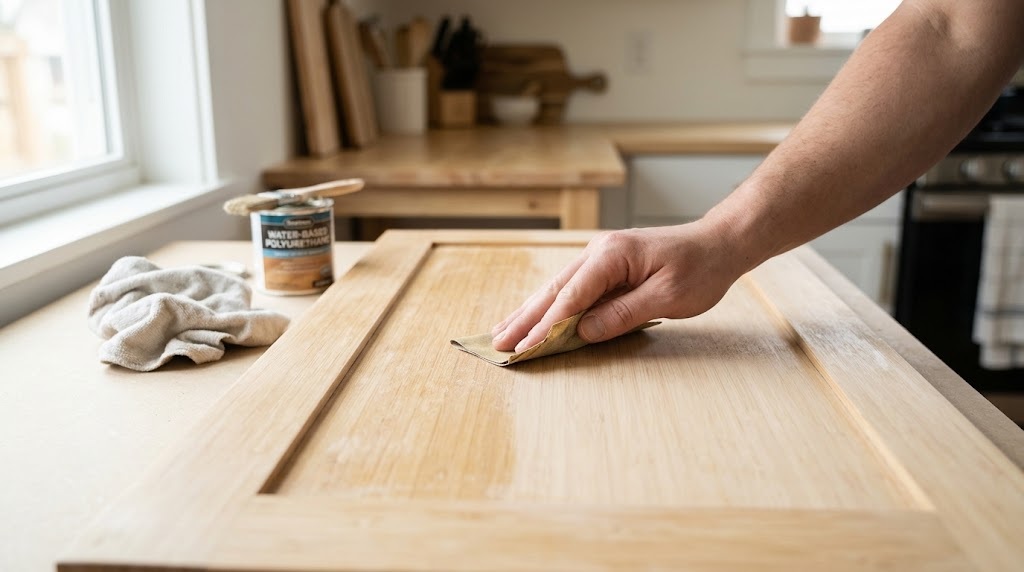
Routine maintenance of bamboo cabinets requires minimal effort but delivers significant returns in appearance and longevity. Regular dusting with a soft cloth removes abrasive particles that can dull surface finishes. For cleaning, a damp cloth with mild soap handles most soil without affecting the finish—harsh chemical cleaners and abrasive sponges should be avoided as they can degrade protective coatings.
Periodic inspection of hinges, drawer slides, and cabinet hardware catches minor adjustments before they become operational problems. Tightening loose hinge screws and lubricating drawer slides annually maintains smooth function and prevents the excessive wear that misaligned components can cause.
Surface refinishing may be desirable after many years of service, particularly on cabinet doors that receive frequent handling. Light sanding with fine-grit sandpaper followed by reapplication of the original finish type restores the surface to near-factory condition. This refinishability represents a significant advantage over synthetic laminate cabinetry, which cannot be renewed once its surface layer is damaged.
Balancing Cost and Long-Term Value
Bamboo cabinetry occupies a mid-to-premium price tier, typically costing more than stock synthetic laminate cabinets but remaining accessible relative to high-end solid hardwood options. The initial investment is justified by the material’s durability, moisture resistance, and environmental credentials, all of which contribute to a longer functional service life.
When evaluating bamboo cabinets against alternatives, consider the total cost of ownership rather than the initial purchase price alone. Bamboo’s resistance to denting, warping, and fungal damage reduces the likelihood of premature replacement, and the material’s refinishability extends its aesthetic life well beyond what disposable cabinetry options can deliver. For homeowners planning to remain in their properties long-term, this durability translates to genuine value that justifies the modest premium bamboo commands over conventional materials.