15mm vs. 20mm Bamboo Plywood: Standard Applications for Modern Woodworking

Selecting the right panel thickness is one of the most critical decisions in custom cabinetry, furniture design, and interior architectural woodwork. Among engineered sheet goods, bamboo plywood has emerged as a premier choice for modern woodworkers due to its exceptional dimensional stability, high tensile strength, and distinctive linear grain. However, choosing between 15mm (approximately 5/8 inch) and 20mm (approximately 3/4 inch) bamboo plywood often causes confusion for fabricators and designers. While a difference of five millimeters might seem minor on paper, it significantly impacts structural load capacity, weight distribution, joinery techniques, and cost efficiency. Understanding the mechanical behavior and best-use cases for each thickness ensures that your projects remain structurally sound while optimizing material yield.
Structural Characteristics of Engineered Bamboo
To understand why thickness matters, it helps to review how bamboo plywood is manufactured. Unlike traditional hardwood plywood made from peeled rotary veneers, bamboo sheet goods are engineered from individual strips of Moso bamboo. These strips are kiln-dried, carbonized or bleached, and bonded under intense heat and hydraulic pressure using adhesives.
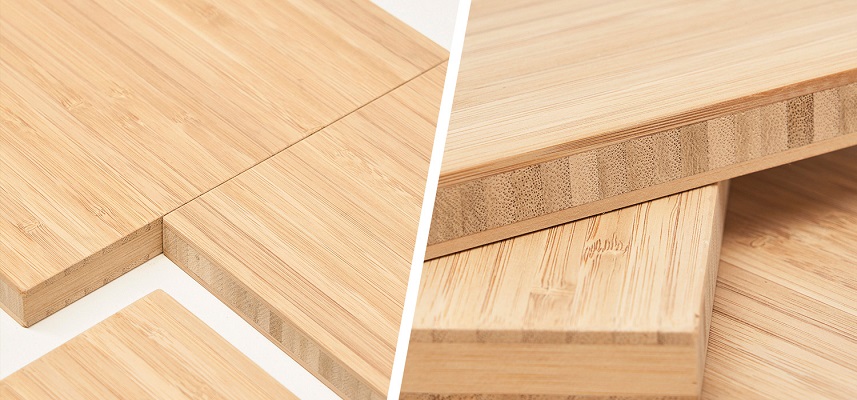
The orientation of these strips—whether horizontal, vertical, or cross-banded strand-woven—dictates the strength of the panel. A 15mm vertical bamboo panel features tightly packed narrow strips turned on edge, creating a sleek, uniform grain pattern with high vertical rigidity. A 20mm cross-laminated panel typically consists of a three-ply construction where the core layer runs perpendicular to the face veneers. This cross-ply configuration neutralizes the natural movement of the material, minimizing warping, twisting, or cupping under environmental changes.
Because bamboo fibers possess a higher tensile strength than many traditional hardwoods, even thinner panels offer remarkable load-bearing capability. Nevertheless, mass and thickness directly influence deflection—the degree to which a board bends under weight. This structural reality defines where 15mm excels and where 20mm becomes non-negotiable.
Working with 15mm Bamboo Plywood
15mm bamboo plywood balances structural integrity with manageable weight, making it a favorite for interior casework and vertical surfacing applications. It offers enough substance to hold mechanical fasteners securely without adding unnecessary mass to a cabinet structure.
Key Applications for 15mm Panels
- Cabinet Carcasses and Wall Units: Standard kitchen and commercial cabinet boxes benefit greatly from 15mm panels. The material provides sufficient structural strength to support upper cabinet loads while keeping overall weight low enough for straightforward installation and secure wall anchoring.
- Drawer Boxes and Internal Dividers: High-end cabinetry frequently utilizes 15mm vertical or horizontal bamboo for drawer sides, fronts, and internal organizers. The clean edge profile eliminates the need for edge banding, allowing fabricators to expose the attractive layered construction.
- Wall Paneling and Architectural Cladding: For interior feature walls, ceiling tiles, and acoustic paneling, 15mm bamboo serves as a durable, impact-resistant surface layer. Its reduced weight simplifies French cleat mounting and reduces tension on structural studs.
- Medium-Duty Shelving: Supported shelves spanning under 30 inches perform reliably at a 15mm thickness without noticeable sagging under moderate loads, such as books or kitchenware.
Fabrication Considerations for 15mm Material
When machining 15mm bamboo, precision is paramount. Standard pocket-hole joinery works well, but screw length must be adjusted to prevent breakout on the opposite face. A 1-1/4 inch pocket screw combined with specialized wood glue provides a rock-solid joint. Router bits and saw blades should be ultra-sharp; carbide-tipped, high-tooth-count blades prevent tear-out along the delicate bamboo face fibers.
Because 15mm panels are lighter, they are easier to handle on a CNC router table or table saw by a single woodworker, reducing shop fatigue and labor time during production runs.
Working with 20mm Bamboo Plywood
When a project demands maximum rigidity, high span strength, or substantial visual presence, 20mm bamboo plywood is the industry benchmark. Roughly equivalent to 3/4-inch material, 20mm is the heavy-duty workhorse for furniture makers and commercial millwork shops.
Key Applications for 20mm Panels
- Kitchen Countertops and Island Tops: The extra 5mm of thickness provides the structural stiffness needed for solid surface tops, bar counters, and butcher-block style work surfaces. It easily withstands heavy kitchen appliances, sink cutouts, and daily wear.
- Heavy-Duty Furniture Construction: Dining tables, executive desks, benches, and bed frames require the robust joinery support that only a 20mm panel can offer. The extra thickness allows for deep mortise and tenon joints, doweling, or heavy-duty mechanical fasteners.
- Long-Span Bookcases and Commercial Shelving: For shelves spanning 36 inches or more without center supports, 20mm bamboo is essential to prevent long-term sag. The higher cross-sectional area resists deflection even when fully loaded with heavy reference books or commercial inventory.
- Custom Doors and Entryway Gates: Internal passage doors, heavy sliding barn doors, and thick cabinet doors constructed from 20mm bamboo maintain flatness over time, resisting the warping forces caused by temperature and humidity differentials between rooms.
Fabrication Considerations for 20mm Material
Machining 20mm bamboo requires adequate tooling power. The high density of bamboo combined with the extra material volume creates resistance when cutting or routing. Feed rates on CNC machines or table saws should be monitored closely to avoid burning the dense fibers or dulling tooling prematurely.
Joinery options expand considerably with 20mm material. It accommodates standard 35mm concealed European hinges with generous depth clearance for the cup holes, ensuring cabinet doors remain attached securely even with frequent daily use. Furthermore, 20mm material allows for decorative edge profiles—such as bevels, bullnose, or chamfer edges—to be routed directly into the solid material, highlighting the unique multi-ply core.
Direct Application Comparison
Choosing between these two structural thicknesses often comes down to balancing mechanical demands against project constraints.
Structural Integrity and Spanning Capability
If your build involves horizontal surfaces subjected to static or dynamic loads, 20mm offers far greater resistance to bending forces. A 15mm shelf spanning 36 inches will show visible deflection under a heavy load over time, whereas a 20mm panel retains its flat plane. For vertical dividers, face frames, or light doors, 15mm offers more than enough structural rigidity.
Weight and Ergonomics
Bamboo is notoriously dense, often weighing significantly more than standard Baltic birch or MDF sheet goods. A full 4x8 foot sheet of 20mm bamboo plywood can weigh upwards of 90 pounds. This extra weight makes transportation, sheet handling, and installation significantly more labor-intensive. If weight reduction is a design parameter—such as in mobile van conversions, floating wall shelves, or modular trade show displays—15mm is the superior option.
Cost Efficiency and Yield
From a material procurement standpoint, 15mm panels generally cost 15 to 25 percent less per sheet than 20mm panels. On large-scale commercial fit-outs or extensive kitchen builds, using 15mm for cabinet boxes and reserving 20mm strictly for countertops, open shelving, and exposed end panels can optimize project budgets without sacrificing quality or structural performance.
Edge Treatment and Finishing Techniques
One of the greatest design advantages of both 15mm and 20mm bamboo plywood is the finished appearance of the exposed edges. Unlike standard softwood plywood, which reveals unsightly voids and soft core veneers, bamboo panels feature tight, void-free core construction.
Exposed Edge Aesthetics
Woodworkers frequently choose not to apply edge banding to bamboo panels. Sanding the exposed edge through progressively finer grits—up to 220 or 320 grit—reveals a beautifully patterned, linear core that highlights the multi-ply construction. This detail works exceptionally well in modern, minimalist, and Scandinavian-style designs. The extra thickness of 20mm provides a bold, tactile edge, whereas 15mm yields a refined, thin-line aesthetic.
Finishing Guidelines
Both panel thicknesses respond well to standard wood finishes, but proper preparation is required. Because bamboo fibers are naturally dense and non-porous, oil-based finishes, hardwax oils, and polyurethane topcoats must be applied in thin, even coats.
- Hardwax Oils: Penetrating oils highlight the natural warmth and grain depth of both natural (blonde) and carbonized (amber) bamboo. They are easy to apply and maintain, making them ideal for residential furniture and decorative millwork.
- Film-Forming Clear Coats: Water-based or solvent-based polyurethanes provide maximum moisture and abrasion resistance. They are recommended for high-wear 20mm applications like kitchen countertops, desk surfaces, and commercial reception desks.
- Sealing the Edges: Because end-grain bamboo absorbs finishes more rapidly than the flat face, sanding edges smoothly and applying an initial sealer coat ensures an even, satin sheen across the entire assembly.
Practical Guidance for Shop Workflows
Integrating bamboo plywood into your standard woodworking setup requires a few simple adjustments to maximize efficiency and protect your machinery.
First, always use sharp, dedicated tooling. Carbide-tipped saw blades with a high tooth count, such as an 80-tooth finish blade, deliver crisp cuts on both 15mm and 20mm stock without chipping the delicate face veneers. When routing, compression bits on CNC machines clean both top and bottom edges simultaneously, preventing micro-tears along the cut line.
Second, account for environmental acclimation. Store bamboo panels flat in your shop for at least 48 to 72 hours before cutting. This allows the material to adjust to the ambient moisture levels and relative humidity of your workspace, preventing movement after joinery cuts are completed.
Third, pre-drill all pilot holes. Bamboo’s high density makes it prone to splitting near board ends if fasteners are driven directly without clearance holes. Using countersink bits tailored to your screw size guarantees flush fastener heads and strong, split-free joints.
By matching the right thickness to your specific application—utilizing 15mm for lightweight, efficient vertical structures and 20mm for high-load, high-impact horizontal surfaces—you can execute flawless woodworking projects that showcase the natural beauty and unmatched performance of engineered bamboo.