Bamboo Wall Paneling: Cladding for Interior Wall

Product Overview
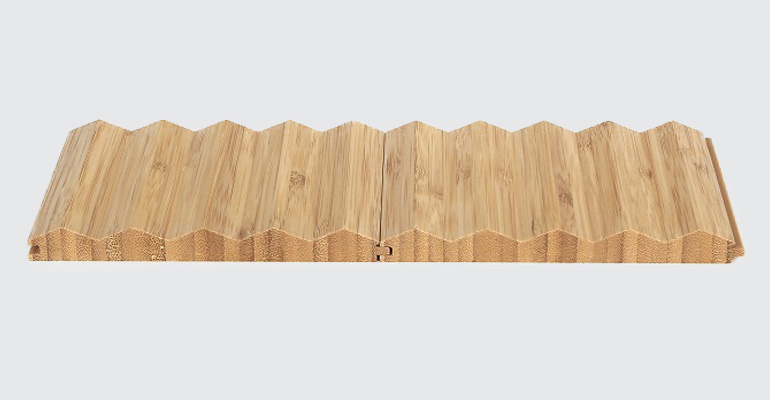
Bamboo wall paneling transforms flat interior surfaces into textured architectural features. The product line includes five distinct profiles, each engineered from 100% Moso bamboo laminates using a patent-controlled continuous non-length-limit lamination system. This manufacturing approach produces panels up to 5.8 meters in length with minimal visible joints, creating the seamless linear appearance typically associated with premium millwork at a fraction of the installation labor.
The panels install as a floating or fixed cladding system over existing drywall, concrete, or framed substrates. A tongue-and-groove edge profile on each board locks into the adjacent piece, reducing the need for additional fasteners and finishing trim. The result is a wall surface that reads as continuous ribboned bamboo grain, suitable for residential living rooms, commercial lobbies, hospitality corridors, and wellness spaces where warmth and texture are design priorities.
Available Profiles
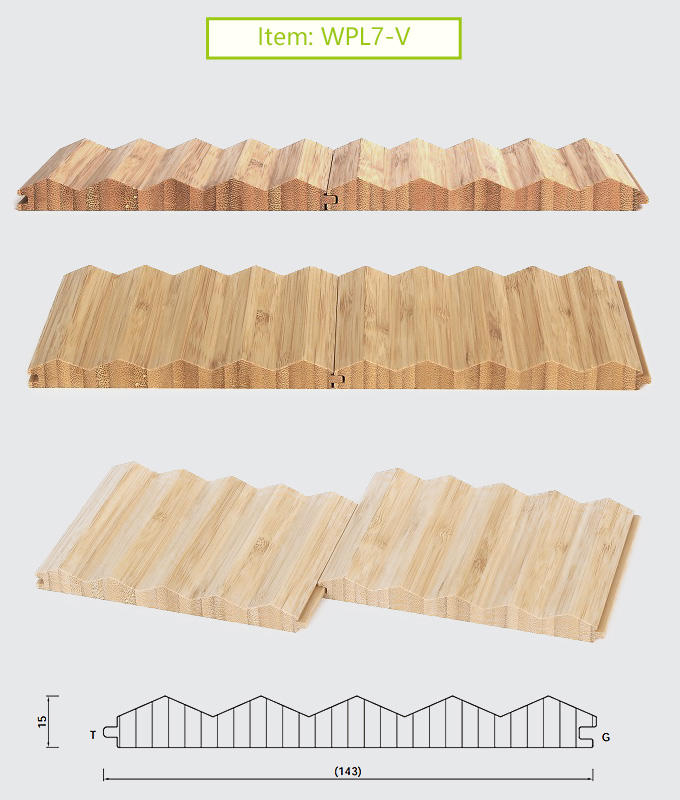
WPL7-V features a sharp triangular wave profile with pronounced peaks and valleys. The geometry creates strong shadow lines under directional lighting, making it particularly effective for feature walls with integrated LED uplighting or natural light from side windows. Panel thickness is 15mm with an overall width of 143mm.
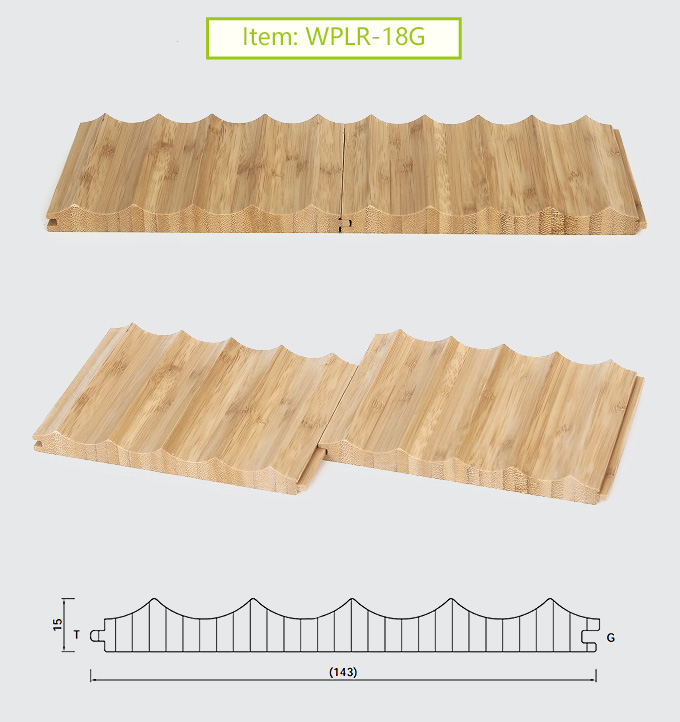
WPLR-18G uses a smooth sinusoidal curve rather than angular peaks. The rounded profile catches light more softly and reads as organic rather than geometric. This profile suits spaces where the goal is warmth and movement rather than dramatic contrast. Panel thickness is 15mm with an overall width of 143mm.
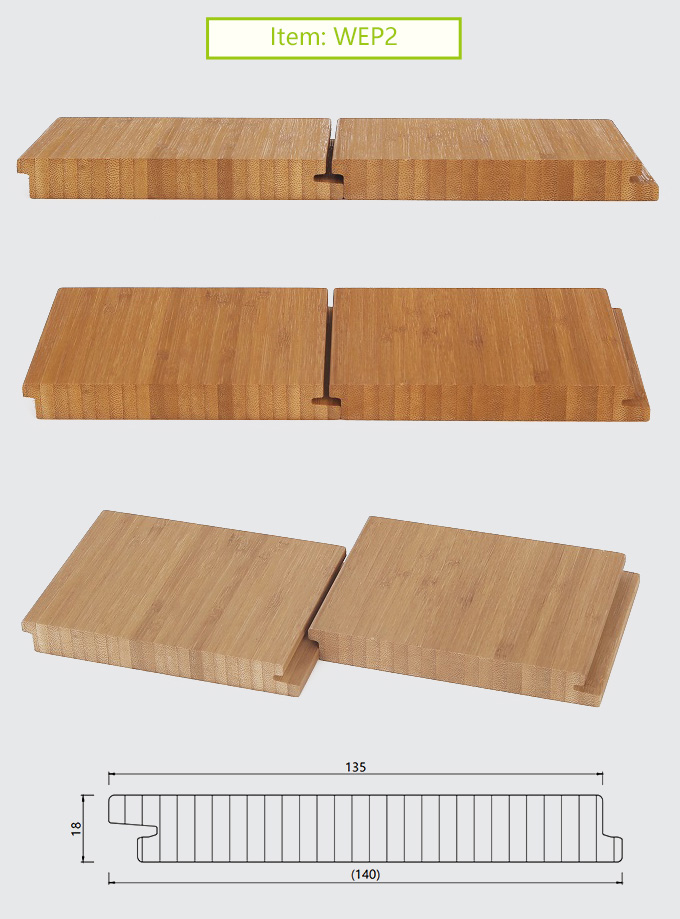
WEP2 is a flat panel with a recessed tongue-and-groove joint. The surface is smooth and uninterrupted, emphasizing the natural horizontal grain of the bamboo laminates. This is the most understated profile in the range, appropriate for ceiling applications and walls where the material itself, rather than the profile, is the focus. Panel thickness is 18mm with an overall width of 140mm.
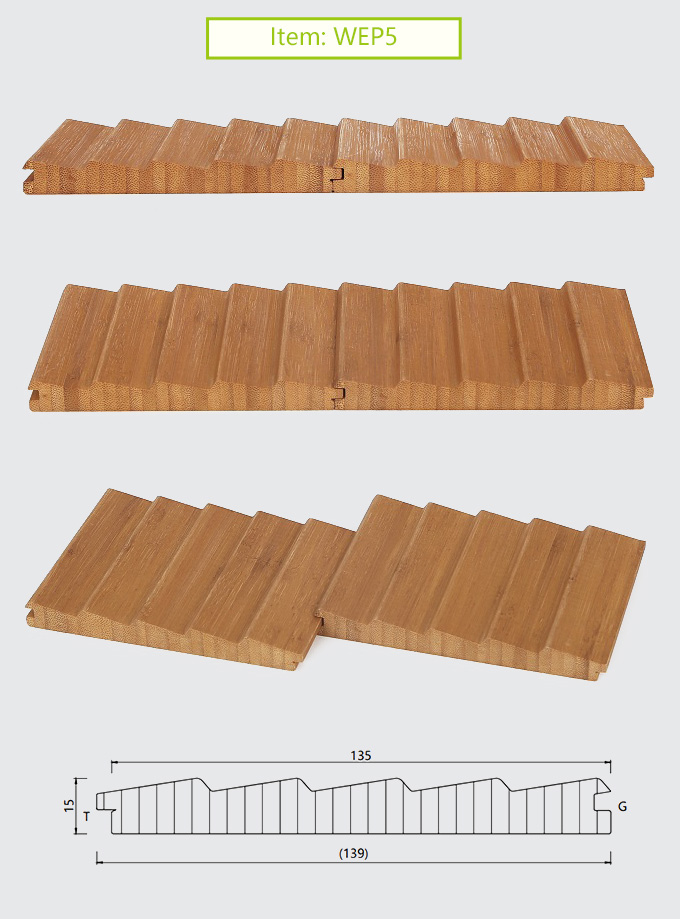
WEP5 combines a flat face with a stepped relief pattern. The shallow channels create a rhythm across the wall without the deep shadow lines of the wave profiles. This profile bridges the gap between flat and textured, offering visual interest that remains subtle enough for large continuous surfaces. Panel thickness is 15mm with an overall width of 139mm.
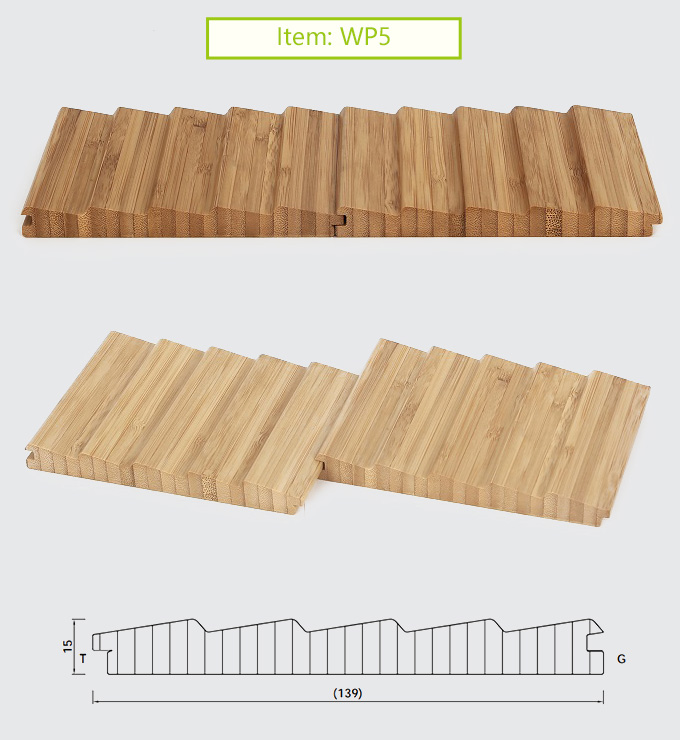
WP5 features an asymmetrical stepped profile with alternating high and low bands. The irregular rhythm breaks up the visual regularity of standard paneling and creates a dynamic surface that changes appearance as the viewer moves. Panel thickness is 15mm with an overall width of 139mm.
Specifications
| Parameter | Specification |
|---|---|
| Material | 100% Moso Bamboo |
| Standard Lengths | 2900mm / 5800mm |
| Standard Width | 140mm (varies by profile) |
| Standard Thickness | 18mm |
| Density | ±700 kg/m³ (EN 323) |
| Janka Hardness | 1,380 lbf |
| Moisture Content | 10% - 14% |
| Glue Bond Strength | BS 1088-2 Class 3 / EN 314 |
| Mold Resistance | Grade 0 (JIS Z 2911) |
| Bending Strength | 111.75 N/mm² (EN 310) |
| Modulus of Elasticity | 9,750 N/mm² (EN 310) |
Safety & Compliance
The manufacturing process prioritizes indoor air quality and environmental responsibility. Formaldehyde emissions test as non-detectable under EN 717-1, ISO 16000-9, and ISO 16000-6. Total volatile organic compound emissions are similarly non-detectable under ISO 16000-9:2006/COR1-2007, ISO 16000-6:2011, and ISO 16000-3:2011.
Fire performance meets multiple international standards:
- B-s1, d0 under EN 13501
- Class 1 under BS 476 Part 7
- Class A under ASTM E84
- 1010°C for 120 minutes under ASTM E119
These ratings qualify the paneling for use in commercial corridors, elevator lobbies, and other spaces where fire codes restrict combustible wall finishes.
Biological durability rates as Class 1-2 under EN 350, indicating high resistance to fungal decay and insect attack. The material performs reliably in humid climates and in spaces such as spas and wellness centers where moisture levels fluctuate.
Physical Stability
Dimensional stability under humidity variation is controlled through the manufacturing process and the inherent properties of laminated bamboo. Length change measures ±0.9 mm/m under EN 318. Thickness change is held to ±1%. The coefficient of thermal expansion from -20°C to 80°C is 7 x 10⁻⁶ K⁻¹ under ASTM E831, which is lower than most solid hardwoods and comparable to engineered wood products.
Screw holding strength on the long edge reaches 31 N/mm² under EN 13446, sufficient for secure mechanical fastening without pre-drilling in most applications. The Brinell hardness of 30 N/mm² under EN 1534 confirms resistance to surface denting from incidental impact.
Installation Advantages
The continuous lamination system produces panels in lengths up to 5.8 meters, which dramatically reduces the number of end joints on a typical wall. Fewer joints mean fewer alignment points for the installer to manage, less need for color matching between adjacent boards, and a more uniform finished appearance. The tongue-and-groove profile on all four edges allows panels to lock together without visible fasteners, reducing both material cost and labor time.
For large commercial installations, the reduced joint count also means fewer potential failure points over the life of the wall. Joints are where panels can cup, gap, or telegraph substrate movement. A wall with ten joints behaves differently than a wall with fifty, and the long-panel format addresses this directly.
Application Gallery
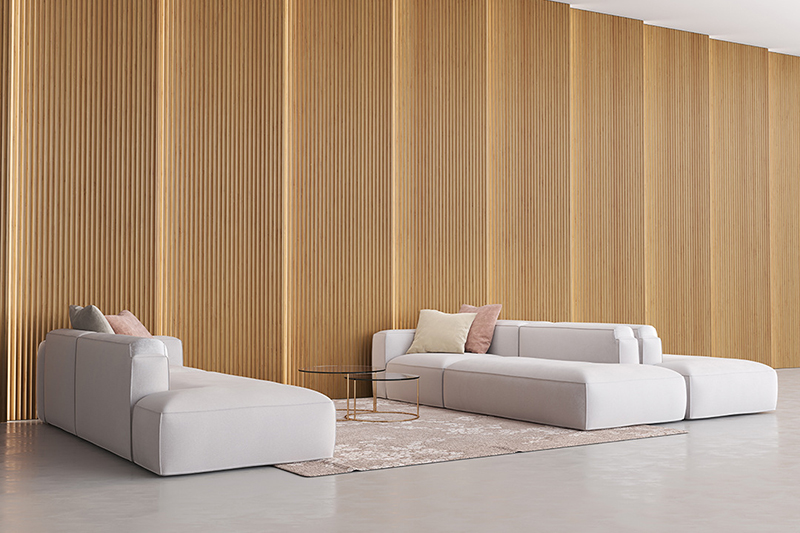
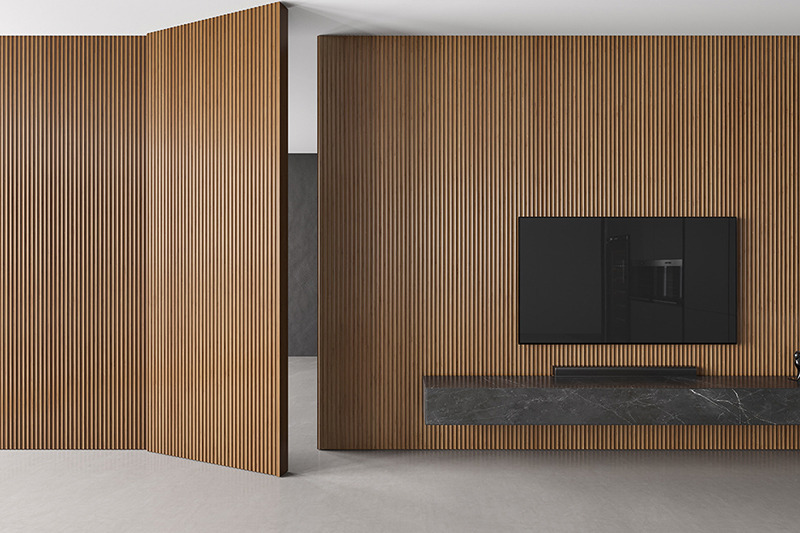
Vertical ribbed paneling creates a warm backdrop for residential media walls and living spaces. The linear grain draws the eye upward, increasing perceived ceiling height.
In hospitality and commercial lounges, the natural tone of bamboo softens hard surfaces and provides acoustic diffusion that reduces echo in open-plan areas.
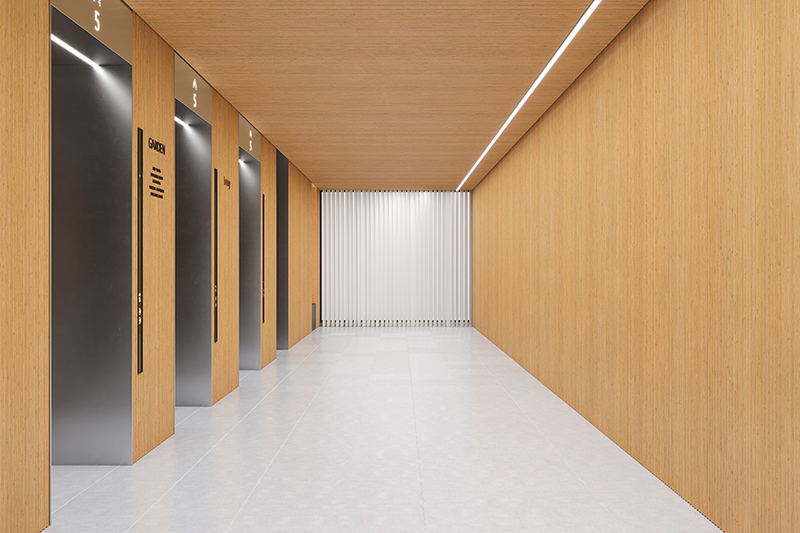
Ceiling and wall continuity in corridors and elevator lobbies creates a cohesive architectural envelope. The fire ratings qualify the material for these high-traffic commercial applications.
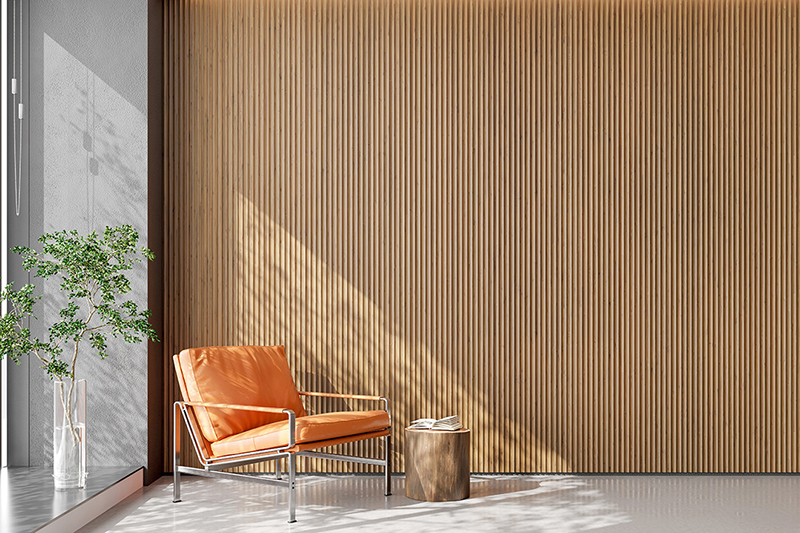
Reception areas and waiting rooms benefit from the biophilic associations of natural bamboo, which studies associate with reduced stress and improved occupant comfort.
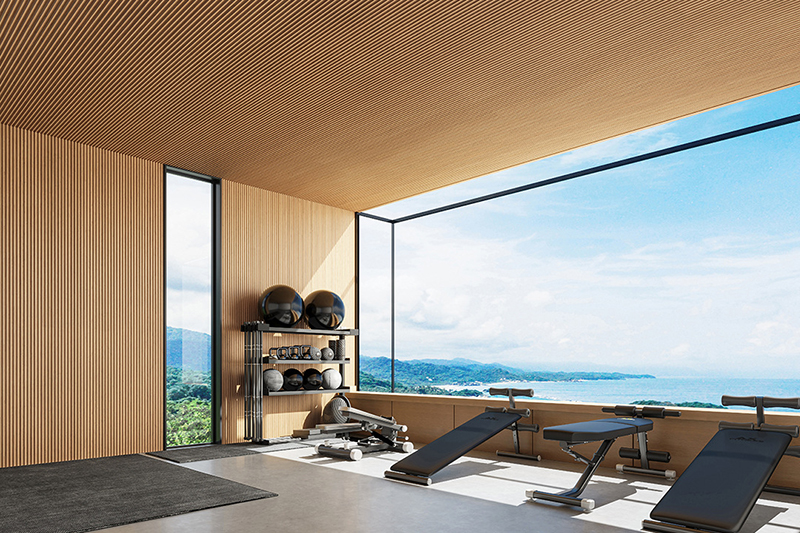
Wellness and fitness spaces use the material for both walls and ceilings, creating an immersive environment that connects interior exercise with natural materials.