Bamboo Tabletop for Modern Home Offices: Sleek, Sustainable, and Ergo-Approved

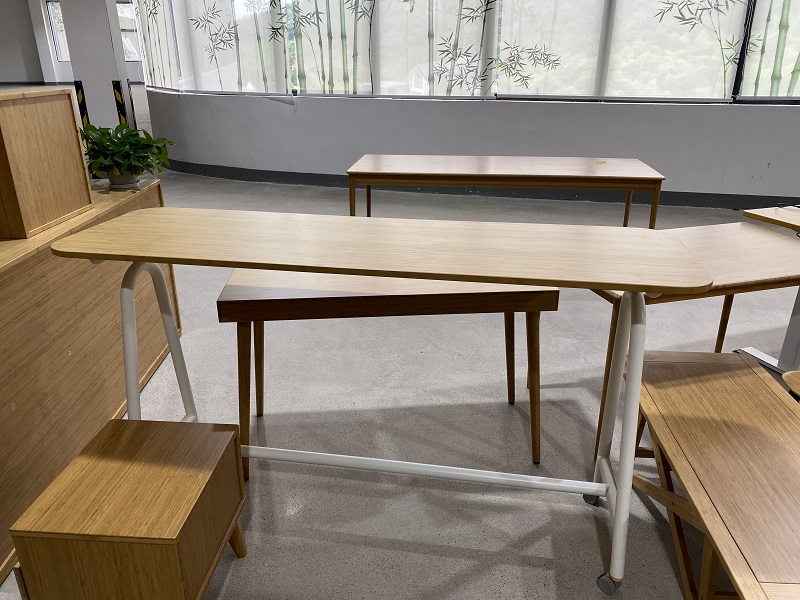
A solid Moso bamboo tabletop brings together the clean architectural lines of contemporary design, verified environmental responsibility, and the structural rigidity required for all-day ergonomic work. Anyone who spends eight or more hours at a desk quickly notices the limitations of cheap office surfaces. Hollow-core particleboard sags under heavy monitor arms, thin melamine chips along the front edge, and cold glass reflects overhead glare while amplifying every keystroke. Solid bamboo solves each of these problems without the high cost or slow forestry timelines of endangered tropical hardwoods. Engineered from mature Moso culms pressed under high heat and pressure, a properly crafted bamboo desktop delivers a smooth, warm tactile surface that ages gracefully across years of daily use. Whether you are building a minimalist corner workstation or outfitting an electric sit-stand frame, understanding how bamboo performs in hardness, stability, and ergonomics makes choosing the right desktop straightforward.
Why a Bamboo Tabletop Fits the Modern Home Office
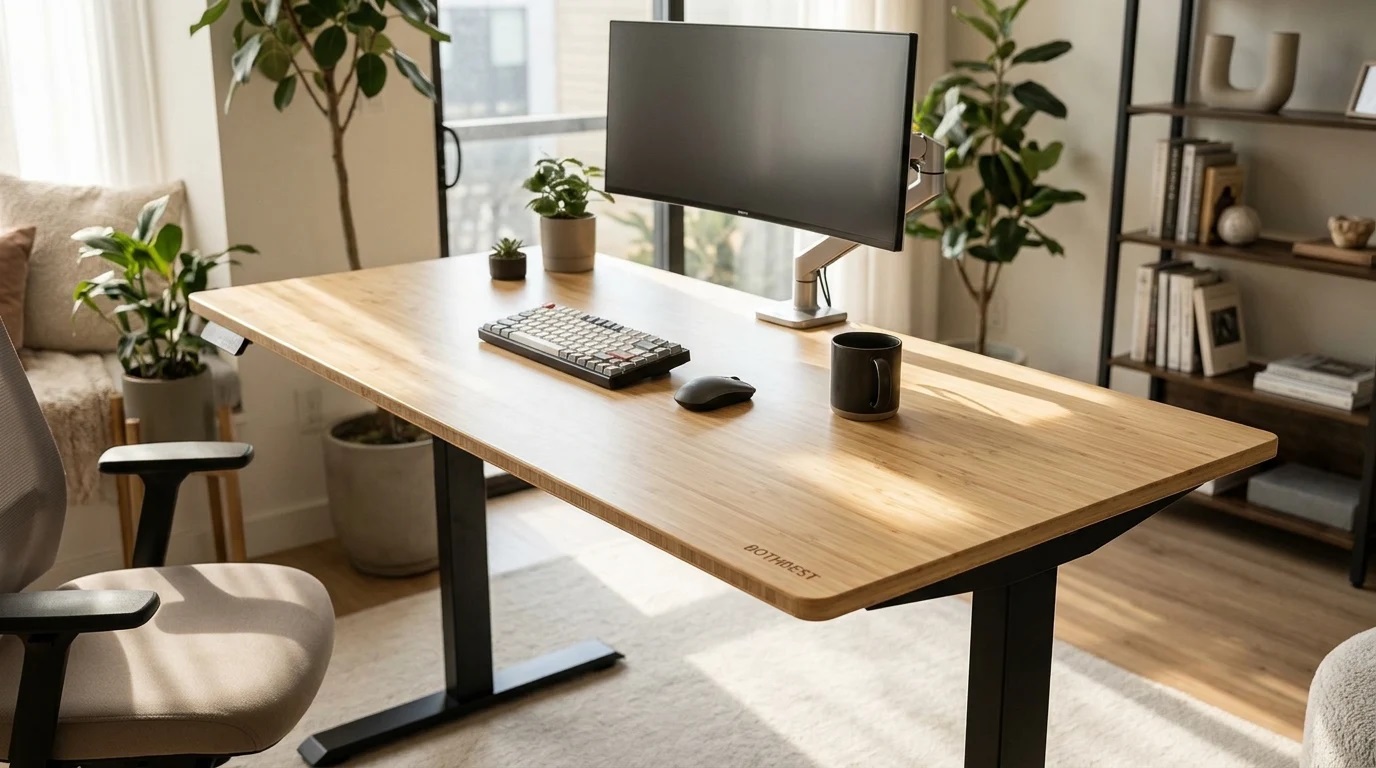
Visual clutter drains mental focus faster than most remote professionals realize. A bamboo tabletop introduces calm, organic warmth into rooms otherwise dominated by anodized aluminum laptops, matte black monitors, and tangled charging cables. Unlike heavily figured rustic slabs with deep knots and dramatic color swings, laminated bamboo strips create a rhythmic, architectural grain pattern that pairs effortlessly with Scandinavian white walls, industrial steel frames, or warm mid-century shelving.
Beyond visual balance, bamboo improves the physical feel of a workspace. Metal and tempered glass draw heat away from your forearms during winter mornings, creating subtle physical tension as you type. Natural bamboo retains ambient room temperature and offers a smooth, satin touch that stays comfortable through long writing, coding, or design sessions. It also dampens acoustic harshness. Mechanical keyboards, ceramic mugs, and desktop speakers produce a softer, lower-pitched sound on dense bamboo than on hollow laminate boards, making video calls noticeably clearer.
Versatility across layouts is another major advantage. Standard desktop footprints—such as 48 by 24 inches for compact bedrooms, 60 by 30 inches for dual-monitor setups, and 72 by 30 inches for creative studios—give home workers generous depth for proper eye-to-screen distance. Because solid bamboo can be CNC-machined with clean rounded corners, subtle cable grommets, or bevelled edges, the finished surface looks tailored rather than improvised.
How Bamboo Compares to Oak, Walnut, and MDF Desktops
Shopping for a replacement desktop usually narrows down to three categories: engineered fiberboard like MDF, traditional domestic hardwoods like oak and walnut, or engineered Moso bamboo. Comparing their physical properties reveals why bamboo has earned a reputation as a practical workhorse material.
On the Janka hardness scale, which measures resistance to denting and surface wear, classic horizontal and vertical Moso bamboo averages between 1,380 and 1,600 pounds-force. That places standard architectural bamboo well above American black walnut at 1,010 pounds-force and red oak at 1,290 pounds-force. For buyers who want extreme impact resistance, high-density strand-woven bamboo compresses shredded fibers under immense hydraulic pressure to exceed 3,000 pounds-force, shrugging off dropped tools, heavy camera gear, and rolling chair collisions.
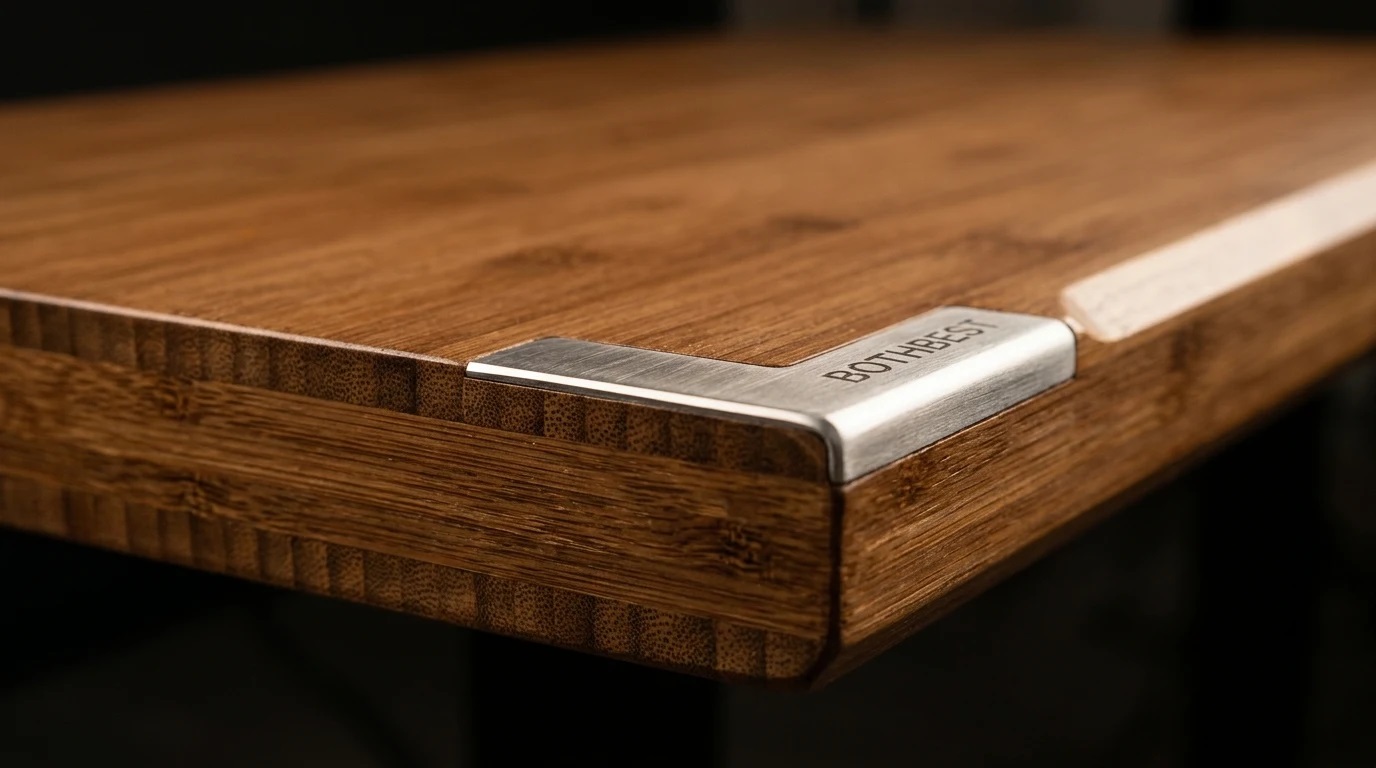
Dimensional stability separates laminated bamboo from wide-plank solid timber. Solid oak and walnut boards expand and contract across their width whenever indoor heating dries out winter air or summer humidity climbs. Over several seasons, wide hardwood tops can cup, twist, or develop hairline splits along glue joints. Because a bamboo tabletop is constructed from narrow, kiln-dried strips cross-laminated in balanced layers, internal wood tension is neutralized. Meanwhile, compared to MDF or particleboard, solid bamboo holds wood screws tightly along the underside. You can mount under-desk PC holders, keyboard trays, and cable channels without worrying about fasteners stripping out after a few adjustments.
Ergonomic Advantages for Sit-Stand Workstations
An ergonomic desk frame is only as reliable as the tabletop bolted to its lifting columns. Modern electric standing desks are designed around ANSI/BIFMA G1 guidelines, which recommend an adjustable height range of roughly 22.6 to 48.7 inches so users of varying heights can alternate smoothly between seated and standing postures. As a desktop rises to full standing height, any structural flex or top-heavy imbalance becomes immediately noticeable when you lean forward to type.
Solid Moso bamboo hits an ideal strength-to-weight ratio for dual-motor standing frames. A 60 by 30 inch bamboo top at 1 inch thickness weighs roughly 45 to 55 pounds—heavy enough to anchor the desk firmly against lateral wobble, yet light enough to leave ample lifting capacity for dual monitors, studio speakers, and desktop towers. Clamping heavy-duty monitor arms onto the rear edge also poses zero crushing risk. Whereas honeycomb cardboard cores and low-density particleboard often cave in under the concentrated pressure of a C-clamp, solid bamboo distributes that clamping force cleanly across its laminated plies.
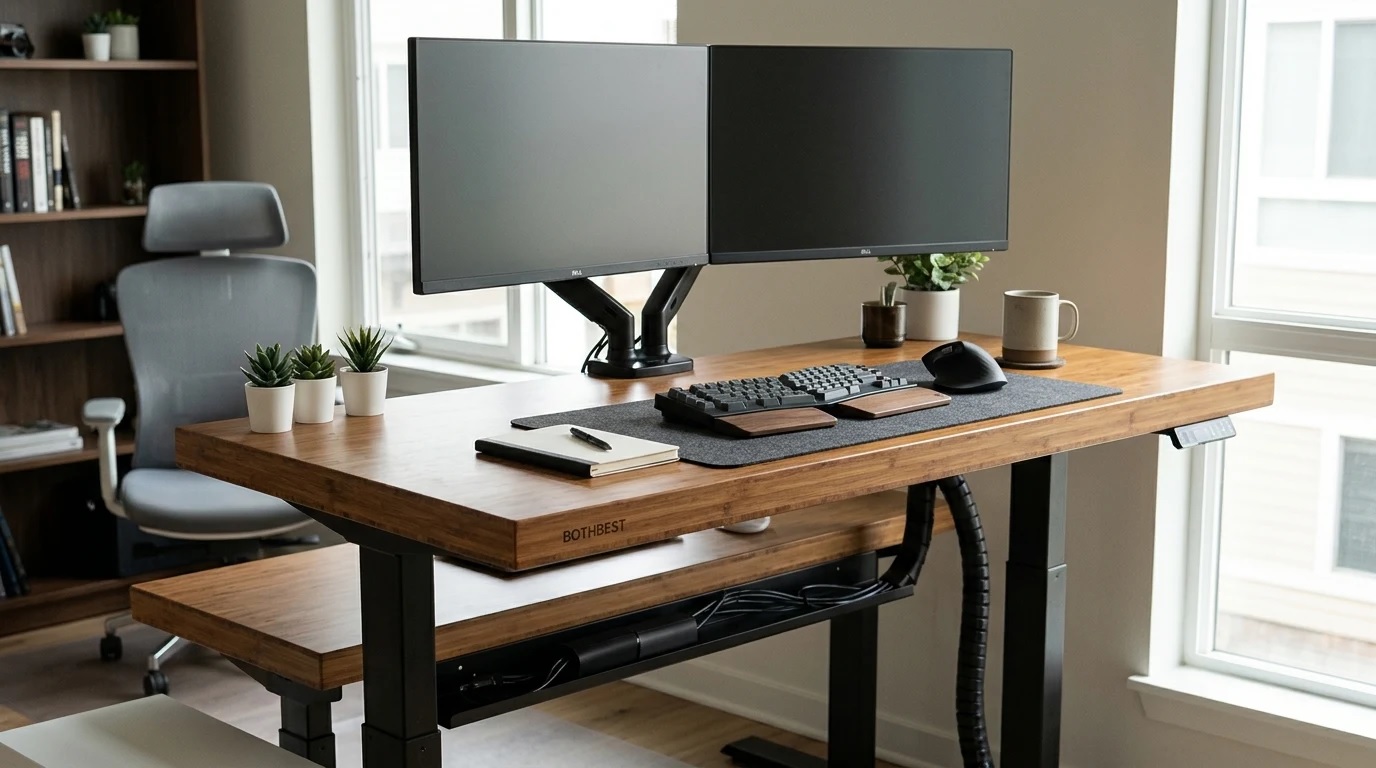
Edge geometry plays an equally important role in daily comfort. Sharp 90-degree desk edges press into the ulnar nerve and soft tissue of your wrists during prolonged mouse and keyboard work. Quality bamboo tabletops feature precision CNC-profiled edges—typically a gentle 3 mm radius round-over or an ergonomic comfort chamfer along the front lip—allowing your forearms to rest naturally without pressure points.
Verified Sustainability and Indoor Air Quality Standards
Genuine sustainability in office furniture comes down to harvest speed, land impact, and chemical safety inside your home. Unlike slow-growing temperate hardwoods that require 40 to 60 years before selective logging, Moso bamboo (Phyllostachys edulis) is a giant woody grass that reaches full structural maturity in just four to five years. Harvesting mature culms does not kill the plant; the underground rhizome system stays intact, preventing soil erosion and sending up fresh shoots the following spring without replanting or chemical fertilizers.
Just as important as forest stewardship is what holds the desktop together. Because home offices are often closed rooms where you breathe the same air for hours, adhesive chemistry matters. Reputable bamboo manufacturers bond strips using low-emission resins certified to CARB Phase 2 standards, which cap formaldehyde emissions at 0.05 parts per million, or stricter ENF-grade standards rated at 0.025 milligrams per cubic meter or lower. Pairing low-VOC bonding with water-based or UV-cured polyurethane finishes ensures your new desktop arrives free from harsh solvent odors and supports healthier indoor air quality from day one.
How to Choose the Right Thickness, Grain, and Finish
Selecting the right specification ensures your desktop matches both your equipment load and your room aesthetic. Paying attention to three core variables makes the buying decision simple.
Ideal Desktop Thickness
Most home office bamboo tabletops come in 25 mm (1 inch) or 38 mm (1.5 inch) profiles. A 1-inch slab provides plenty of rigidity for standard laptop, single-monitor, and dual-monitor setups up to 60 inches wide while keeping overall weight moderate for standing desk motors. Step up to a 1.5-inch thick top if you prefer a bolder architectural silhouette, plan to span 72 inches or wider, or intend to mount heavy triple-monitor arrays and studio equipment.
Natural vs. Carbonized Grain
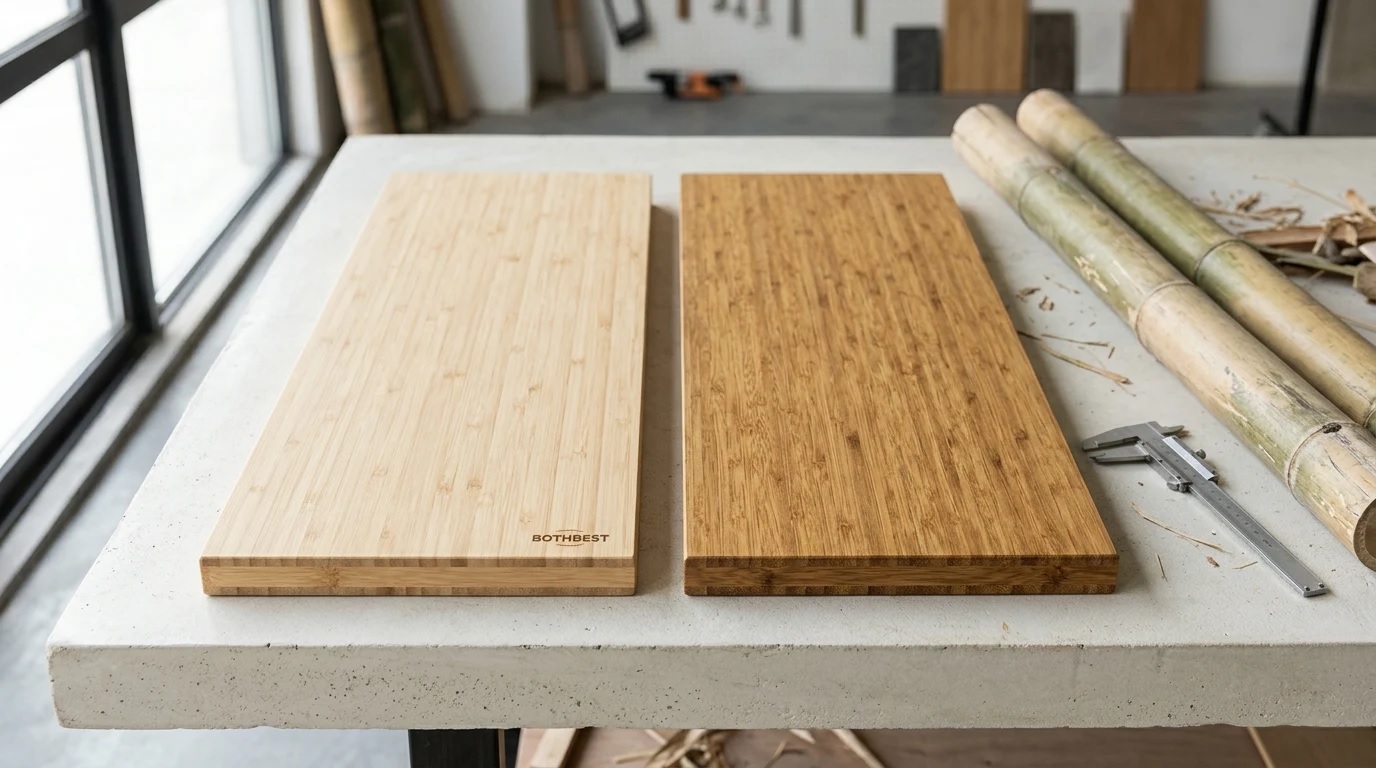
Bamboo grain style defines the visual mood of your workspace. Horizontal grain displays the distinctive bamboo nodes prominently across the surface, offering an organic look. Vertical grain turns the strips on edge for sleek, tight pinstripes that read modern and minimalist. Color comes in two primary tones: natural blonde, which preserves the bright creamy hue of raw culms, and carbonized caramel, achieved by pressure-steaming the strips to caramelize natural sugars into a rich amber tone without artificial stains.
Glare-Free Matte Coatings
Surface finish determines both scratch resistance and visual comfort under task lighting. High-gloss lacquers bounce overhead LED reflections directly into your eyes, causing fatigue during afternoon work blocks. Look for multi-coat UV-cured matte or satin polyurethane finishes, which seal the pores against coffee spills while diffusing ambient light softly across the desk.
Everyday Care and Maintenance
Maintaining a finished bamboo tabletop requires almost no specialized upkeep. Wipe dust and fingerprints weekly using a soft microfiber cloth slightly dampened with warm water or a mild, pH-neutral dish soap, then dry immediately with a clean towel. Use cork or felt coasters beneath hot mugs and iced glasses to prevent thermal rings or prolonged moisture pooling, and place silicone pads under rough ceramic planters or heavy metal monitor bases. Avoid abrasive scouring pads, ammonia glass cleaners, or silicone furniture polishes, which can dull a satin polyurethane coat over time. With basic sensible habits, a solid bamboo surface retains its smooth luster for decades.
Frequently Asked Questions About Bamboo Tabletops
Does Bamboo Scratch Easily?
No. Solid Moso bamboo ranks harder than red oak and black walnut on the Janka scale, and factory-applied UV-cured polyurethane coatings add a tough protective barrier against everyday keyboard, mouse, and notebook friction.
Can It Hold Monitor Arms?
Yes. Unlike hollow-core or particleboard desktops that crush under clamp pressure, a solid laminated bamboo tabletop easily supports heavy single, dual, or triple monitor C-clamp arms without flexing or denting.
How Thick Should It Be?
A 25 mm (1 inch) thickness works reliably for most home office desks up to 60 inches wide, while a 38 mm (1.5 inch) slab is ideal for 72-inch spans or heavy multi-monitor studio workstations.